
Blog

They Told Me My Body Had Failed
I was a brand-new mother when I was told my body couldn’t give my baby what he needed. I believed it. Years later, sitting in a circle of women, I began to understand how deeply those words had shaped me—and discovered the kind of healing that becomes possible when we stop trying to do it all alone.
Some of the deepest healing I’ve experienced didn’t come from understanding myself better. It came from being witnessed.
My own experience with postpartum anxiety eventually changed not only the way I understood myself, but the way I understood therapy. It showed me the limits of trying to heal entirely on our own and the power of being in relationship with people who can help us see the things we’ve learned to normalize.
Today, that experience influences the way I approach individual and group work, including online therapy in California and the healing circles I offer for women throughout the state. For women searching for group therapy in San Diego or elsewhere in California, I believe there is something uniquely powerful about having a space where healing happens not only within ourselves, but in connection with others.
This is part of the story of how I came to understand that:
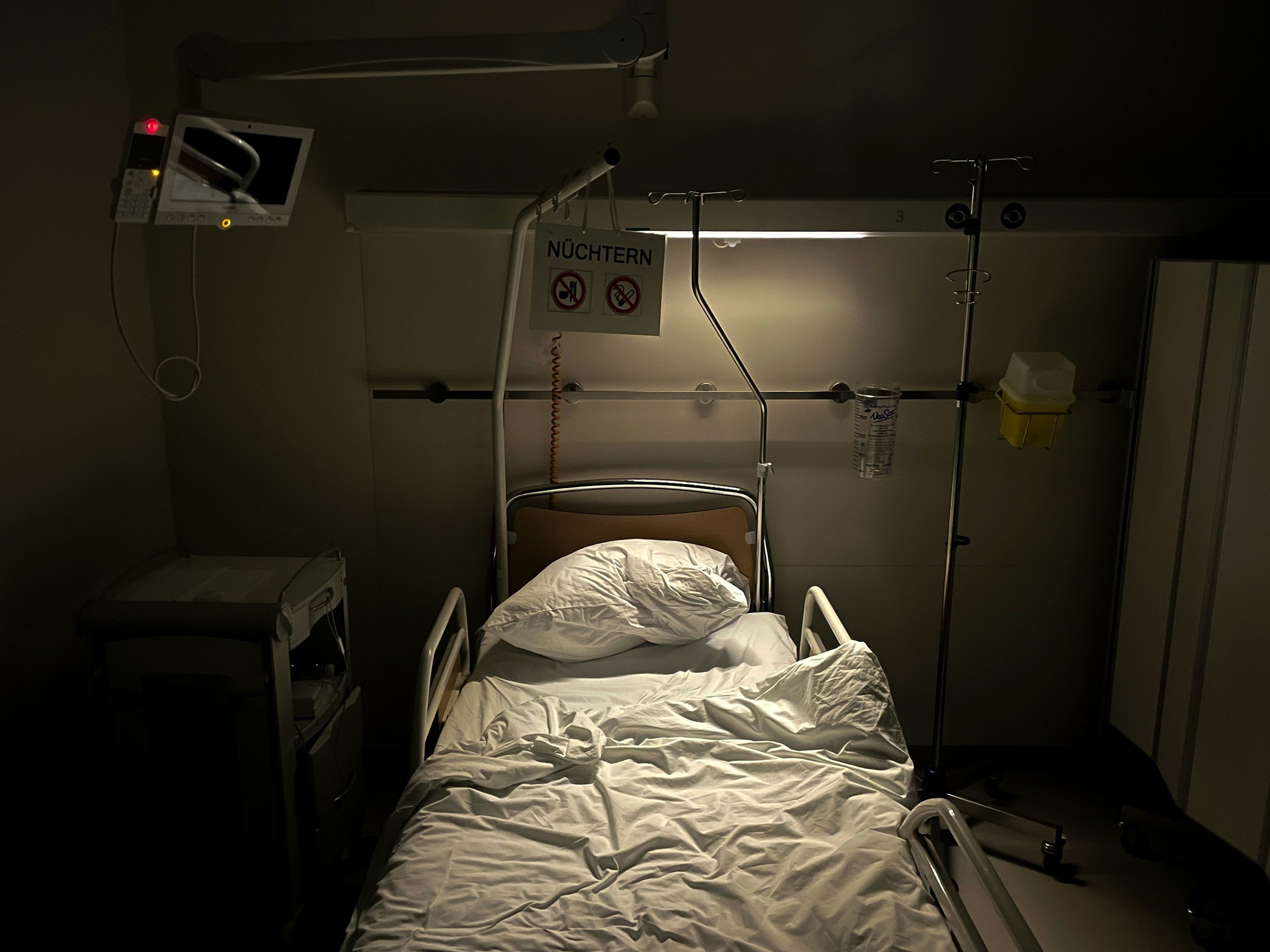
I sat in my hospital bed holding my brand new baby. After 18 hours of labor and an emergency c-section, he was finally here and my life as a new mom had just begun. I had just experienced more physical pain than I ever knew was possible. My body was bleeding, I was exhausted, and my abdomen was freshly stitched up, but nevermind all that - I was now responsible for this very tiny human.
Who said I could be in charge of this tiny human?
I didn’t know the first thing about breast feeding, but a nurse came in and showed me how to hold him and get him to latch. She was gruff and not very kind. I could tell that maybe she’d been having a bad day, so I tried not to ask too many questions. I felt desperate to get the whole breast-feeding thing right, so I hung on every word she’d said and tried to commit it all to memory. My brain felt like mush.
She seemed like she was in a hurry, so I didn’t want to take up too much of her time. He had latched and seemed like he was eating fine, but I was so new at this that I felt anxious. How do I know when he’s done? How will I know when he’s hungry again? Do I switch boobs? I had so many questions but I told myself that I’d just figure it out as I went. This nurse was definitely not up for chit-chat.
After he seemed to be done I rolled him carefully onto my chest and she showed me how to burp him. Nothing came out so I just I held him there. He was so small and felt so fragile. I tried to take it in, but I was worried I’d hurt him somehow. The nurse was very adamant that his head needed to be supported. I did my best to hold his tiny little head without touching the soft spot on top. She was also adamant that I needed to be careful not to injure his brain by pushing on it.
I let him sleep on me for a while. The nurse came back in to check on us. She took my vitals, checked my incision, and pushed on my belly. Tears welled in my eyes but I refused to cry because I was afraid of waking the baby and inflicting even more pain into my abdomen.
The nurse looked at me and said, “make sure you don’t hold him too much. He’ll become spoiled if he’s always in your arms.”
I nodded my head slowly as she left the room. I looked down at my baby, worried again that I’d somehow fuck this up. I figured she knew what she was talking about. She was the one wearing the scrubs and taking care of all the new moms on this floor. I’d only been a mom for 6 hours at this point, what did I know?
After that, I’d feed him, burp him, change him, rock him for a little while and then put him in the little clear isolette next to my bed. I’d stare at him and make sure he was still breathing. He seemed to be fine with this arrangement for the reminder of our stay at the hospital.
Once we got home I followed the same routine and placed him in his Momaroo. I stared at him as he was lulled to sleep by the circular rocking motion it made.
On his second night home he started crying and would not stop. Every time I tried feeding him he’d latch for a minute or two and then pull his head off and wail. I felt panicked and worried that something was terribly wrong with him. My partner and I took turns trying to soothe him.
Maybe he wasn't getting enough milk. How could he be getting enough milk? He wasn’t latching long enough.
Why wasn’t he latching??
This continued for hours. I don’t even remember how it finally stopped. I’d only had 8 hours of sleep in the last 3 days, so maybe I blacked out at some point and he finally gave up after deciding I was an unfit mother.
Some version of this scenario continued the next night and the next day my partner drove me to the breast-feeding group hosted by the hospital. There, I sat in a circle of women who were also having trouble with breastfeeding while the nurse walked around and adjusted our positions, handed out nipple shields, and gave tips about ways to improve milk production. The nurse told me that my colostrum was fine and that my real milk should arrive in the next day or so.
It did not.
I bought all the lactation cookies, teas, and tinctures I could get my hands on. The smell of maple syrup came out of my pores from all the fenugreek I ingested. I changed my diet and ate all the things that were said to increase milk production.
I pumped and fed and pumped some more. I slept in 1-hour increments and returned to the breastfeeding support group a couple days later. I felt ashamed that my breasts weren’t engorged with milk. I told the nurse that nothing was coming out when I pumped.
She said, “your body just isn’t going to produce what your baby needs.”
I felt devastated that, once again, my body had failed to do what it was supposed to know how to do naturally.
Or so I was told.
I remember the first time I sat in a room full of women and told them these stories.

They were outraged.
There were parts of me that knew the things I was told weren’t great, but hearing from a group of women who were all intelligent, caring, and supportive allowed me to see that not only were the comments not great - they were actually harmful.
I was in an incredibly vulnerable state and because I was raised to not question authority, I took what those nurses said as fact. This cut me off from my intuition and made me question everything about my body and my ability to care for my baby.
I eventually learned that I had postpartum anxiety and OCD. (I also learned that my son had a lip tie and his inability to latch correctly was actually the cause of my lack of milk production.) I followed the typical medical protocol and got on meds. I went to therapy and I did my best to heal. But healing often reaches a limit when it’s done in isolation.
For the first four years of my healing journey I barely scratched the surface. It wasn’t until I found this beautiful community and was witnessed by other women that the deeper work truly began.
Healing Was Never Meant to Happen in Isolation
My own healing changed the way I think about what it means to help another person heal.
Individual therapy can be incredibly powerful. There is something deeply healing about having another person sit with you, co-regulate with you, help you understand what happened, and reflect back the things you may not yet be able to see for yourself.
But community offers something different.
There is something powerful that happens when we tell the truth in a room full of women and are met not with judgment, advice, or someone trying to fix us—but with recognition.
Sometimes another woman can see what we have normalized for years. She can reflect back the parts of us we learned to question, silence, or abandon. We hear another woman’s story and recognize something of ourselves in it.
And slowly, in the safety of being witnessed, we begin to trust ourselves again.
This is one of the reasons I’ve become so passionate about creating opportunities for women seeking online therapy in California to experience healing in community, too. An online group allows women across California—including women looking for group therapy in San Diego—to gather in an intentional space without geography determining who gets to sit in the circle.
As humans, we are wired for connection. And I think we’ve been siloed for far too long.
An Invitation to Becoming
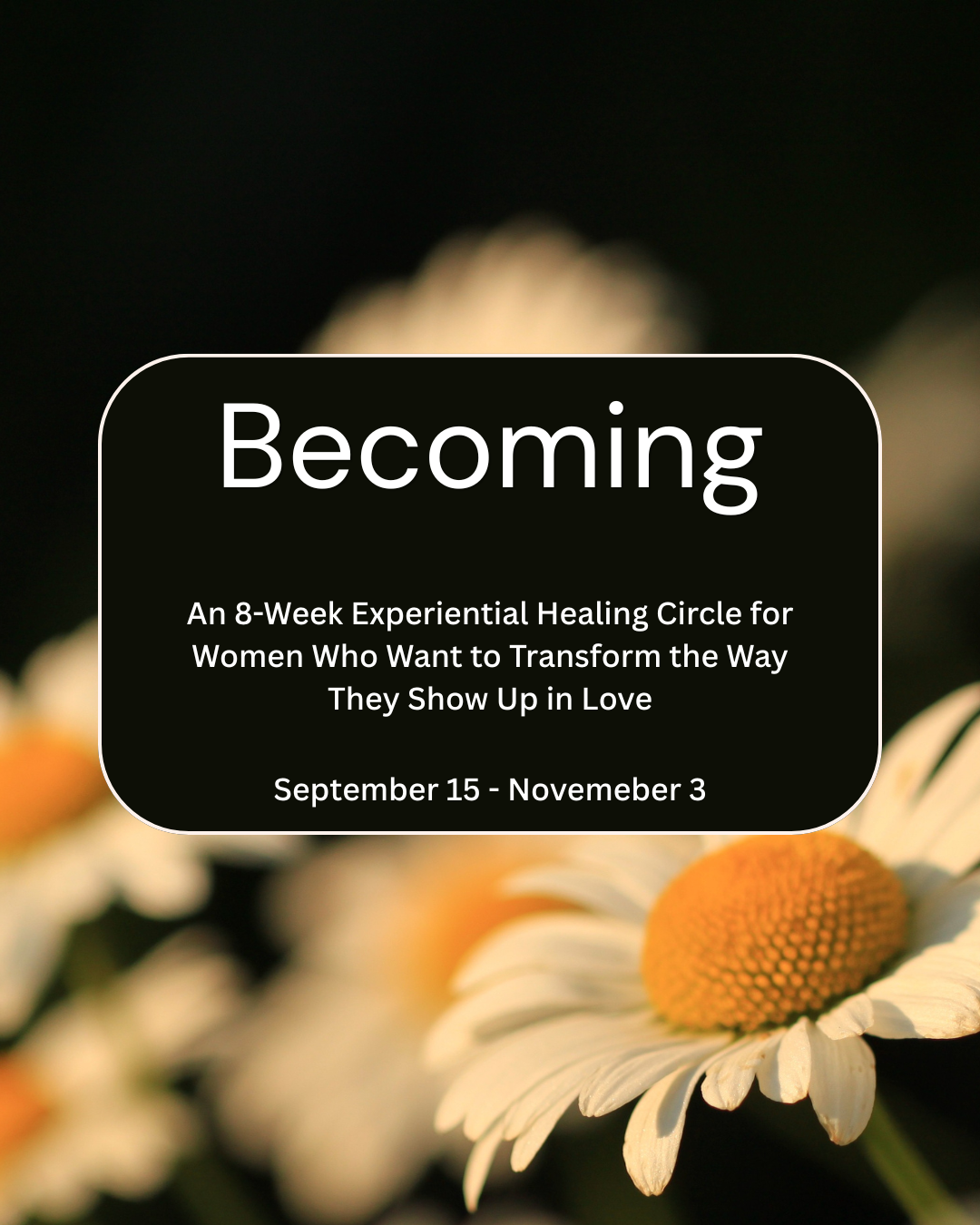
This is part of what inspired me to create Becoming, an 8-week online healing circle for women in California.
Becoming is for women who are ready to move beyond understanding their patterns intellectually and begin reconnecting with the wisdom of their bodies, their intuition, and the parts of themselves they may have learned long ago not to trust.
We gather not because any one of us has the answers for another woman, but because there is something profoundly healing about remembering ourselves in the presence of one another.
If you’ve been doing your healing alone for a long time, maybe you were never meant to do all of it that way.
Whether you’ve been searching for online therapy in California, group therapy in San Diego, or simply know that you’re longing for a different way of doing your healing work, I invite you to learn more about Becoming.
I’d love to welcome you into the circle.
Alicia Taverner, LMFT, is a licensed marriage and family therapist who helps couples heal after infidelity, years of resentment, and the exhaustion of feeling stuck in the same painful patterns.
Her work helps partners begin to understand each other again, rebuild appreciation, and create lasting change with a focused, supportive approach. Alicia uses brain based techniques, including Brainspotting and ketamine assisted psychotherapy, in an intensive format that gives couples more room to heal without the start and stop of weekly sessions.
Learn more about Alicia’s work with affair recovery intensives, relationship therapy, and ketamine therapy, or visit her About page.
When Did You Stop Asking Yourself What You Needed?
Many women learn early that being loved means being good, helpful, accommodating, and aware of everyone else’s needs. But what happens when you become so fluent in caring for others that you stop listening to yourself? A reflection on self-abandonment, the roles we inherit, and finding our way back to who we were before we learned who we needed to be.
The First Time I Learned to Abandon Myself
The first time I learned to abandon myself was when I was 4 years old. I can still hear the inflection in my mother’s voice telling me not to be too loud. This was my indoctrination into patriarchy. My dad was just home from work and he needed time to wind down. In our house his energy was protected above everyone else’s and my mom ran interference keeping me and my brother quiet while he napped, worked, or watched TV.
My mom also worked outside of the home, and on Wednesday evenings she worked late and my dad took care of us. He picked us up from daycare, fed us dinner, bathed us when we were little, and put us to bed. Looking back now, I remember that my mom always left a meal that she prepared on her day off in order to make his life easier.
She did a lot of things to make his life easier which taught me that men’s lives should be made easy by the women that love them. I carried a lot of those things with me into the early years of my marriage. I prepared all the meals, did all of the household chores and shopping. I planned most of our social activities and made sure we spent an equal amount of time with each set of parents. I also worked full-time.

When Being a “Good Wife” Meant Taking It All On
When we had kids and I felt weighed down by postpartum anxiety and OCD, I finally began to realize how much of what I was doing was never discussed. I had unconsciously taken on the brunt of the responsibility in my home while my husband had meals ready, clothes ironed, and lunches prepared for him. This was how women showed love in my family and this type of love was passed down several generations.
When I started to do my own healing work it became obvious why adding a baby into our lives was so challenging. Even if I hadn’t been struggling mentally - I was already working 40+ hours a week, handling all of the household responsibilities with very little outside support. Going back to work while still sleep deprived hit me like a tidal wave. Not only was I drowning in intrusive thoughts and panic, but I had set myself up to fail by trying to be a “good wife.” Taking it all on was what I learned to do in order to be loved.
When Did I Stop Asking Myself What I Needed?
By allowing the part of me to take over that believed she needed to earn love through self-sacrifice, I was held captive by the wants and needs of others. I would try to anticipate what they needed and then use up what little energy I had left to show up for them. I rarely stopped to ask myself what I needed. This made me feel frustrated and resentful.
What I know now is that I was taught to self-abandon from a very young age. I was taught to be a “good girl” and to sacrifice myself for others. It took a while to finally meet myself and begin showing up in the world as my true self - not who others wanted me to be. I was deathly afraid of losing people that I loved through the process.
I did lose a few who were only there to benefit from my over-giving, but I also gained an entire community of people who love the real me. Not for what I can do for them, but because they can trust me to say no when I’m too depleted. They honor and appreciate not having to guess or wonder if what they might ask for is too much, and I love knowing the same about them.
What Parts of Yourself Did You Leave Behind?
I sometimes wonder how different our lives might be if, instead of teaching little girls to be good, we taught them to know themselves.
What if we taught them that the discomfort of someone they love does not automatically mean they have done something wrong? That they are allowed to have needs that inconvenience other people. That love does not have to be earned through usefulness, sacrifice, or making themselves smaller. That saying no does not make them selfish. That their anger, desire, intuition, pleasure, grief, and longing all carry information worth listening to.
Many of us weren't taught those things.
Instead, we became incredibly skilled at reading the room. We learned to notice the subtle shift in someone's voice, anticipate what would make things easier, and adjust ourselves accordingly. Eventually, we became so fluent in everyone else's needs that we stopped speaking the language of our own.
And then one day, we find ourselves asking: What do I actually want? What do I need? Who am I when I'm not trying to be good for everyone else?
Those questions have become some of the most important questions of my own healing.
Because healing self-abandonment hasn't meant that I stopped caring for other people. I still love deeply. I still give. I still take care of the people I love. The difference is that I no longer believe I have to disappear in order to do it.
I get to belong to myself, too.
Group Therapy in San Diego: An Invitation to Becoming
Maybe that's where the work begins—not by becoming someone new, but by remembering the woman who existed before she learned who she needed to be in order to belong.
This is part of the work we will explore in Becoming, my 8-week online healing circle for women. For women looking for group therapy in San Diego, Becoming offers a space to do this work in community from the privacy of your own home.
This isn't a group about becoming better at meeting everyone else's needs. It's a space to begin turning your attention back toward yourself—to explore the patterns you've inherited, the roles you've learned to play, and the parts of yourself you've quieted along the way.
Together, we'll practice listening beneath all the noise of who you should be so you can begin hearing your own knowing again.
You don't have to blow up your life or stop loving the people in it.
You may simply need to stop leaving yourself out of it.
If something in you recognizes herself in these words, I would love to welcome you into Becoming.
Alicia Taverner, LMFT, is a licensed marriage and family therapist who helps couples heal after infidelity, years of resentment, and the exhaustion of feeling stuck in the same painful patterns.
Her work helps partners begin to understand each other again, rebuild appreciation, and create lasting change with a focused, supportive approach. Alicia uses brain based techniques, including Brainspotting and ketamine assisted psychotherapy, in an intensive format that gives couples more room to heal without the start and stop of weekly sessions.
Learn more about Alicia’s work with affair recovery intensives, relationship therapy, and ketamine therapy, or visit her About page.