
Blog
Ketamine Therapy: What to Expect During Your First Session
Curious what really happens in a Ketamine-Assisted Psychotherapy (KAP) session? Learn what to expect—from preparation and intention setting to the medicine experience and integration—and how KAP creates lasting emotional healing.
If you've been curious about ketamine therapy but aren't sure what actually happens during a session, you're not alone. Many people considering ketamine therapy wonder what the experience feels like, how the medicine is administered, and what role therapy plays in the process.
As a therapist who provides Ketamine-Assisted Psychotherapy (KAP), I often answer questions about what clients can expect before, during, and after a ketamine therapy session. Understanding the process can help reduce anxiety and allow you to approach the experience with greater confidence and clarity.
In this guide, I'll walk you through each stage of ketamine therapy—from preparation and dosing to the integration work that helps create lasting change.
👉 (For a deeper overview of what KAP is, how it works, and who it’s for, check out my comprehensive guide to Ketamine-Assisted Psychotherapy — HERE).

Preparing for a Ketamine Therapy Session
Before a dosing session takes place, there are several steps that happen to prepare you. Preparation involves creating safety and building a strong therapeutic relationship because for a session to be truly fruitful, there must be trust — and you must feel grounded.
I meet with clients for several sessions prior to the first dosing session to establish that trust. During those sessions, we discuss your trauma history, relationship history, and goals for treatment. We also begin to work toward those goals in talk therapy. We’ll address any fears you may have about the dosing process and spend a lot of time helping you feel comfortable in your body and with your emotions — an important resource to return to after your dosing session.
I’ll also help you prepare an intention for your session based on your goals, personal history, and the work we’ve already been doing together.
In addition to our preparation sessions, you’ll be referred to a medical provider for a full evaluation. The doctor ensures that there are no contraindications and prescribes the correct dosage for you.
What Happens During a Ketamine Therapy Session?
On the day of your dosing session, you’ll arrive at my office — a space that should already feel familiar and safe since we’ll have been meeting there beforehand. The environment is calm and inviting.
We’ll begin by checking in and discussing any fears or anxiety about the session — this is completely normal, especially if it’s your first KAP experience. Together, we take time to sit with those fears, rather than push them away. We listen to the parts of you that may be hesitant, allowing them to feel heard and supported, and then gently move forward once those parts feel safe.
You’ll be asked to bring a pillow, blanket, eye mask, your prescribed medication, and any comfort items such as a favorite stuffed animal or photo. I’ll provide headphones and guide you through a short grounding meditation to help you relax and feel at ease.
Once you’re ready, you’ll take a small dose of the ketamine. The medication comes in the form of a lozenge that dissolves in your mouth. You’ll swish it around for several minutes before spitting it into a cup I provide. I keep track of time and remain with you for the entire session to ensure your safety and comfort.
For your first dosing session, a lighter dose is usually recommended to see how your body responds. With a lower dose, you’ll remain awake and able to speak, while feeling deeply relaxed and more connected to yourself. Most people describe a sense of quiet presence — as if the “background noise” in their mind has been turned down — allowing for deep therapeutic work and access to insights that are often difficult to reach through talk therapy alone.
Each dosing session lasts about three hours, with the effects of the medicine lasting between 45 minutes and 1.5 hours. You’ll have plenty of time for grounding, being in the medicine, and gently coming back before we move into integration.

How Ketamine Therapy Supports Healing
One of the reasons ketamine therapy has generated so much interest in recent years is its ability to help people access thoughts, emotions, and memories from a different perspective. Many clients describe feeling less stuck in habitual patterns of thinking and more open to new possibilities.
During ketamine therapy, the brain enters a state that can increase flexibility and openness to change. When combined with skilled therapeutic support and intentional integration, this can help clients work through trauma, anxiety, depression, relationship challenges, and longstanding emotional patterns.
While ketamine therapy is not a magic cure, it can create opportunities for meaningful healing that are often difficult to achieve through insight alone.
Integration After Ketamine Therapy
Integration is the most important part of the KAP process. It’s where you take what you’ve been shown and weave it into your everyday life. This is what creates lasting change — when insights move from thoughts into embodied awareness, shaping how you think, feel, and act.
Ketamine creates a window of neuroplasticity in the brain — a period of about 3–5 days when your brain is more open to new pathways and possibilities. During this time, you’ll have a follow-up integration session where we process your experience and begin translating the insights into action.
You’ll also be encouraged to focus on healthy habits such as nutrition, movement, rest, and meaningful connection. During this neuroplastic window, these behaviors “stick” more easily and help you anchor the transformation you’ve begun.
Integration is where the real magic happens. In my intensive work with clients — this phase is often where people experience the deepest breakthroughs. Old patterns begin to dissolve, and new ways of relating to yourself and others take root.
Is Ketamine Therapy Right for You?
Ketamine-Assisted Psychotherapy isn’t a shortcut — it’s a doorway. When combined with intentional preparation, skilled therapeutic guidance, and deep integration, KAP can help you access parts of yourself that have long been blocked by pain, fear, or shame. Whether you’re working through trauma, relationship wounds, or emotional stuck points, the process offers a profound opportunity for healing and clarity.
At my practice in Rancho Cucamonga, I provide ketamine therapy for individuals and couples throughout California. Sessions are designed to combine the benefits of ketamine with preparation and integration support so that the experience becomes more than a temporary insight—it becomes a catalyst for lasting change.
If you’re curious about what this might look like for you, I encourage you to read my full guide to Ketamine-Assisted Psychotherapy — for a deeper understanding of how it works and who it can help.
And if you’ve been considering doing deeper work — individually or with your partner — you can explore my therapy intensives — to see how KAP can be integrated into a transformative, focused healing experience.
Ketamine therapy isn't simply about taking a medication. It's a carefully structured process that includes preparation, a supported medicine session, and thoughtful integration afterward.
When ketamine therapy is combined with skilled therapeutic guidance, it can help people access deeper healing, develop new perspectives, and create meaningful change in their lives and relationships.
Whether you're exploring ketamine therapy for trauma, anxiety, depression, relationship challenges, or personal growth, understanding the process is the first step toward deciding if it's the right fit for you.
If you're interested in learning more about ketamine therapy in Rancho Cucamonga or anywhere in California, I invite you to schedule a free consultation to discuss your goals and determine whether Ketamine-Assisted Psychotherapy may be appropriate for you.
✨ Ready to experience what’s possible when science, compassion, and connection meet?
Book a free 15-minute consultation to see if a KAP session or intensive might be the next step in your healing journey.
Alicia Taverner, LMFT, is a licensed marriage and family therapist who helps couples heal after infidelity, years of resentment, and the exhaustion of feeling stuck in the same painful patterns.
Her work helps partners begin to understand each other again, rebuild appreciation, and create lasting change with a focused, supportive approach. Alicia uses brain based techniques, including Brainspotting and ketamine assisted psychotherapy, in an intensive format that gives couples more room to heal without the start and stop of weekly sessions.
Learn more about Alicia’s work with affair recovery intensives, relationship therapy, and ketamine therapy, or visit her About page.
Ketamine Therapy in California: The Complete Guide to KAP
Considering ketamine therapy? Learn how Ketamine-Assisted Psychotherapy works, what happens during a session, and how it can help with trauma, anxiety, depression, and relationship healing.
Healing is rarely a straight line. Sometimes, no matter how much therapy you've done or how many tools you've learned, you still feel stuck in patterns of anxiety, depression, trauma, or relationship struggles.
If you've found yourself searching for ketamine therapy, there's a good chance you've already tried hard to feel better. You may have explored traditional therapy, medication, self-help resources, or lifestyle changes, yet something still feels out of reach.
Ketamine therapy offers a different approach. By combining the neuroplastic effects of ketamine with skilled psychotherapy, Ketamine-Assisted Psychotherapy (KAP) can help create breakthroughs that often feel inaccessible through talk therapy alone.
I’m Alicia Taverner, LMFT, and for over a decade I’ve helped individuals and couples heal from deep emotional wounds — including infidelity, attachment trauma, and anxiety — through therapy and intensive work at my practice in Rancho Cucamonga, California. In the past few years, I’ve also become a certified provider of Ketamine-Assisted Psychotherapy, and I’ve seen how it can unlock breakthroughs that once felt impossible.
This guide will walk you through what KAP is, how it works, what to expect, and why it can be such a powerful addition to your healing journey — whether individually or as part of a couples intensive.
What Is Ketamine Therapy?
KAP (ketamine assisted psychotherapy) is a therapeutic approach that combines the safe, guided use of ketamine with psychotherapy to promote emotional healing, insight, and change.
Unlike traditional medication or talk therapy alone, KAP creates a temporary shift in consciousness — quieting the inner critic and opening a space for deep reflection, compassion, and connection.
In a KAP session, you take a small, prescribed dose of ketamine (usually a lozenge that dissolves under your tongue) in a calm, comfortable environment. As your therapist, I’m there with you — helping you prepare, stay grounded, and later integrate what arises into your daily life.
Many clients describe it as “therapy on a deeper level,” where long-buried emotions can surface in a safe and supported way.
How Ketamine Therapy Works in the Brain
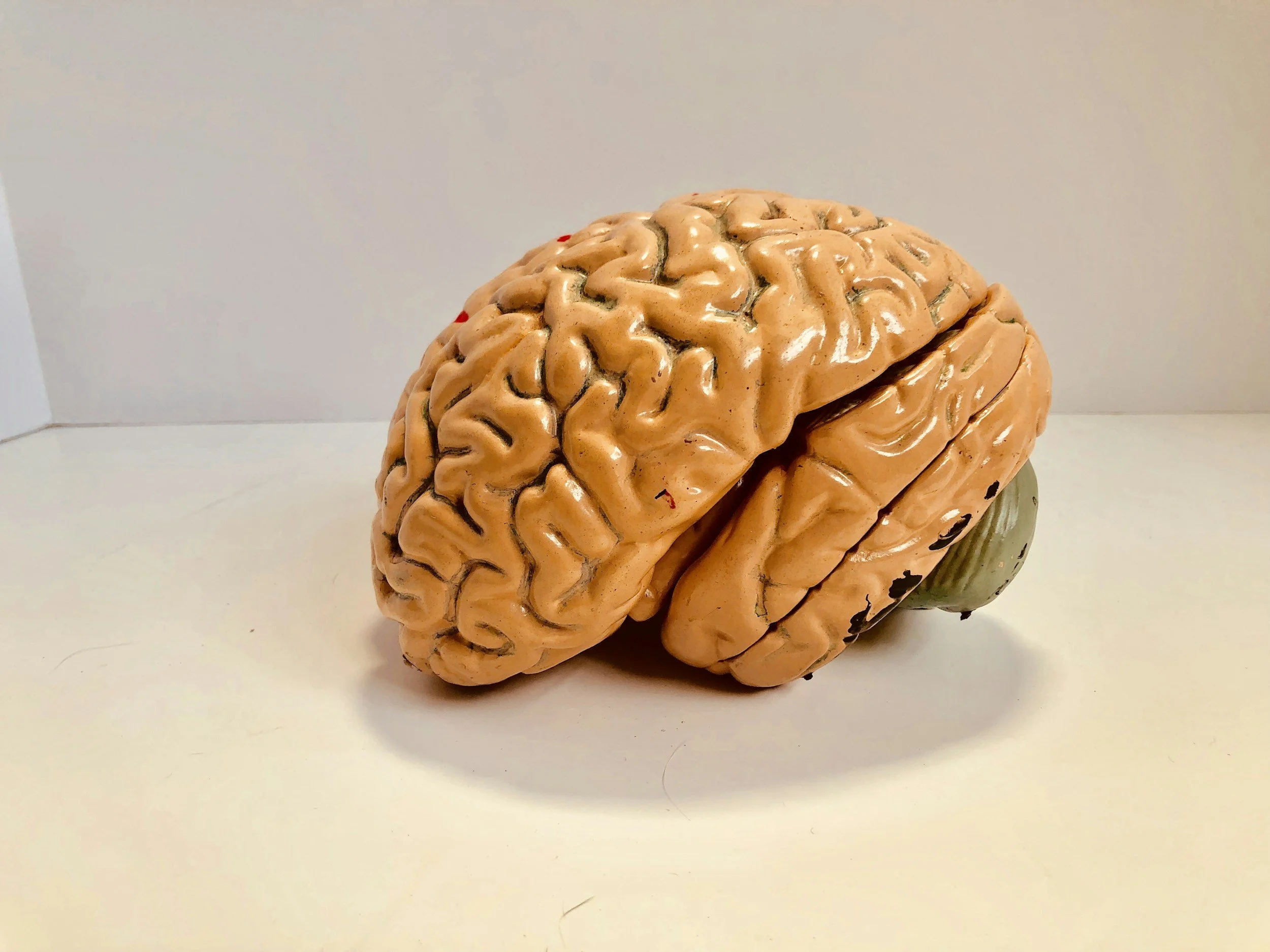
Ketamine works by temporarily quieting the Default Mode Network (DMN) — the part of the brain responsible for self-criticism, rumination, and looping thoughts.
When that constant mental noise softens, you can see yourself and your experiences differently. Old stories lose their grip. New perspectives emerge.
This isn’t just emotional — it’s biological. Ketamine increases levels of glutamate and BDNF (brain-derived neurotrophic factor), both of which boost neuroplasticity — your brain’s ability to form new, healthier pathways.
Think of it like a fresh layer of snow: old tracks (your automatic thoughts) fade, and new ones can be made.
For 1–3 days after a session, your brain remains especially open to learning and change — which is why integration therapy is so essential. Curious how KAP actually changes your brain? Here’s the neuroscience behind ketamine’s powerful healing effects -> How Ketamine Rewires the Brain for Healing.
How KAP Differs from Medical Ketamine Clinics
You may have heard of IV ketamine infusions or nasal sprays like Spravato®. These are medical treatments, typically provided in a doctor’s office without any psychotherapy component.
KAP, however, integrates medicine and meaning.
Here’s how they compare:
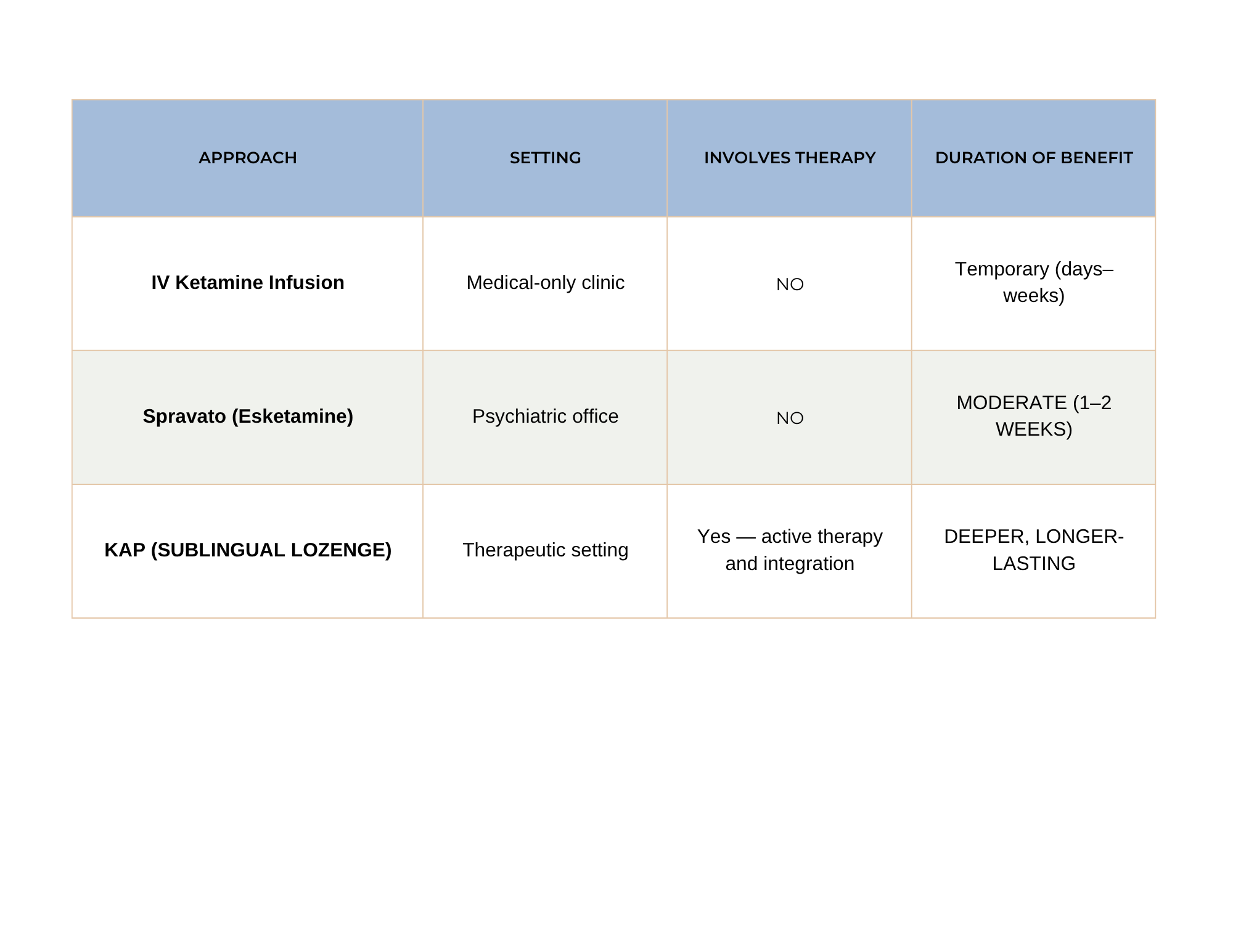
In KAP, the goal isn’t just symptom relief — it’s transformation. You’re not left alone to interpret your experience. You’re supported every step of the way. Not all ketamine treatments are the same. Learn how KAP differs from IV or medical-only ketamine clinics -> KAP vs. IV Ketamine Clinics: What’s the Difference?
What Conditions Can Ketamine Therapy Help Treat?
Research suggests that ketamine therapy may help individuals struggling with depression, anxiety, PTSD, trauma-related symptoms, burnout, grief, and emotional disconnection. While ketamine therapy is not a cure-all, many clients find that it helps them access emotions, memories, and insights that previously felt blocked. It’s also deeply meaningful for couples who are trying to reconnect after betrayal, infidelity, or years of disconnection. In my couples intensivesin Rancho Cucamonga, California, KAP can help partners move past defensiveness and fear, opening space for genuine empathy and healing. When the protective walls soften, it’s often the first time couples truly see each other again.
When combined with psychotherapy and thoughtful integration, ketamine therapy can create lasting changes in the way people relate to themselves, their emotions, and their relationships.
Who Shouldn’t Use KAP
While KAP is safe for most people, it may not be appropriate for those who:
Have uncontrolled high blood pressure or heart issues
Are pregnant or breastfeeding
Have a history of psychosis or bipolar mania
Recently experienced a traumatic brain injury
Before beginning ketamine therapy, I'll review your medical history and collaborate with a licensed prescriber to make sure it’s a safe fit.

What to Expect During Ketamine Therapy
Every KAP process unfolds in three intentional stages: preparation, dosing, and integration.
Preparation
Before any medicine is involved, we take time to build safety and clarity.
You’ll explore your intentions — what you hope to understand, release, or connect with.
We’ll talk through fears, set up your physical environment for comfort, and discuss how to support yourself emotionally before and after the experience.
This is also where we talk about “set and setting” — your mindset and environment. Both play a huge role in shaping the experience.
The Dosing Session
A dosing session usually lasts around three hours.
You’ll take your prescribed ketamine lozenge and rest comfortably with an eye mask and music that supports inward focus.
During this time, I’m there to hold therapeutic space — quietly ensuring safety, comfort, and presence. Some clients experience vivid imagery, emotional release, or deep peace. Others simply feel relaxed and reflective.
There’s no “right” way for a session to go. Whatever arises is welcomed with curiosity and compassion. Wondering what a KAP session actually feels like? Here’s what to expect from a Ketamine-Assisted Psychotherapy experience -> Ketamine therapy: what to expect during your first session.
Integration
This is where the real magic happens.
In the days after your session, we meet again to process what came up — emotionally, spiritually, or relationally. Integration helps connect the insights from your journey to meaningful changes in your everyday life.
We might use tools like Brainspotting, Internal Family Systems (IFS), or guided reflection to anchor those insights.
Without integration, the insights fade. With it, they become transformation. To learn more about the power of integration here -> Ketamine therapy: why integration is essential for healing.
Real Stories of Transformation
One client, a nurse in her 30s, came to KAP feeling exhausted and disconnected after years of people-pleasing and burnout. During her second session, she experienced a wave of compassion for her younger self — the little girl who had learned she had to be perfect to be loved.
Through integration, she began setting boundaries, taking rest seriously, and speaking to herself with gentleness instead of criticism.
Another couple came to me after infidelity had shaken their marriage. Despite months of therapy, they still couldn’t reconnect. Through KAP within their affair recovery intensive, each partner gained a deeper understanding of their pain — beyond blame. For the first time, they were able to speak to each other from empathy instead of defense.
That’s what KAP makes possible: healing at a deeper level that you feel in your brain, your body, and your nervous system. For many clients, KAP helps heal the root of anxiety — disconnection and unresolved attachment wounds. Read how KAP supports emotional reconnection -> Healing Attachment Trauma and Anxiety Through KAP.
The Research Behind Ketamine Therapy
Ketamine has been studied for over 50 years and is FDA-approved as an anesthetic. More recently, research has shown its remarkable effects on mood, trauma, and neuroplasticity.
Studies demonstrate that:
Ketamine increases glutamate and BDNF, supporting brain growth and resilience.
6–8 sessions often lead to significant reductions in depression and anxiety symptoms.
The effects can last for weeks to months — and when combined with psychotherapy, those benefits deepen and last even longer.
In other words, KAP isn’t just about temporary relief. It’s about rewiring your brain and emotions toward healing. For more information check out this post -> How Ketamine Therapy Rewires the Brain for Healing.
KAP as Part of Individual or Couples Intensives
At my practice in Rancho Cucamonga, California I offer both individual and couples intensives — immersive, extended sessions designed to create major breakthroughs in a shorter amount of time.
When combined with KAP, intensives allow us to go even deeper.
For individuals, KAP can help bypass mental resistance and access insight that traditional therapy can take months to reach.
For couples, it can quiet reactivity, allowing compassion and vulnerability to emerge.
Sometimes we begin an intensive with a KAP session to open the process, or integrate it midway to help digest emotional breakthroughs. The structure is always customized to your comfort level and goals.
Safety and Ethical Care
Client safety and ethical practice are at the heart of everything I do.
All KAP sessions are conducted in partnership with a licensed medical provider — typically through Journey Clinical, a trusted organization that specializes in medically supervised ketamine treatment for psychotherapy.
This means:
The medication is prescribed safely by a licensed prescriber.
Your vitals and health history are carefully reviewed.
I provide the therapeutic preparation, dosing support, and integration work.
This collaborative model ensures your emotional and physical well-being are equally cared for.
What Clients Often Notice After KAP
Most clients describe:
Feeling lighter, calmer, or more open
Relief from anxious or depressive thought loops
A deeper sense of self-compassion
Improved sleep and emotional regulation
More meaningful connection to themselves and others
For couples, there’s often a renewed sense of hope — a reminder that healing is possible even after deep pain.
Is Ketamine-Assisted Psychotherapy Right for You?
If you've been researching ketamine therapy because traditional approaches haven't created the change you're looking for, you're not alone. Many of the people I work with arrive feeling discouraged after years of therapy, medication, or personal development work that only partially addressed their pain.
Ketamine therapy offers an opportunity to access deeper healing by combining the neuroplastic effects of ketamine with the safety and guidance of psychotherapy. When paired with intentional preparation and integration, ketamine therapy can help create meaningful and lasting transformation.
Whether you’re an individual searching for peace or a couple wanting to rebuild trust and intimacy, I’d love to help you explore what’s possible through Ketamine-Assisted Psychotherapy in Rancho Cucamonga, California.
Ready to Begin?
If you’re curious about whether Ketamine therapy in California might be right for you, I invite you to schedule a free 15-minute consultation.
We’ll talk about your goals, answer your questions, and create a plan that supports your next steps — whether that’s individual therapy, a couples intensive, or integrating KAP into your healing journey.
Alicia Taverner, LMFT, is a licensed marriage and family therapist who helps couples heal after infidelity, years of resentment, and the exhaustion of feeling stuck in the same painful patterns.
Her work helps partners begin to understand each other again, rebuild appreciation, and create lasting change with a focused, supportive approach. Alicia uses brain based techniques, including Brainspotting and ketamine assisted psychotherapy, in an intensive format that gives couples more room to heal without the start and stop of weekly sessions.
Learn more about Alicia’s work with affair recovery intensives, relationship therapy, and ketamine therapy, or visit her About page.

Affair Recovery Therapist: How to find the right specialist in California
Choosing the right affair recovery therapist can make a significant difference in your healing journey after infidelity. Learn what qualifications, training, and experience matter most when selecting an affair recovery specialist in California.
Choosing the right affair recovery therapist is one of the most important steps in the healing process after infidelity. Once you decide you're ready to work through something so personal and painful, you want to be confident that you've found a therapist with the experience and expertise to guide you through it.
The aftermath of an affair can leave you feeling overwhelmed, confused, and unsure of where to begin. Without the support of a qualified affair recovery therapist, many couples find themselves stuck in cycles of conflict, unanswered questions, and ongoing pain. Finding the right therapist from the start can save valuable time, emotional energy, and frustration. Hiring the right person from the start will save you time, energy, and emotional strain. Here are some things to look for when researching the right therapist for an affair recovery intensive in California:
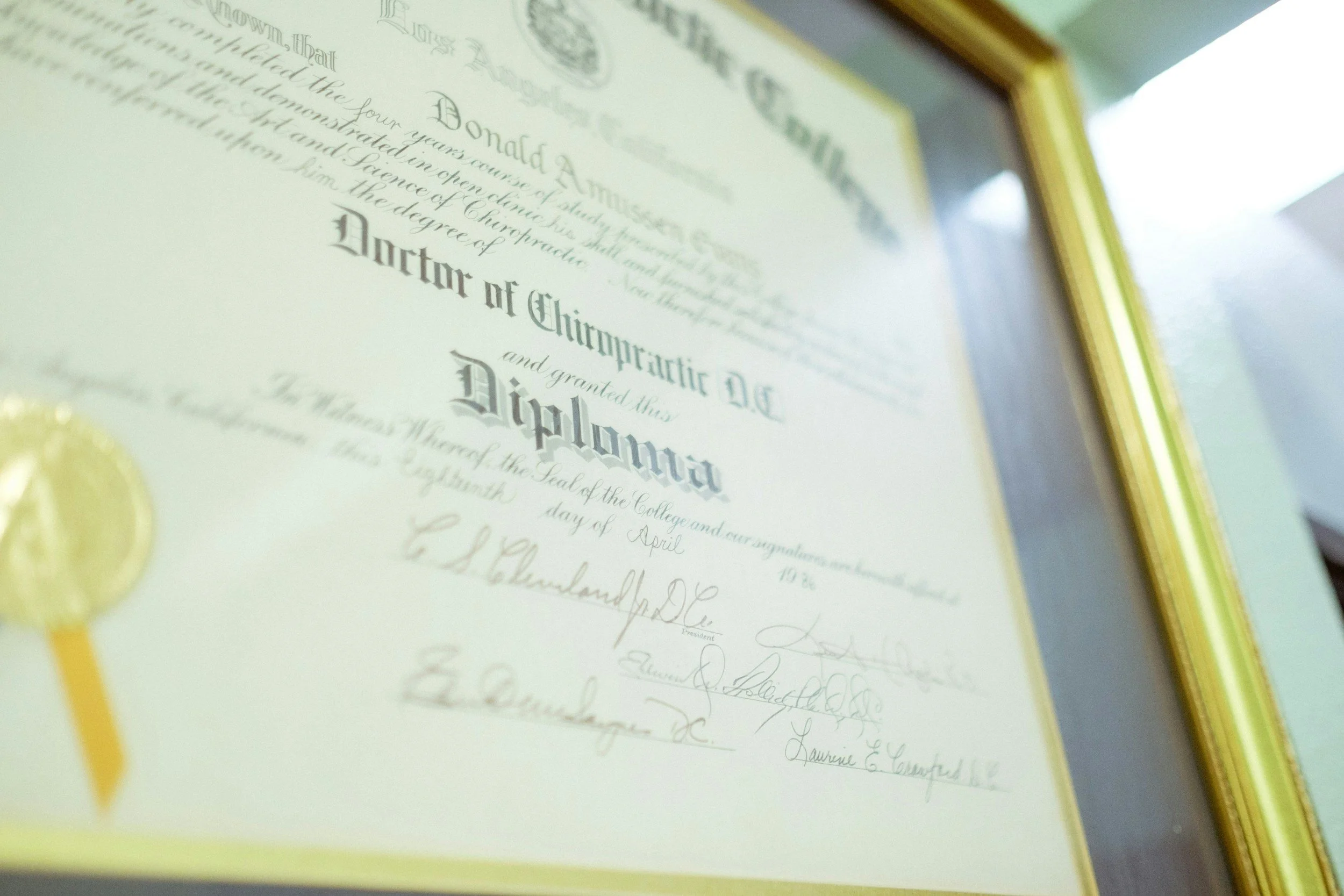
Qualifications to Look For in an Affair Recovery Therapist
The first thing you'll want to do is verify the therapist's licensure status. Working with a licensed mental health professional ensures you're receiving care from someone who has completed extensive education, clinical training, and supervised experience.
A Licensed Marriage and Family Therapist (LMFT), Licensed Clinical Social Worker (LCSW), Licensed Professional Clinical Counselor (LPCC), or Clinical Psychologist can all be excellent choices.
Beyond licensure, look for an affair recovery therapist who specializes in infidelity recovery, relationship trauma, and couples counseling. These specialties are often highlighted on a therapist's website. You can also learn a great deal about a therapist's approach through their blog posts, videos, podcasts, and educational resources.
Experience That Matters in Affair Recovery
Not all couples therapists specialize in affair recovery. Healing after infidelity requires a unique skill set and a deep understanding of betrayal trauma, attachment injuries, trust rebuilding, and relationship repair.
An experienced affair recovery therapist should have advanced training in evidence-based approaches such as:
Emotionally Focused Therapy (EFT)
Internal Family Systems (IFS)
The Gottman Method
Brainspotting
EMDR (Eye Movement Desensitization and Reprocessing)
Your therapist should have direct experience helping couples navigate the affair recovery process from crisis stabilization through trust rebuilding and reconnection. This expertise should be evident throughout their website, educational content, and client resources.
The Importance of Finding the Right Fit
Even the most qualified affair recovery therapist may not be the right fit for every couple. Once you've narrowed down your options, schedule a consultation to get a feel for the therapist's style, personality, and approach.

During the consultation, ask questions about their experience with affair recovery, how they structure intensives, what therapeutic methods they use, and what you can realistically expect from the process.
The conversation should leave you feeling understood, supported, and hopeful. Since you'll be sharing some of the most vulnerable moments of your relationship, it's important to work with an affair recovery therapist you trust and feel comfortable opening up to.
Final Thoughts
Finding the right affair recovery therapist isn't just about credentials—it's about finding someone who can help you make sense of the pain, navigate difficult conversations, and create a clear path toward healing.
A skilled affair recovery therapist can help you process betrayal trauma, rebuild trust, improve communication, and determine whether your relationship can move forward in a healthy way.
If you're looking for an experienced affair recovery therapist in California, an affair recovery intensive can provide focused support and faster progress than traditional weekly therapy.
Ready to learn more? Read my Ultimate Guide to Affair Recovery Intensives or schedule a consultation to explore whether an intensive is the right next step for your relationship.
Alicia Taverner, LMFT, is a licensed marriage and family therapist who helps couples heal after infidelity, years of resentment, and the exhaustion of feeling stuck in the same painful patterns.
Her work helps partners begin to understand each other again, rebuild appreciation, and create lasting change with a focused, supportive approach. Alicia uses brain based techniques, including Brainspotting and ketamine assisted psychotherapy, in an intensive format that gives couples more room to heal without the start and stop of weekly sessions.
Learn more about Alicia’s work with affair recovery intensives, relationship therapy, and ketamine therapy, or visit her About page.
Affair Recovery: Can a Relationship Survive Infidelity?
Discover how couples can rebuild trust and heal after an affair. Learn how affair recovery intensives and couples therapy in Rancho Cucamonga, CA can help you reconnect and find hope after betrayal.
There are so many questions that surface in the aftermath of discovering an affair. Whether you're the one who was betrayed or the one who strayed, it's completely normal to feel overwhelmed and fearful about what the future holds.
If you're wrestling with the decision to stay or go, you're probably wondering whether affair recovery is even possible. How can a relationship survive something so painful?
The truth is that many couples successfully navigate the affair recovery process and rebuild trust after infidelity. Some even go on to create a deeper, more honest, and more meaningful relationship than they had before the affair.
I know that might sound impossible right now, but stay with me. After more than a decade of helping couples through affair recovery and infidelity healing, I've seen firsthand that recovery is possible when both partners are willing to do the work.

The Impact of Betrayal on Both Partners
An affair is deeply painful for both partners.
If you’re the one who betrayed your partner, you’re probably carrying a heavy mix of guilt and shame for the hurt you’ve caused. While those emotions are completely normal, shame can be especially difficult to navigate—it convinces you that you’re a terrible person and pushes you to shut down or hide. The problem is, pulling away often makes things worse. To your betrayed partner, that distance can look like indifference or a lack of commitment to repairing the relationship, even when that’s the opposite of what you truly feel.
If you’re the one who has been betrayed, you likely have countless questions about how and why this happened. You may find yourself falling into unhealthy patterns of self-blame or anger—especially if you ignored your intuition when something felt “off.” You might feel buried under an avalanche of emotion and unable to see a path forward. But there is a path forward, and with the right support, you can move through these emotions and come out stronger on the other side.
Key Factors That Influence Affair Recovery After Infidelity
Several factors influence a couple's ability to successfully navigate affair recovery and rebuild trust after infidelity.
The first is commitment. If both partners are willing to show up for themselves and for each other—to do the hard work of understanding their contributions and patterns—healing and repair are absolutely possible.
Another key factor is transparency and accountability. If you can take an honest look at your behaviors and stay committed to developing a deeper understanding of yourself and your partner, surviving an affair is within reach.
While some couples attempt this on their own, working with a highly trained couples therapist in Rancho Cucamonga can save valuable time and energy. A skilled therapist can help you have the right conversations—ones that promote understanding, meaning, and long-term healing.
How Couples Therapy Supports Affair Recovery
Finding a therapist who’s a good fit for both of you is crucial. They should be trained specifically in couples therapy and infidelity recovery, and create a safe, supportive space for processing painful emotions like anger, grief, and shame.
In my work with affair recovery intensives in Rancho Cucamonga, I use brain-based techniques such as Brainspotting
and Internal Family Systems (IFS) to help clients understand and heal the parts of themselves that hold onto difficult emotions. I guide couples from being “in their heads” to processing emotions in the body—safely and without causing additional harm.
Clients often carry judgment about their emotional responses, saying things like, “I shouldn’t be angry about this anymore,” or “I don’t want to be an angry person.” But judgment keeps emotions stuck. By learning to experience emotions—like anger or sadness—directly in the body without labeling them as “good” or “bad,” clients discover that these feelings naturally rise and fall. That’s where real healing begins.
Working with an experienced affair recovery therapist can help couples move through the confusion and pain that often follows infidelity. The early stages of affair recovery are often filled with unanswered questions, intense emotions, and repeated conflicts that can leave couples feeling stuck.
One of the biggest misconceptions about affair recovery is that healing happens when couples simply stop talking about the affair. In reality, successful affair recovery requires creating enough safety to understand what happened, process the trauma of betrayal, rebuild trust, and develop new ways of connecting. Avoiding the pain rarely leads to healing. Working through it together often does.
When Affair Recovery Isn’t the Goal
There are times when affair recovery isn’t the goal—and that truth often becomes clear during the therapy process.
Separation or divorce may be the healthiest option when:
One partner is unwilling to be transparent or take responsibility for their actions
One or both partners become volatile or abusive
There are ongoing patterns of manipulation or control
When staying together isn’t possible, an individual intensive can be incredibly beneficial. It can help you process the end of the relationship, heal emotionally, and gain clarity about the deeper patterns that led you here—so you don’t repeat them in future relationships. While many couples are able to experience meaningful affair recovery, there are situations where repairing the relationship may not be the healthiest path forward.
Stories of Hope After Affair Recovery
Over the years, I've worked with many couples who have successfully completed the affair recovery process. Those who stay committed to the work—taking responsibility, remaining curious about their relationship patterns, and learning how to rebuild trust—often emerge saying that while the experience was incredibly painful, it ultimately transformed their relationship.
They describe a renewed sense of connection, trust, and commitment—and feel equipped with the tools to keep growing together.
The Bottom Line: Affair Recovery Is Possible
It's normal to wonder if your marriage can survive after betrayal. The truth is that many couples successfully move through affair recovery and create a stronger, more connected partnership than ever before. Others decide to separate, but they do so with greater clarity, healing, and understanding rather than remaining trapped in unresolved pain.
No matter where your journey leads, you don't have to navigate it alone. Working with an experienced affair recovery therapist can help you understand what happened, process the trauma of infidelity, and determine the best path forward for your relationship.
Ready to begin your affair recovery journey?
My Affair Recovery Intensives in Rancho Cucamonga help couples move beyond the endless cycle of arguments, questions, and uncertainty. Together, we'll create a structured path toward healing, rebuilding trust, and determining whether your relationship can become stronger after infidelity.
👉 Learn more Affair Recovery Intensive in California: A Complete Guide to Healing After Infidelity and take the first step toward healing.
Alicia Taverner, LMFT, is a licensed marriage and family therapist who helps couples heal after infidelity, years of resentment, and the exhaustion of feeling stuck in the same painful patterns.
Her work helps partners begin to understand each other again, rebuild appreciation, and create lasting change with a focused, supportive approach. Alicia uses brain based techniques, including Brainspotting and ketamine assisted psychotherapy, in an intensive format that gives couples more room to heal without the start and stop of weekly sessions.
Learn more about Alicia’s work with affair recovery intensives, relationship therapy, and ketamine therapy, or visit her About page.
Affair Recovery: The 3 Phases of Healing After Infidelity
Affair recovery is a process of rebuilding trust, healing emotional wounds, and creating a stronger relationship after infidelity. Learn the three phases of recovery and how affair recovery intensives can help couples heal faster.
When you discover that your partner has had an affair, it can feel like your world is ending. The relationship you thought you had suddenly feels like a lie. The shock, grief, anger, and uncertainty that follow can leave you wondering whether healing is even possible.
If you've decided to stay together and work toward healing, understanding the phases of affair recovery can help you make sense of what you're experiencing. While every couple's journey is unique, most successful affair recovery follows a predictable path. Knowing what to expect can help you move forward with greater clarity and hope.

Phase 1: Atonement in Affair Recovery
The first phase of affair recovery, based on the research of Drs. John and Julie Gottman, is the Atonement Phase. This is where couples begin the difficult work of rebuilding trust through complete honesty, transparency, and accountability.
If you've been betrayed, you'll likely need answers about what happened. Some people want every detail of the affair, while others prefer only a general understanding. There is no right or wrong approach—what matters is that you receive enough information to make sense of what happened and begin healing after infidelity.
If you're the partner who had the affair, this phase requires deep self-reflection and a willingness to be fully transparent. Many people try to protect their partner by sharing only pieces of the truth. Unfortunately, partial disclosures often create additional trauma when new information emerges later.
In affair recovery, atonement is about much more than saying "I'm sorry." It involves demonstrating genuine empathy, taking responsibility for the pain caused, and consistently showing up in ways that help your partner feel emotionally safe.
This phase can be emotionally exhausting. One day you may feel hopeful about your future together, and the next you may question everything. These ups and downs are a normal part of the affair recovery process.
Phase 2: Attunement and Rebuilding Trust After Infidelity
The Attunement Phase focuses on restoring emotional safety and rebuilding connection. During this stage of affair recovery, couples begin exploring the relationship dynamics that existed long before the affair occurred.
While the affair itself was a choice made by one partner, many couples discover that emotional disconnection, unresolved conflicts, unmet needs, or attachment wounds had been creating distance for years.
As trust begins to rebuild, open communication becomes essential. Partners learn to discuss difficult emotions without becoming defensive or shutting down. They begin expressing their needs more clearly and responding to each other with greater empathy.
Many betrayed partners initially struggle with exploring these deeper relationship patterns because it can feel like shifting responsibility away from the partner who had the affair. However, understanding the relationship dynamics that existed before the betrayal is an important part of long-term affair recovery.
As both partners develop greater awareness of their attachment styles, emotional triggers, and communication patterns, they begin creating the emotional intimacy necessary for lasting healing.

Phase 3: Attachment and Long-Term Affair Recovery
The final stage of affair recovery is the Attachment Phase. This is where couples create a renewed sense of commitment and connection based on a deeper understanding of each other.
By this point, you've worked through much of the pain and uncertainty that dominated the early stages of recovery. You've learned how to communicate more openly, respond to each other's needs more effectively, and maintain emotional closeness even during difficult conversations.
Rather than simply trying to "get back to normal," many couples find that successful affair recovery helps them create a stronger relationship than the one they had before the betrayal occurred.
The goal isn't to erase what happened. The goal is to integrate the experience into your story, rebuild trust after infidelity, and create a relationship that feels secure, connected, and resilient.
The conversations that take place throughout these phases are often lengthy, emotional, and sometimes explosive. Many couples struggle to make consistent progress due to time constraints or emotional fatigue. That’s where affair recovery intensives can be especially valuable.
Why Affair Recovery Intensives Can Accelerate Healing
The conversations required for successful affair recovery are often lengthy, emotional, and difficult to fit into traditional 50-minute therapy sessions. Many couples spend months in weekly therapy feeling like they're only scratching the surface.
An affair recovery intensive provides the dedicated time, structure, and professional support needed to move through these phases more effectively. Instead of stopping and starting each week, couples can stay engaged in the work long enough to reach meaningful breakthroughs.
During an affair recovery intensive, you'll have the opportunity to:
Understand what happened and ask difficult questions in a structured environment.
Learn how to rebuild trust after infidelity.
Identify the attachment patterns that contributed to disconnection.
Develop healthier communication skills.
Create a clear roadmap for ongoing affair recovery and healing.
Many couples accomplish more in a few focused days than they would in months of traditional weekly therapy.
Healing After Infidelity Is Possible
Recovering from an affair isn't about forgetting what happened or pretending the pain doesn't exist. True affair recoveryinvolves moving through the phases of Atonement, Attunement, and Attachment with honesty, compassion, and support.
While the journey can feel overwhelming, many couples emerge from affair recovery with a deeper understanding of themselves, a stronger emotional connection, and renewed hope for the future.
Ready to Begin Your Affair Recovery Journey?
If you're struggling to rebuild trust after infidelity, an affair recovery intensive can provide the focused support needed to help you move forward.
Explore my guide to Affair Recovery Intensives in California and learn how intensive couples therapy can help you heal, reconnect, and create a stronger relationship after betrayal.
Recovering from infidelity isn’t about rushing through the pain or pretending it didn’t happen. It’s about honoring each phase—Atonement, Attunement, and Attachment—so you can move forward with clarity, connection, and hope. 🌱
While the journey can feel overwhelming, having the right structure and support can make all the difference.
👉 Ready to take a deeper dive?
Read Affair Recovery: What to expect in a 3-day Intensive in California to see how focused, compassionate therapy can help you rebuild trust and connection after betrayal.
Alicia Taverner, LMFT, is a licensed marriage and family therapist who helps couples heal after infidelity, years of resentment, and the exhaustion of feeling stuck in the same painful patterns.
Her work helps partners begin to understand each other again, rebuild appreciation, and create lasting change with a focused, supportive approach. Alicia uses brain based techniques, including Brainspotting and ketamine assisted psychotherapy, in an intensive format that gives couples more room to heal without the start and stop of weekly sessions.
Learn more about Alicia’s work with affair recovery intensives, relationship therapy, and ketamine therapy, or visit her About page.