
Blog
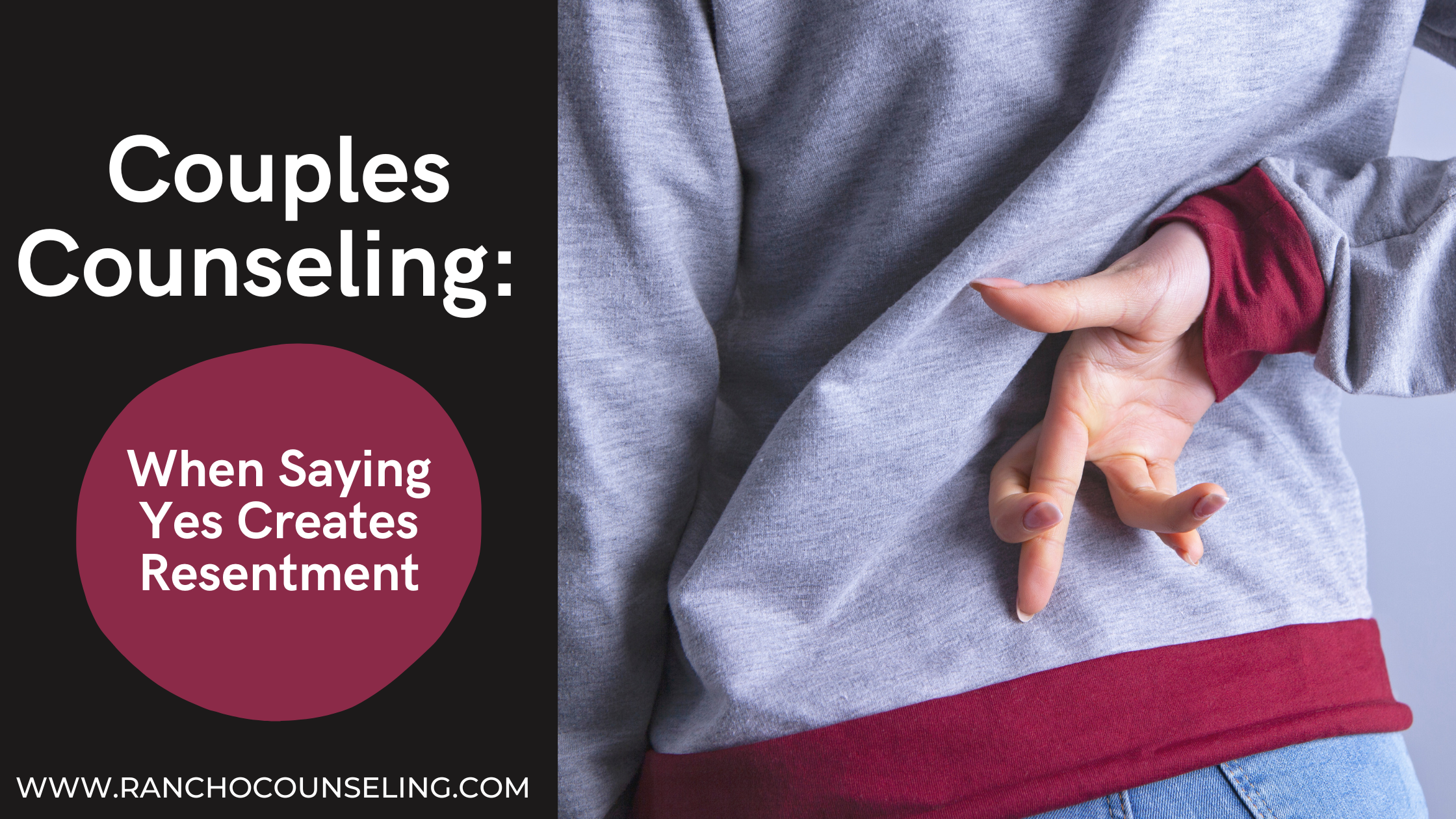
Couples Counseling: When Saying Yes Creates Resentment
Are you saying yes when you really mean no? Avoiding conflict may feel easier in the moment, but it often creates resentment and emotional distance. Learn how couples counseling can help you communicate more honestly and strengthen your relationship.

The other day, my 6-year-old daughter asked me to do a craft with her. I had a whole list of to-dos that I wanted to get done that day, and I knew if I didn’t get started early, I’d never complete all the things on my list.
She begged and pleaded with me, and I gave in. We made an origami sword that she ended up being obsessed with. She said it made her feel so powerful.
I wish I could say it was a great activity and that it was totally worth pushing off my to-do list for.
But unfortunately, that wasn’t the case.
She asked me to do a craft with her, but I ended up doing it for her. She did some cutting and project management, but it was an involved process that included many folds, multiple papers, and a glue gun. It was not something she could have completed on her own.
I begrudgingly folded and glued, and even though she came with excitement and encouragement, I was resentful.
I felt the annoyance radiating through my body, and it didn’t allow me to show up with an open heart. I was short and uninterested. It wasn’t what she deserved. It wasn’t even her fault. It was mine.
I had said yes when I meant no.
The entire project took maybe 30 minutes, but the entire time I was distracted thinking about what I needed to get done before we headed out on our camping trip the next day. I was grumpy and didn’t appreciate her enthusiasm and sweetness.
When it was finished, I totally regretted my withdrawn attitude.
That’s not how I want to show up in my relationship with her.

How Avoiding Conflict Creates Resentment in Relationships
That’s not how any of us should show up in our relationships, but it’s how I see so many couples show up toward one another.
As a therapist who provides couples counseling, I often see resentment growing when people say yes when they really mean no. We convince ourselves we're being kind, accommodating, or keeping the peace. But underneath the surface, resentment begins to build.
And when we feel resentful, it impacts our mood, our communication, and the way we approach the people we love most.
I was withdrawn with my daughter and unappreciative of her excitement.
How many times have you begrudgingly attended an event with your partner and looked for any reason not to have a good time?
You might drag your feet and show up late. You might nitpick the food, criticize the company, or find fault with your partner throughout the evening.
When we say yes when we mean no, it often leads to passive-aggressive behavior, emotional distance, and resentment. Ironically, the very conflict we were trying to avoid often becomes much bigger later.
Why Couples Avoid Difficult Conversations

So why do we do it?
Most people do it to avoid conflict.
Many people also do it because they don't want to disappoint their partner. Others do it because they feel guilty about something that happened in the relationship and believe they need to make up for it by always saying yes.
This is especially common after a betrayal, breach of trust, or major relationship conflict.
If you feel like you have to go along with whatever your partner wants because you made a mistake in the past, there is really no amount of people-pleasing or good deeds that will repair the relationship.
Healthy relationships aren't built on obligation.
They're built on honesty, authenticity, and open communication.
What Couples Counseling Teaches About Healthy Communication
One of the goals of couples counseling is helping partners communicate honestly without fear of conflict.
Conflict itself isn't the problem.
In fact, healthy conflict can lead to deeper intimacy, greater understanding, and stronger emotional connection.
The real problem is when couples avoid difficult conversations altogether.
When you continually suppress your feelings, avoid expressing your needs, or agree to things you don't actually want, resentment begins to take root. Over time, resentment can create emotional distance, increase defensiveness, and leave both partners feeling misunderstood.
Learning to say:
"I don't have the capacity for that right now."
"Can we find a compromise?"
"I want to support you, but I also need to be honest about what I'm feeling."
These conversations may feel uncomfortable in the moment, but they create much more connection than silently carrying resentment.
Couples Counseling Can Help You Stop Avoiding Conflict
If you find yourself avoiding difficult conversations, walking on eggshells, or struggling to express your needs, it may be time to take a closer look at what's happening beneath the surface.
You aren't showing up authentically, and you're doing a disservice to both your partner and the relationship.
Often, it's a sign that important issues aren't being addressed through open dialogue. Healing happens when both partners feel safe enough to be honest about their needs, disappointments, fears, and desires.
Sometimes that healing comes from doing your own inner work. Sometimes it comes from working together with a trained therapist through couples counseling.
The good news is that it's never too late to start having the conversations you've been avoiding.
If you're ready for a fresh start and want to improve communication, resolve resentment, and strengthen your relationship, we're here to help.
Schedule a free 15-minute phone consultation to learn more about couples counseling, relationship therapy, and intensive couples therapy options available in Rancho Cucamonga, Temecula, or online throughout California.
Alicia Taverner, LMFT, is a licensed marriage and family therapist who helps couples heal after infidelity, years of resentment, and the exhaustion of feeling stuck in the same painful patterns.
Her work helps partners begin to understand each other again, rebuild appreciation, and create lasting change with a focused, supportive approach. Alicia uses brain based techniques, including Brainspotting and ketamine assisted psychotherapy, in an intensive format that gives couples more room to heal without the start and stop of weekly sessions.
Learn more about Alicia’s work with affair recovery intensives, relationship therapy, and ketamine therapy, or visit her About page.

Exploring Ketamine Therapy in Southern California: A Comprehensive Guide
Ketamine therapy is gaining attention across Southern California as an innovative treatment for depression, anxiety, PTSD, and emotional trauma. While many people experience rapid symptom relief, lasting change often depends on proper preparation and integration. Learn the difference between ketamine therapy and Ketamine Assisted Psychotherapy (KAP), what to look for in a provider, and how this powerful treatment can support deeper healing and transformation.
Ketamine Therapy and Why It's Gaining Attention
Southern California, renowned for its sunny beaches and vibrant lifestyle, is not immune to the challenges of depression, anxiety, PTSD, and emotional trauma. As more people search for effective alternatives to traditional treatments, ketamine therapy has emerged as a promising option for those seeking relief and lasting change.
Ketamine clinics have become increasingly common throughout Southern California, offering treatment for depression, anxiety, PTSD, and other mental health concerns. Research from leading institutions has demonstrated that ketamine therapy can provide rapid symptom relief, particularly for individuals struggling with treatment-resistant depression.
While many people experience significant improvement after ketamine therapy, the medicine itself is only one piece of the healing process. Without proper therapeutic support and integration, the transformative potential of ketamine therapy may not fully translate into meaningful, lasting changes in everyday life.
In a ketamine therapy session, the medication is administered through an IV infusion, lozenge, or nasal spray. The effects typically begin quickly and can last anywhere from 45 minutes to two hours, depending on the method of administration. Many people describe the experience as dream-like, introspective, and emotionally expansive.
Why Integration Matters
One of the most overlooked aspects of ketamine therapy is integration.
Integration is the process of making sense of the thoughts, emotions, memories, and insights that emerge during a ketamine experience. Without integration, the experience may remain just that—an interesting experience.
With proper integration, ketamine therapy can become a catalyst for meaningful personal growth and emotional healing. Integration helps anchor the experience in both the brain and body, allowing insights gained during treatment to influence daily behaviors, relationships, and emotional well-being long after the medicine has worn off.
This is where many ketamine clinics and Ketamine Assisted Psychotherapy (KAP) providers differ.
Ketamine Therapy vs. Ketamine Assisted Psychotherapy
Ketamine Assisted Psychotherapy combines ketamine therapy with the support of a licensed psychotherapist before, during, and after treatment.
Rather than focusing solely on symptom reduction, KAP uses the ketamine experience as part of a larger therapeutic process designed to create lasting transformation. The therapeutic relationship provides guidance, support, and structure, helping clients make sense of their experiences and apply what they learn to their lives.
If you are considering Ketamine Assisted Psychotherapy, there are several important questions to ask:
• How do you determine whether the therapist and client are a good fit?
• How will the ketamine be administered?
• What is the process for obtaining the medication?
• What does the preparation and integration process look like?
Not all ketamine therapy providers offer preparation and integration support. If your goal is long-term healing rather than temporary symptom relief, understanding the therapist's process is essential.
I always recommend taking time to establish a strong therapeutic relationship before the first ketamine journey. Building trust and safety creates a stronger foundation for meaningful therapeutic work.

Choosing the Right Ketamine Therapy Provider
Choosing between ketamine therapy and Ketamine Assisted Psychotherapy depends on your goals.
If you're looking for rapid symptom relief, ketamine therapy may be an excellent option. If you're seeking deeper emotional healing, trauma resolution, and lasting change, Ketamine Assisted Psychotherapy offers a more comprehensive approach that combines the benefits of ketamine therapy with the power of psychotherapy and integration.
If you're exploring ketamine therapy in Southern California and aren't sure where to start, we're here to help. We offer a free 15-minute consultation to answer your questions, discuss your goals, and help determine whether Ketamine Assisted Psychotherapy is the right fit for your healing journey.
Whether you're struggling with depression, anxiety, trauma, or feeling stuck in traditional therapy, ketamine therapy may offer a new path toward hope, healing, and lasting transformation.
Alicia Taverner, LMFT, is a licensed marriage and family therapist who helps couples heal after infidelity, years of resentment, and the exhaustion of feeling stuck in the same painful patterns.
Her work helps partners begin to understand each other again, rebuild appreciation, and create lasting change with a focused, supportive approach. Alicia uses brain based techniques, including Brainspotting and ketamine assisted psychotherapy, in an intensive format that gives couples more room to heal without the start and stop of weekly sessions.
Learn more about Alicia’s work with affair recovery intensives, relationship therapy, and ketamine therapy, or visit her About page.
Navigating Matthew Perry's Tragic Incident: Debunking Media Sensationalism
Analyzing the Circumstances: Accurate Information Amidst Sensationalism
Over the weekend, various media outlets reported the unfortunate passing of Matthew Perry, attributing it to the acute effects of ketamine. In the midst of mourning, it is crucial to sift through the sensationalism often presented for clickbait and ratings, ensuring accurate information reaches the public.
Matthew Perry's Ketamine Infusion Treatments: Setting the Record Straight
Understanding the Treatment Journey: Ketamine Infusion Insights
Contrary to initial reports, Matthew Perry was undergoing ketamine infusion treatments, likely administered in a Los Angeles clinic. However, critical details emerge when examining the reported ketamine levels in his system, suggesting an "anesthetic level" that demands closer scrutiny.
Deciphering "Anesthetic Level": Unveiling the Truth About Ketamine's Effects
The Critical Distinction: Unpacking the Anesthetic Level
Matthew Perry was said to have been receiving ketamine infusion treatments from a clinic, likely in Los Angeles.
However, the amount of ketamine that was reported to have been found in his system was reported to be an “anesthetic level.”
An anesthetic level means simply that you are anesthetized and will not be able to deal consciously with circumstances. Ketamine takes a bit of time to have its effect—seconds to minutes—sufficient time to make a mistake and then subsequently become unconscious.
Matthew likely procured ketamine illegally as the timeline between his last treatment and his death do not align. He used an anesthetic level of the drug and then tragically got into a hot tub.
Ketamine-Assisted Psychotherapy (KAP): A Ray of Hope Amidst Tragedy
The Transformative Potential: KAP as a Mental Health Treatment
Despite this tragic incident, there is substantial evidence supporting Ketamine-Assisted Psychotherapy (KAP) as a transformative and life-changing treatment for mental health conditions. This section emphasizes the importance of delivering KAP safely and responsibly, within a therapeutic container supervised by licensed professionals.
Ensuring Client Safety: The Collaborative Approach with Journey Clinical
Journey Clinical has developed a collaborative care model to prioritize improving clinical outcomes with robust patient safety policies and procedures to ensure the highest standard of care and reduce the likelihood of potential negative outcomes and adverse events.
As stated in their patient safety policies and procedures, Journey Clinical’s approach to care includes:
KAP is done solely in the context of a therapeutic alliance between patients and trained, licensed mental health professionals supported by an entire team of highly trained and experienced medical professionals.
During Journey Clinical's rigorous intake process, they clearly communicate the potential risks and side effects of the drug. In addition, their medical team screens for patient medical history (including substance abuse) to make informed decisions on their eligibility for KAP.
Finally, the requirement to book a follow-up consultation to receive a new prescription is designed to ensure compliance with our KAP protocols.
As such, 93% of Journey Clinical patients who have seen our prescribers three times to date have seen improvements in their outcomes.
I remain very confident in Journey Clinical's collaborative care model, protocols, policies, and procedures. I encourage you to read their commitment to patient safety here: https://www.journeyclinical.com/ourpatientcommitment/. If you have any additional questions or concerns about this matter, I encourage you to email me at any time.

Marriage Counseling Rancho Cucamonga: Frequently Asked Questions
Searching for marriage counseling in Rancho Cucamonga? Learn what to expect, including fees, insurance, session frequency, and how long therapy takes.

If you're searching for marriage counseling in Rancho Cucamonga, you're likely already aware of how difficult relationship struggles can be. Living in Rancho Cucamonga offers access to incredible restaurants, shopping, outdoor activities, and family experiences. But when you and your spouse find yourselves stuck in the same painful patterns, it can be hard to enjoy any of it.
When couples begin searching for marriage counseling in Rancho Cucamonga, they often discover that there are many talented therapists and marriage counselors to choose from. But after finding a potential therapist, the next step isn't always clear.
You probably have a lot of questions—and that's completely normal.
Not knowing what to ask can sometimes cause couples to put off getting help altogether. My hope is that this guide will answer some of the most common questions about marriage counseling in Rancho Cucamonga so you can move forward feeling informed and confident.
Below are some of the questions I hear most often from couples considering marriage therapy.

What Is the Fee for Marriage Counseling in Rancho Cucamonga?
Q. What is the fee for marriage counseling sessions?
A. In my practice, the fee for each 50-minute individual or couples session is $350. For couples who prefer longer sessions and want more time for deeper work, I also offer 100-minute sessions for $700.
When researching marriage counseling in Rancho Cucamonga, you'll find that fees vary based on factors such as session length, therapist experience, specialized training, and the type of therapy being provided.
Investing in marriage counseling is an investment in the health of your relationship and family. Many couples find that dedicating time and resources to strengthening their relationship positively impacts every area of their lives.
How Often Should We Attend Marriage Counseling Sessions?
Q. How often should we come to marriage counseling sessions?
A. In my experience, consistency is one of the most important factors in creating lasting change in your relationship.
Many couples begin with weekly 50-minute sessions, especially if they are feeling disconnected, struggling with communication, or wanting support as they navigate ongoing relationship challenges. Weekly sessions help couples build momentum, practice new skills, and address issues before they become larger problems.
I also offer 100-minute extended sessions, which many couples choose to attend every other week. These longer sessions allow us to move beyond simply catching up on the events of the week and provide more uninterrupted time for deeper exploration, emotional processing, and meaningful relationship work.
By the time many couples seek marriage counseling in Rancho Cucamonga, they are often feeling overwhelmed, disconnected, or stuck in painful patterns and are ready for meaningful change. Whether you choose weekly 50-minute sessions or bi-weekly 100-minute sessions, regular attendance is essential to making progress.
For couples recovering from infidelity, betrayal, or other significant trust violations, I highly recommend a couples intensive rather than traditional weekly therapy alone. After an affair, couples are often in crisis and need more support than a 50-minute session can provide. Intensive sessions offer extended, uninterrupted time to begin stabilizing the relationship, process the betrayal, answer important questions, and start rebuilding safety and trust. Many couples find that this format allows them to make meaningful progress in days rather than months.
Throughout the counseling process, we will continually evaluate how things are going and determine together when sessions can become less frequent. As couples begin experiencing relief, strengthening their connection, and meeting their treatment goals, many transition to maintenance sessions as needed.
The frequency that works best for your relationship depends on your goals, schedules, and the intensity of the issues you are facing. During your consultation, we can discuss which format may be the best fit for your unique situation.
How Long Does Marriage Counseling Take?
Q. How long should we continue to come to marriage counseling sessions?
A. Every relationship is unique, and the length of treatment depends on your goals, the depth of the hurt, and your commitment to the healing process.
Most couples participate in therapy anywhere from 8 to 20 sessions. However, in my practice, I encourage couples to plan on participating in marriage counseling for at least six months.
This recommendation is not arbitrary. Lasting change in relationships takes time.
During the early stages of counseling, couples often focus on behavioral changes and communication skills. Because both partners are motivated and hopeful, relationship satisfaction frequently improves quickly.
However, behavior changes alone only go so far.
Eventually, most couples begin slipping back into familiar patterns. This is often the point when people wonder if therapy is working.
In reality, this is where some of the most important work begins.
At this stage, we begin exploring the underlying attachment wounds, unresolved trauma, family-of-origin experiences, and emotional triggers that influence how each partner shows up in the relationship. When couples are willing to engage in this deeper work, true transformation can occur.
This is often where the real magic of marriage counseling in Rancho Cucamonga happens.
Does Insurance Cover Marriage Counseling?
Q. What if I want to use my insurance?
A. In our practice, we intentionally keep marriage counseling separate from insurance companies whenever possible.
We have found that couples often make more meaningful progress when treatment decisions are made collaboratively between the therapist and clients rather than being directed by an insurance company.
Insurance companies frequently determine the number of sessions allowed and often require a mental health diagnosis in order to provide reimbursement. We do not believe that relationship distress necessarily requires a mental health diagnosis in order for effective treatment to occur.
While we do not bill insurance directly, we can provide a superbill or receipt that some PPO insurance plans may reimburse.
Working outside of insurance allows clients greater privacy, flexibility, and control over their healing process while allowing us to focus our energy where it belongs—on providing excellent care.
If using insurance is important to you, that is completely understandable. Before beginning therapy, we recommend contacting your insurance provider to determine whether marriage counseling or couples therapy is covered and requesting a list of in-network providers.
Doing this ahead of time can help avoid unexpected costs later.
Finding the Right Marriage Counselor in Rancho Cucamonga
Choosing the right therapist is one of the most important decisions you can make for your relationship. The connection you have with your therapist matters, so don't be afraid to ask questions and find someone who feels like the right fit.
I hope these answers have helped you better understand what to expect from marriage counseling in Rancho Cucamonga.
If you're still feeling unsure about where to begin, I invite you to schedule a free 15-minute phone consultation. I'd be happy to learn more about your relationship, answer your questions, and help you determine whether we are a good fit for working together.
Ready to get started with marriage counseling in Rancho Cucamonga? Call (909) 600-0306 or schedule your free consultation today.
Alicia Taverner, LMFT, is a licensed marriage and family therapist who helps couples heal after infidelity, years of resentment, and the exhaustion of feeling stuck in the same painful patterns.
Her work helps partners begin to understand each other again, rebuild appreciation, and create lasting change with a focused, supportive approach. Alicia uses brain based techniques, including Brainspotting and ketamine assisted psychotherapy, in an intensive format that gives couples more room to heal without the start and stop of weekly sessions.
Learn more about Alicia’s work with affair recovery intensives, relationship therapy, and ketamine therapy, or visit her About page.
When Marriage Feels Hopeless: How Couples Counseling Rancho Cucamonga Can Help
Feeling hopeless in your marriage? You're not alone. Many couples find themselves trapped in painful cycles of conflict, disconnection, and resentment. Learn how couples counseling in Rancho Cucamonga can help you break unhealthy patterns, improve communication, and reconnect with your partner.

When that rage burns through your body like a dragon breathing fire because you feel like your partner is never going to get it, do you feel like just burning it all down?
Do you want to throw in the towel and wave your white flag?
Do you feel like locking the front door and simply walking away?
If so, you're not alone.
As a therapist providing couples counseling Rancho Cucamonga, I meet with many couples who arrive feeling exactly this way.
I know it feels like things will never get better.
I know these cycles can leave you feeling paralyzed and withdrawn. They make it hard to focus on your work, your children, and the life you've worked so hard to build.
That feeling is terrible—feeling so stuck and not knowing what to do next. The guilt. The shame. The exhaustion.
You can go back and fight it out again, or you can retreat and try to soothe yourself with the usual distractions: social media, shopping, drinks with friends, or maybe another trip to the gym.
For a little while, these things help you forget about the rage, sadness, and disappointment of finding yourself in the exact same place you've been for far too long.
But those coping strategies are only temporary.
When Disconnection Takes Over
Deep down, you know this isn't how you truly want to live.
You don't want to feel numb and disconnected from your partner. You don't want to miss out on your children's lives because you're emotionally exhausted. You don't want to hand them another screen because you simply don't have the energy to engage the way you'd like.
I'm not judging you.
I know you're doing the best you can right now.
But I also know you're capable of so much more.
I want to remind you of a couple of things.
First, you're still in this relationship for a reason—probably several reasons.
Maybe it's your children. Maybe it's the life you've built together. Maybe it's the love that still exists beneath all the hurt and resentment.
Those things matter.
If they didn't, you probably wouldn't be searching for marriage counseling Rancho Cucamonga or looking for answers online.
I also want to remind you of another time in your relationship.
You can probably remember a season when you felt deeply connected to your partner. A time when you were in love and filled with hope and excitement for the future.
Right now, it may be difficult to even remember what life felt like before all the fighting.
But not being able to remember doesn't mean those moments never existed.
It simply means you're exhausted from riding the merry-go-round of conflict.
The Negative Cycle Many Couples Experience
Does this sound familiar?
You blow up.
You push each other away.
Someone gives the silent treatment.
Eventually, because of children, schedules, or shared responsibilities, you begin speaking again.
Someone extends an olive branch.
Things return to "normal"—until the next argument.
And then the cycle starts all over again.
I know these cycles well because I hear them every single day in my practice.
When couples walk into my office for the first time, I ask them to describe the dance they do during conflict. While every relationship is unique, the patterns are often surprisingly similar.
The cycle is frustrating not only because it's exhausting, but because it's unproductive.
You're not actually resolving the issues underneath the conflict.
You're simply surviving until the next blow-up.
And you already know you'll probably have the exact same argument again in a few weeks.
How Couples Therapy Can Help
You don't have to stay stuck.
Healing is possible.
With the right support, you can learn to communicate in ways that help both of you feel heard, respected, connected, and loved again.
Whether you're struggling with constant conflict, emotional distance, or feeling more like roommates than partners, relationship counseling can help you understand the patterns keeping you stuck and create new ways of connecting.
If you're ready to get off the merry-go-round and start creating lasting change, couples counseling Rancho Cucamonga can help.
Reach out today to schedule your free 15-minute phone consultation. Together, we'll explore what's happening in your relationship and discuss the next steps toward healing and reconnection.
Alicia Taverner, LMFT, is a licensed marriage and family therapist who helps couples heal after infidelity, years of resentment, and the exhaustion of feeling stuck in the same painful patterns.
Her work helps partners begin to understand each other again, rebuild appreciation, and create lasting change with a focused, supportive approach. Alicia uses brain based techniques, including Brainspotting and ketamine assisted psychotherapy, in an intensive format that gives couples more room to heal without the start and stop of weekly sessions.
Learn more about Alicia’s work with affair recovery intensives, relationship therapy, and ketamine therapy, or visit her About page.