
Blog
Relationship Therapy vs Couples Counseling: Which Is Right?
Relationship therapy vs couples counseling—learn the difference, who each is for, and how to decide what kind of support your relationship needs right now.
If you've been looking for support for your relationship, you've likely come across both relationship therapy and couples counseling. While many people use these terms interchangeably, they actually serve different purposes and can lead to very different healing experiences.
Understanding the difference between relationship therapy and couples counseling can help you choose the type of support that best fits your needs. Whether you're navigating recurring conflict, emotional disconnection, attachment wounds, communication challenges, or a partner who refuses therapy, knowing where to start can make all the difference.
At its core, relationship therapy focuses on how you relate to yourself and others, while couples counseling focuses primarily on the dynamic between two partners. Both can be valuable, but they are designed to address different aspects of relational healing.
What Is Relationship Therapy?
Many people are surprised to learn that relationship therapy does not require both partners to attend. Relationship therapy helps individuals understand the attachment patterns, nervous system responses, communication habits, and relational experiences that influence how they connect with others.
Because relationship therapy focuses on your role within relationships rather than only the relationship itself, meaningful change can occur even when a partner is unwilling to participate. This makes relationship therapy a powerful option for people who feel stuck, disconnected, or alone in their efforts to improve a relationship. Relationship therapy can be facilitated with just one person and focuses on how you show up across all of your relationships. If you’re newer to this concept, I explore it more deeply in The Ultimate Guide to Relationship Therapy, where I walk through what it is, who it’s for, and how it creates lasting change.
Let’s break it down.

How Relationship Therapy Creates Lasting Change
Relationship therapy is deeply rooted in understanding you—your patterns, your nervous system, and the experiences that shaped how you relate to others.
Relationship Therapy Helps You Understand Relationship Patterns
You may want to change the dynamics in your romantic relationship, but if your partner isn’t ready (or willing) to do the work alongside you, that doesn’t mean you’re powerless. Showing up to therapy on your own can create meaningful, lasting shifts.
When you change how you respond—how you communicate, regulate emotions, and set boundaries—those changes naturally carry into the relationship. Even when only one person does the work, the system often begins to shift.
If you’re showing up on your own and feeling like all the responsibility is falling on you, you’re not alone. I wrote more about this experience in Feeling Like You’re the Only One Trying, and how relationship therapy can still create meaningful shifts—even when your partner isn’t changing yet.
Healing Attachment Wounds Through Relationship Therapy
Most of the reactive responses people struggle with in relationships aren’t random—they’re rooted in attachment wounds. These are the early experiences that taught you whether closeness felt safe, whether your needs would be met, or whether love came with conditions.
Relationship therapy helps you understand your attachment wounds and gives you the support needed to heal them. As those wounds soften, you’re able to show up with more clarity, steadiness, and emotional safety in all of your relationships.
One of the primary goals of relationship therapy is helping people understand why the same painful relationship experiences seem to repeat themselves. Whether the pattern involves people-pleasing, conflict avoidance, emotional withdrawal, defensiveness, or difficulty trusting others, relationship therapy helps uncover the deeper experiences that shaped those responses and creates opportunities for lasting change.
How Relationship Therapy Addresses Nervous System Responses
Attachment wounds live in the nervous system, not just in thoughts. That’s why reactions can feel automatic and overwhelming—your body is responding before your mind catches up.
Over time, your relationship with your therapist often mirrors other relationships in your life. If control has been a way to protect yourself from being hurt, you may try to control the therapeutic process. If you tend to withdraw when things feel vulnerable, that pattern may show up too. These moments become powerful opportunities for awareness and healing.

Why Internal Change Matters in Relationship Therapy
One of the most underestimated truths about relationships is this: when one person changes, the entire dynamic changes.
If you no longer escalate when something painful is brought to your attention, your partner is less likely to become defensive or reactive. When you step out of the familiar back-and-forth, the system loses momentum—and space for something new opens.
Relationship therapy is often a good fit for people who want deeper self-understanding, are navigating relationship challenges independently, or want to heal patterns that affect multiple relationships throughout their lives. While couples counseling focuses on improving a specific relationship, relationship therapy focuses on transforming the way you experience relationships as a whole.
What Couples Counseling Focuses On
Couples counseling is most effective when both partners are committed to showing up and working together.
Present-Day Conflict
Couples counseling often starts with what’s happening now—the arguments, the ruptures, the moments that keep repeating. The goal isn’t to assign blame but to slow things down enough to understand what’s really happening beneath the surface.
Communication Systems and Shared Patterns
In couples work, we look closely at the pattern the two of you are engaging in together.
For example, one partner may respond from an attachment wound by becoming overly controlling in an attempt to feel safe. That behavior can trigger the other partner’s attachment wound around autonomy or feeling dominated. Suddenly, both people are flooded, reactive, and locked in a familiar argument.
Couples counseling doesn’t just focus on what you’re fighting about—it explores where the reactions are coming from. By working with each partner’s internal experience, couples can move toward understanding, emotional safety, and less reactivity over time.
Which One Do You Need?
Many people assume they must choose between relationship therapy and couples counseling. In reality, relationship therapy and couples counseling often complement one another. Some people begin with relationship therapy to better understand themselves and later transition into couples counseling when their partner is ready to participate. Others find that relationship therapy alone creates meaningful shifts in communication, boundaries, emotional regulation, and connection.
The right choice often depends on your current reality. Here are a few common scenarios:
You feel like you’re the only one trying
Relationship therapy allows you to begin healing without waiting for your partner to be ready.You want to understand why patterns keep repeating
If you’re committed to deeper self-understanding and long-term change, relationship therapy offers that depth.You want change even if your partner won’t attend
You don’t have to stay stuck just because your partner isn’t in therapy.You need support navigating conflict together
If both of you are willing and motivated, couples counseling can help you slow down, understand each other, and rebuild connection.
If you’re still unsure which approach makes the most sense for your situation, I break this down in more detail in Relationship Therapy vs Couples Counseling, including how to choose when you feel stuck, overwhelmed, or unsure what step comes next.
When Intensives Might Be Better Than Weekly Sessions
For some people, weekly therapy works well. For others—especially those dealing with high-conflict dynamics, long-standing patterns, or relationship crises—it can feel painfully slow.
Intensives offer extended, uninterrupted time to:
Get beneath surface-level arguments
Regulate nervous systems more effectively
Address attachment wounds in real time
Create tangible shifts that don’t get lost between sessions
Instead of reopening wounds each week without enough time to integrate, intensives allow for deeper momentum and meaningful progress.
Is Relationship Therapy or Couples Counseling Right for You?
If you're feeling disconnected, stuck in recurring conflict, struggling with communication, or wondering why the same relationship patterns continue to show up, relationship therapy can help you better understand what's happening beneath the surface.
Whether you pursue relationship therapy on your own or engage in couples counseling with your partner, healing becomes possible when you begin understanding the attachment wounds, nervous system responses, and relational patterns influencing your experience.
If you're unsure where to begin, I invite you to schedule a consultation. Together, we can explore whether relationship therapy, couples counseling, or an intensive format is the best fit for your goals and circumstances.
Alicia Taverner, LMFT, is a licensed marriage and family therapist who helps couples heal after infidelity, years of resentment, and the exhaustion of feeling stuck in the same painful patterns.
Her work helps partners begin to understand each other again, rebuild appreciation, and create lasting change with a focused, supportive approach. Alicia uses brain based techniques, including Brainspotting and ketamine assisted psychotherapy, in an intensive format that gives couples more room to heal without the start and stop of weekly sessions.
Learn more about Alicia’s work with affair recovery intensives, relationship therapy, and ketamine therapy, or visit her About page.
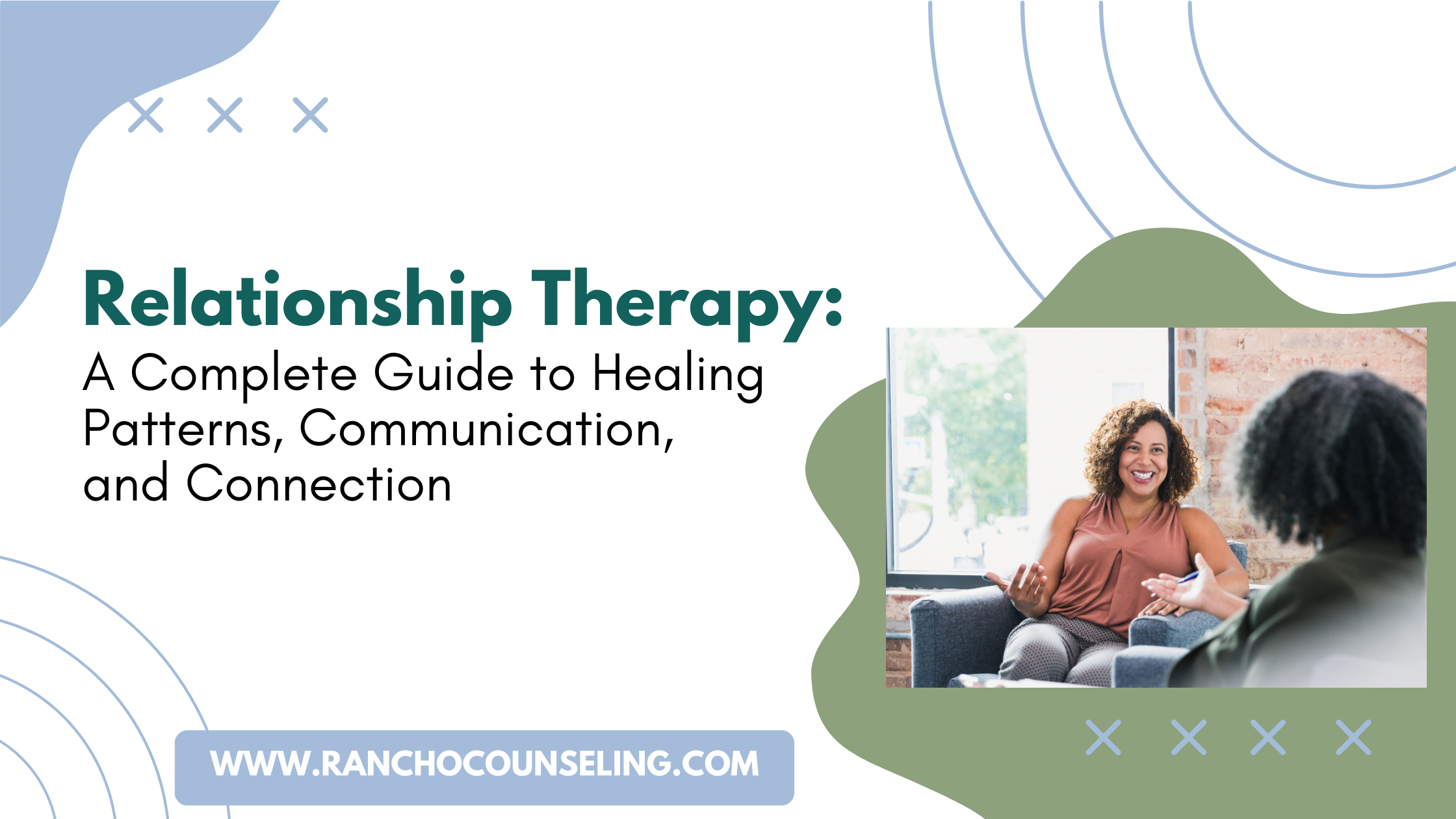
Relationship Therapy: The Ultimate Guide to Healing
Relationship therapy helps individuals and couples heal attachment patterns, improve communication, and create deeper emotional connection—even if you come alone.
As human beings, it is almost impossible to be without relationship. We are wired for connection. As mammals, we quite literally need others to survive. From our earliest caregivers to our romantic partners, family members, friends, and even coworkers, relationships shape how we experience ourselves and the world.
Relationship therapy is focused on helping people improve the quality of their relationships—communication, emotional connection, intimacy, and trust. While many people associate relationship therapy only with couples counseling, it is actually much broader than that. Relationship therapy looks at how you relate, the patterns you get stuck in, and the attachment wounds that quietly influence your reactions, expectations, and fears.
There are many therapeutic approaches used in relationship therapy, including Emotionally Focused Therapy (EFT), Gottman-based work, Internal Family Systems (IFS), somatic therapies, and other trauma-informed modalities that focus on healing attachment trauma. Each of these approaches recognizes that our relational struggles are rarely about “just communication” and almost always about something deeper.
One of the most common myths is that relationship therapy is only for couples. In reality, relationships exist everywhere in your life—and they tend to reveal your blind spots whether you want them to or not. If you struggle with control in your romantic relationship, chances are your family, coworkers, or children experience similar dynamics. Relationships have a way of showing you where healing is needed. For more on this, read my post, Relationship Therapy vs Couples Counseling: What Is the Difference and Which Do You Need?
When these patterns become impossible to ignore and you feel ready to do deeper work, relationship therapy intensives can be a powerful option. They allow space to slow down, understand what is really happening underneath the surface, and create meaningful change without dragging the process out for months or years. For more on this, see my post, Preparing for a Relationship Therapy Intensive: What To Expect in Your First Intensive.

What Relationship Therapy Actually Is
Relationship therapy is a holistic approach to understanding how you show up in connection with others. Rather than focusing solely on surface-level problems, it looks at relational patterns—how conflict starts, how it escalates, how it shuts down, and how it repeats.
Many forms of talk therapy are symptom-focused, and that can be incredibly helpful. Symptom-focused therapy might help you build coping skills, increase support, or manage anxiety or depression. But lasting change often comes from identifying patterns, not just managing symptoms.
For example, symptom-focused therapy might help ease depression by encouraging more rest, community, or self-care. Pattern-focused therapy, on the other hand, helps you notice when the depression tends to show up and why. You might realize that you feel depleted and low after spending time with family—not because family time is inherently bad, but because you fall into people-pleasing, suppress your needs, or stop showing up authentically. Over time, this becomes exhausting and leads to withdrawal and burnout.
The deeper healing happens when you understand the parts of you that learned to people-please to avoid rejection, heal those wounds, and begin showing up differently. That is the heart of relationship therapy.
Relationship therapy is not just about learning better communication scripts. It involves nervous system regulation, attachment healing, and learning how to stay present with yourself and others when things feel uncomfortable or emotionally charged. This process can take place with your partner, or with you alone. For more about this, see my post, Relationship Therapy for One: What Happens When You Come in Without Your Partner.
Why People Seek Relationship Therapy
People come to relationship therapy for many reasons, but certain themes show up again and again.
Feeling disconnected or like “roommates”
Many couples find themselves stuck in routines, passing like ships in the night. Conflict is avoided at all costs, difficult conversations are postponed indefinitely, and emotional distance grows quietly. Relationship therapy helps you understand why avoidance feels safer, heal the fear underneath it, and learn how to show up more fully—even when it means risking conflict. You can read more about this here: Relationship Therapy for People Who Feel Like Roommates Instead of Partners.
Repeating the same conflict cycles
Some couples have the same argument over and over. The beginning looks the same. The middle looks the same. And it always ends the same way—withdrawal, shutdown, or silent treatment. By the time things calm down, the original issue is never addressed because the relief of reconnection feels more important than reopening the wound.
Relationship therapy helps identify your role in these cycles and gives you tools to interrupt them before they escalate. You can make big changes in your relationship even if you’re the only one trying and you can read more about how in this post: Relationship Therapy When You're the Only One Trying
Attachment trauma shaping adult relationships
Many of the patterns you find yourself stuck in are rooted in attachment trauma. If you learned early on that love was inconsistent, conditional, or unsafe, you may approach your adult relationships with fear of abandonment, hypervigilance, or emotional distance.
You might treat your partner as though they will leave—even when they have not—or become fiercely independent because no one was there for you when you needed support. While that independence may have helped you survive and succeed, it can leave your partner feeling shut out or unneeded.
Fear of intimacy, fear of abandonment, emotional walls—these are not character flaws. They are adaptive responses that once kept you safe. Relationship therapy helps you identify these patterns and gently work through them.
Life transitions and ruptures
Breakups, affairs, rebuilding trust, or preparing for partnership are all moments when relational support can be especially important. Relationship therapy offers a container to process these transitions with intention, clarity, and care.

Relationship Therapy for One: How It Works
Relationships do not change unless someone changes. Often, that someone is you.
Individual relationship therapy is powerful—even if your partner will not attend. You can disrupt entrenched cycles simply by changing how you show up in them. When you respond with a regulated nervous system instead of shutting down or escalating, your partner will notice. The change may not be immediate, but over time, the dynamic begins to shift.
In our work together, we slow things down in a way that real life rarely allows. We look closely at what happens right before an argument, during the shutdown, and in the quiet aftermath. We notice what your body does—tight chest, dropped stomach, clenched jaw. We get curious about the protective parts of you that jump in to keep you safe.
Using somatic work and brainspotting, we access the deeper layers of your nervous system where these patterns live. Instead of endlessly rehashing the same arguments, we work with how your brain and body are holding fear, grief, or beliefs like “I’m too much” or “I’m not enough.”
With IFS-informed tools, we explore your internal system—the part that wants to leave, the part that feels guilty, the part that believes it must hold everything together. As you build a different relationship with these parts, you gain choice. You are no longer stuck on autopilot.
When appropriate and when you are interested, ketamine-assisted therapy can support this work by softening rigid defenses and allowing deeper emotional processing. There is never pressure. We move carefully, collaboratively, and with safety at the forefront.
During the intensive process, we map the specific cycle you and your partner get stuck in so you can see it clearly. From there, we build your capacity to stay present, set boundaries, and communicate from a grounded place rather than panic or exhaustion.
If you are reading this, there is a good chance you feel like you are carrying the emotional weight of the relationship. You are the one doing the reading, listening to podcasts, trying to say things the “right” way. You may swing between anger and grief, between wanting to leave and wanting to fight for what you hoped the relationship could be.
If your partner will not come to therapy, it can feel like a dead end. The truth is that individual relationship therapy intensives can still be deeply transformative. They are not just about fixing the relationship—they are about tending to the part of you that has been holding everything together for far too long. For more on the best ways to prepare for a relationship therapy intensive, read Relationship Therapy: What to Expect From an Intensive.
Attachment Trauma & How It Impacts Relationships
Our earliest relationships shape our expectations of closeness, safety, and love. Attachment patterns—anxious, avoidant, or disorganized—develop as adaptations to our caregiving environments.
Anxious attachment may show up as fear of abandonment and a constant need for reassurance. Avoidant attachment often appears as emotional distance or discomfort with dependence. Disorganized attachment can involve a painful push-pull between craving closeness and fearing it.
Relationship therapy helps you recognize these patterns not as flaws, but as learned survival strategies—and then update them so they no longer run your relationships.
Tools & Methods Used in Relationship Therapy
Relationship therapy may include:
Pattern identification and cycle mapping
Core wound exploration
Nervous system regulation
Communication rewiring
Boundary and self-worth work
Trauma-informed modalities, including the option for KAP intensives
When Intensives Are More Effective Than Weekly Therapy
Weekly therapy can be helpful, but for deeply entrenched relational patterns, it can feel slow and fragmented. Each session ends just as things open up, and life happens in between.
Relationship therapy intensives offer extended, uninterrupted time to do meaningful work. They are especially helpful for people who are ready to look inward and understand what they can change—because ultimately, that is all any of us can control.
What Changes You Can Expect
Clients often report:
Increased emotional safety
Clearer, calmer communication
Less reactivity and more self-awareness
Triggers that once caused spirals now pass more easily
Greater confidence expressing needs
More authenticity, trust, and intimacy
How to Know If You’re Ready
You may be ready for relationship therapy if:
You feel exhausted or hopeless in your relationship
The same patterns keep repeating despite your best efforts
Books and podcasts haven’t created lasting change
You want to understand why you do what you do
For a deeper dive on this, read Relationship Therapy Rancho Cucamonga: Questions to Ask before you begin.
How to Get Started
We begin with a 30-minute consultation call where you can ask questions and we explore whether this work is the right fit. If it isn’t, I will help refer you to someone who can support you.
If we move forward, we schedule a preparation session to understand your history, attachment patterns, and past traumas so our intensive work is informed, intentional, and supportive.
All you need to bring is a willingness to show up honestly and openly.
If you are ready to stop repeating the same cycles and start creating real change, I invite you to schedule a consultationand begin this work together. If you’d like more information on choosing the right therapist for your relationship intensive, you can read my post, Relationship Therapy Rancho Cucamonga: Choosing a Therapist
Alicia Taverner, LMFT, is a licensed marriage and family therapist who helps couples heal after infidelity, years of resentment, and the exhaustion of feeling stuck in the same painful patterns.
Her work helps partners begin to understand each other again, rebuild appreciation, and create lasting change with a focused, supportive approach. Alicia uses brain based techniques, including Brainspotting and ketamine assisted psychotherapy, in an intensive format that gives couples more room to heal without the start and stop of weekly sessions.
Learn more about Alicia’s work with affair recovery intensives, relationship therapy, and ketamine therapy, or visit her About page.