
Blog

Couples Counseling Rancho Cucamonga: Two Powerful Ways to Reconnect When You Feel Stuck in Your Relationship
Feeling stuck in the same arguments with your partner? You're not alone. Many couples seek couples counseling in Rancho Cucamonga after months or even years of feeling disconnected, unheard, or trapped in unhealthy communication patterns. The good news is that meaningful change often starts with small shifts. In this article, you'll learn two powerful relationship tools that can help you reconnect: leading with your needs instead of criticism and using the power of the pause during conflict. These simple strategies can reduce defensiveness, improve communication, and create more emotional connection in your relationship. Whether you're struggling with recurring arguments, emotional distance, or simply want to strengthen your bond, these practical tips can help you begin moving in a healthier direction. Discover how small changes can lead to lasting transformation—and when it may be time to seek professional support through couples counseling or marriage counseling in Rancho Cucamonga to help your relationship thrive.
Have you ever looked at your partner and wondered, "How did we get here?"
Maybe you're having the same argument over and over. Maybe conversations feel transactional, revolving around schedules, kids, chores, and responsibilities instead of connection. Or perhaps you've noticed a growing emotional distance between you and the person you once couldn't wait to spend time with.
If any of this sounds familiar, you're not alone.
Many couples come to couples counseling in Rancho Cucamonga feeling frustrated, exhausted, and unsure how to break free from the patterns that keep pulling them apart. The encouraging news is that relationships rarely change because of one grand gesture. More often, transformation happens through small, consistent shifts that help partners feel seen, heard, and valued again.
While professional support can accelerate the process, there are simple strategies you can start using today to create more understanding and connection in your relationship.
Why Couples Get Stuck
Most couples don't wake up one morning suddenly disconnected. Instead, disconnection happens gradually.
A stressful job leads to less quality time together. Parenting demands consume your attention. Unresolved arguments pile up. Small hurts go unspoken. Over time, these experiences create emotional distance.
When couples feel disconnected, they often develop predictable patterns:
One partner pursues while the other withdraws.
Conversations quickly become defensive.
Assumptions replace curiosity.
Resentment grows beneath the surface.
Emotional intimacy begins to fade.
These patterns are common, but they aren't permanent. Understanding how to interrupt them is often one of the first steps we work on in couples counseling Rancho Cucamonga.

1. Lead With the Need, Not the Criticism
When you're hurting, frustrated, or feeling neglected, criticism often feels like the easiest way to communicate.
You may find yourself saying:
"You never help around the house."
"You're always on your phone."
"You don't listen to me."
"You care more about work than this relationship."
While these statements may contain some truth, they rarely produce the response you're hoping for.
Why?
Because criticism tends to trigger defensiveness. Instead of hearing your pain, your partner hears an accusation. Rather than moving toward you, they instinctively move into self-protection.
Underneath most criticism is an unmet need.
For example:
Instead of:
"You never help around the house."
Try:
"I've been feeling overwhelmed lately, and I'd really appreciate more support."
Instead of:
"You're always on your phone."
Try:
"I miss spending uninterrupted time together."
Instead of:
"You don't listen to me."
Try:
"I want to feel understood and connected when we talk."
Notice the difference.
The second version reveals vulnerability rather than blame. It gives your partner insight into your emotional experience and creates an opportunity for connection.
Why Vulnerability Works
Many people fear vulnerability because it feels risky. Criticism can feel protective because it keeps us from exposing our deeper emotions.
But healthy relationships are built on emotional honesty.
When you share your needs directly, you're inviting your partner into your experience rather than attacking them from the outside.
In marriage counseling Rancho Cucamonga, couples often discover that the argument they're having isn't really about dishes, text messages, or household responsibilities. It's about wanting to feel loved, appreciated, important, and emotionally safe.
Once those deeper needs become visible, meaningful conversations become possible.
2. Harness the Power of the Pause
One of the biggest mistakes couples make during conflict is trying to solve problems when their nervous systems are already overwhelmed.
When we're emotionally activated, our brains become less capable of empathy, perspective-taking, and problem-solving. Instead, we move into survival mode.
You may notice yourself:
Raising your voice
Interrupting
Shutting down
Becoming defensive
Saying things you later regret
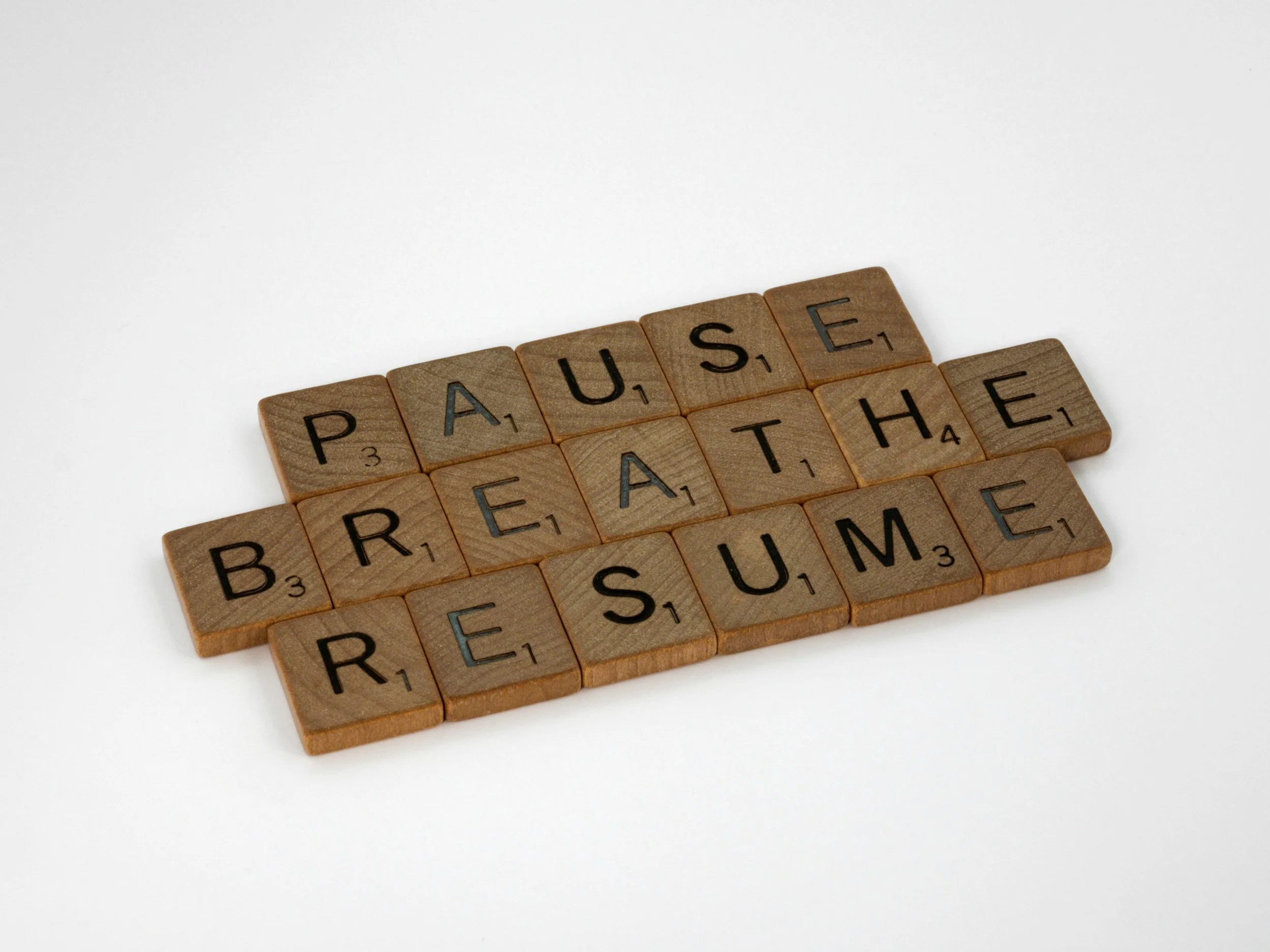
This is where the pause becomes incredibly powerful.
The next time a disagreement starts escalating, try stopping for just 30 seconds.
Ask yourself:
What am I feeling right now?
What do I need?
What outcome do I want from this conversation?
How do I want my partner to feel after we talk?
Taking a brief pause gives your nervous system an opportunity to regulate before responding.
The Difference Between Reacting and Responding
Reacting is automatic.
Responding is intentional.
When we react, we often speak from frustration, fear, or hurt.
When we respond, we speak from clarity.
A simple pause can be the difference between:
Escalating a conflict
Creating understanding
It may feel small, but this practice can dramatically improve communication over time.
In fact, many couples tell me that learning to pause during conflict is one of the most valuable skills they gain through couples counseling in Rancho Cucamonga.
The Importance of Micro-Moments of Connection
While conflict gets most of the attention, healthy relationships are built through everyday moments of connection.
Research consistently shows that strong couples turn toward each other in small ways throughout the day.
This might look like:
A six-second kiss before leaving for work
Sending a thoughtful text during the day
Holding hands while watching television
Making eye contact during conversations
Asking meaningful questions and listening to the answers
These moments may seem insignificant, but they help create emotional safety and trust.
When couples stop investing in these small interactions, disconnection often follows.
If your relationship feels distant, start by looking for opportunities to create more positive moments together rather than waiting for a major breakthrough.
When It May Be Time for Professional Support
Sometimes relationship challenges go beyond communication tips and self-help strategies.
If you're experiencing:
Constant arguments
Emotional disconnection
Trust issues
Infidelity or betrayal
Recurring resentment
Difficulty resolving conflict
A feeling that you're living like roommates
It may be time to seek professional guidance.
Working with a therapist can help you identify the underlying patterns driving your conflict and develop healthier ways of relating to one another.
At Rancho Counseling, we provide couples counseling Rancho Cucamonga for couples who want to rebuild trust, improve communication, strengthen emotional intimacy, and create lasting change. We offer both traditional therapy and private couples intensives designed to help partners make meaningful progress in a focused, supportive environment.
It's Never Too Late to Reconnect
Many couples wait years before seeking help because they believe things will eventually improve on their own.
Unfortunately, relationship problems rarely resolve through avoidance. More often, they grow larger over time.
The good news is that even relationships that feel stuck can change when both partners are willing to approach each other with curiosity, compassion, and commitment.
Small shifts—like expressing needs instead of criticism and learning to pause before reacting—can create powerful momentum toward healing.
And when you need additional support, you don't have to navigate it alone.
If you're looking for couples counseling in Rancho Cucamonga, we'd be honored to help you strengthen your relationship and rediscover the connection that brought you together in the first place.
Ready to Take the Next Step?
Schedule a FREE 15-minute consultation to learn more about our couples therapy and relationship intensives. We'll answer your questions, discuss your goals, and help you determine the best path forward for your relationship.
Alicia Taverner, LMFT, is a licensed marriage and family therapist who helps couples heal after infidelity, years of resentment, and the exhaustion of feeling stuck in the same painful patterns.
Her work helps partners begin to understand each other again, rebuild appreciation, and create lasting change with a focused, supportive approach. Alicia uses brain based techniques, including Brainspotting and ketamine assisted psychotherapy, in an intensive format that gives couples more room to heal without the start and stop of weekly sessions.
Learn more about Alicia’s work with affair recovery intensives, relationship therapy, and ketamine therapy, or visit her About page.
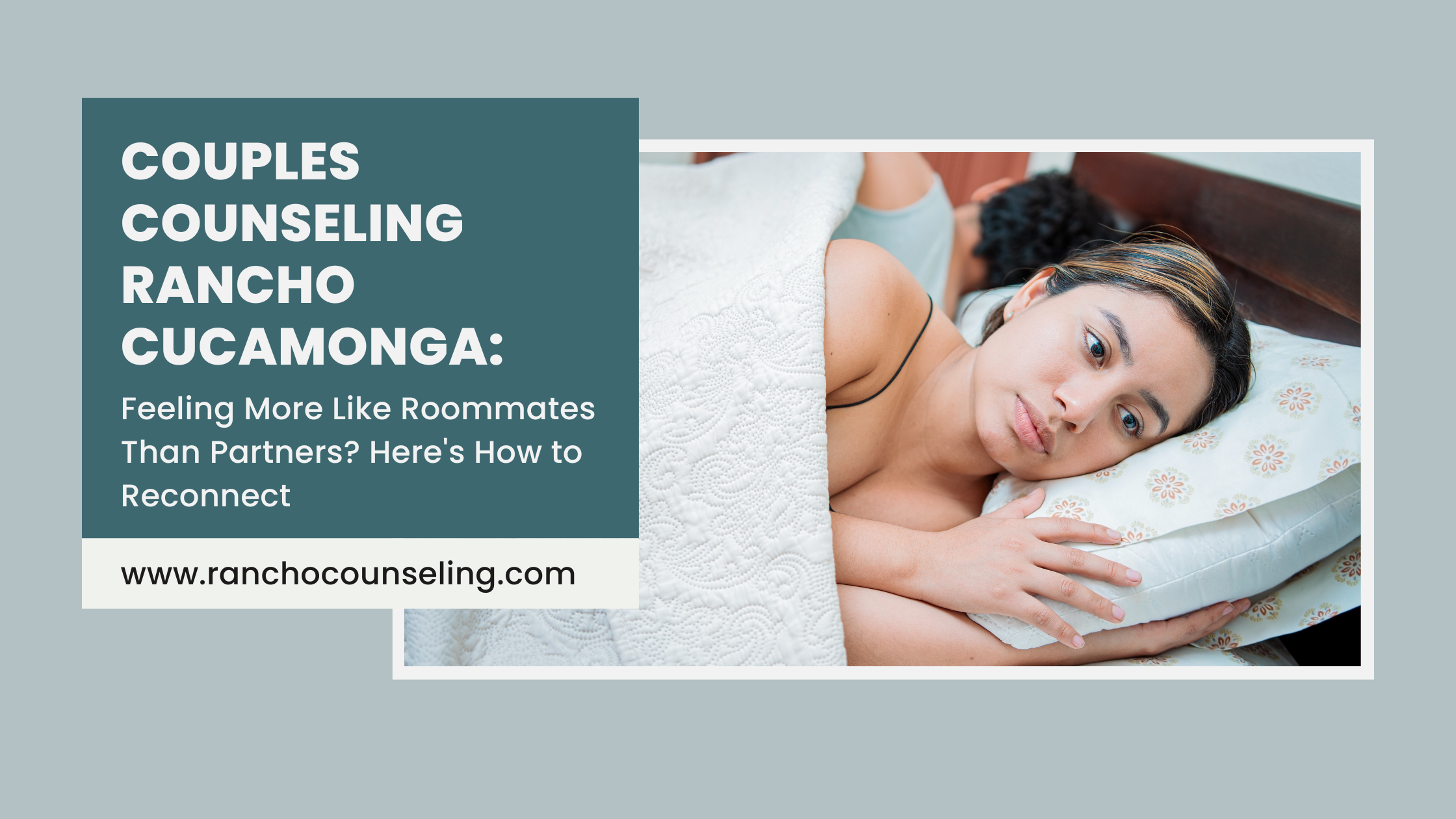
Couples Counseling Rancho Cucamonga: Feeling More Like Roommates Than Partners? Here's How to Reconnect
Has your relationship started feeling more like a roommate situation than a romantic partnership? Learn practical ways to reconnect and discover how couples counseling in Rancho Cucamonga can help you rebuild intimacy, improve communication, and strengthen your relationship.
Have you ever looked at your partner and realized that somewhere along the way, your relationship started feeling more like a business partnership than a romantic relationship?
You share responsibilities. You coordinate schedules. You discuss the kids, work, bills, and household tasks. Yet despite spending time together every day, you may feel emotionally disconnected and lonely.
If this sounds familiar, you're not alone. Many couples seek couples counseling in Rancho Cucamonga because they feel stuck in a pattern of coexisting rather than truly connecting. The good news is that this dynamic is common—and it can be changed.

When Did We Become Roommates?
Most relationships don't suddenly fall apart. Instead, they slowly drift apart over time.
In the beginning, connection often feels effortless. You stay up late talking, laugh together, flirt throughout the day, and look forward to spending time with one another.
Then life happens.
Careers become more demanding. Children enter the picture. Aging parents need support. Stress increases. Before you know it, your conversations revolve around logistics:
Who's picking up the kids?
Did you pay that bill?
What's for dinner?
What time is soccer practice?
The emotional connection that once felt natural begins to take a back seat.
Many couples who come to marriage counseling in Rancho Cucamonga tell me the same thing:
"We don't fight all the time. We just don't feel close anymore."
That emotional distance can feel just as painful as conflict.
Why Simply Spending Time Together Isn't Enough
One of the biggest misconceptions couples have is that being physically together automatically creates connection.
You can sit on the same couch every night and still feel miles apart.
You can sleep in the same bed and still feel lonely.
You can spend every weekend together and still feel emotionally disconnected.
True intimacy requires more than proximity. It requires intentional emotional engagement.
Connection happens when partners feel seen, heard, understood, and valued.
Without those experiences, relationships can begin to feel empty—even when everything appears fine from the outside.
Signs You May Be Stuck in the Roommate Phase
Many couples don't recognize how disconnected they've become until the distance feels overwhelming.
Some common signs include:
Conversations revolve mostly around responsibilities.
Physical affection has significantly decreased.
You rarely spend quality time together.
You feel more like co-parents than romantic partners.
Small disagreements quickly turn into arguments.
You avoid difficult conversations.
You feel lonely even when you're together.
Your relationship feels stagnant or repetitive.
If several of these sound familiar, couples therapy in Rancho Cucamonga can help you identify what's keeping you stuck and create new patterns of connection.

Reconnecting Doesn't Have to Mean Expensive Date Nights
You've probably heard the advice:
"Just have a weekly date night."
While date nights can be helpful, many couples struggle to make them happen consistently. Between busy schedules, childcare responsibilities, and exhaustion, it can feel impossible.
The truth is that meaningful connection often happens in small moments rather than grand gestures.
Here are several practical ways to begin rebuilding emotional intimacy.
1. Create Daily Emotional Check-Ins
Spend five minutes each day checking in emotionally.
Instead of asking:
"How was your day?"
Try questions like:
What was the best part of your day?
What felt stressful today?
Is there anything you need support with right now?
What are you looking forward to this week?
These conversations help you stay emotionally connected even during busy seasons.
2. Schedule Screen-Free Connection Time
Technology often becomes the third person in the relationship.
Choose one evening each week to put away phones, turn off the television, and focus on each other.
You might:
Cook together
Take a walk
Play a game
Sit outside and talk
Share a dessert after the kids are asleep
The goal isn't perfection—it's presence.
3. Break Out of Autopilot
Many couples operate on autopilot for years.
Try introducing something new into your routine:
Grab coffee together before work.
Take a morning walk.
Visit a new restaurant.
Explore a local hiking trail.
Attend a community event.
Novel experiences activate parts of the brain associated with excitement and bonding.
4. Prioritize Physical Affection
Physical touch is one of the simplest ways to increase connection.
Research consistently shows that affectionate touch helps partners feel safer and more emotionally connected.
Start small:
Hold hands.
Sit closer together.
Hug for 10 seconds.
Kiss hello and goodbye.
Put your hand on your partner's shoulder when talking.
These small moments can have a surprisingly powerful impact.
5. Bring Back Playfulness
Many couples stop having fun together long before they stop loving each other.
Laughter helps reduce stress, increases connection, and reminds you why you chose each other in the first place.
Try:
A game night
Mini golf
An escape room
A cooking class
Dancing in the kitchen
Watching a comedy special
Playfulness creates opportunities for positive interactions that strengthen your bond.
6. Protect Time for Your Relationship
Your relationship deserves intentional attention.
Just as you schedule meetings, appointments, and activities for your children, schedule time for your marriage.
Even one uninterrupted hour each week can make a meaningful difference when it becomes a consistent priority.
When Reconnection Efforts Aren't Enough
Sometimes the issue isn't simply a lack of quality time.
Many couples are carrying deeper wounds beneath the surface:
Resentment
Chronic conflict
Communication problems
Trust issues
Emotional disconnection
Unresolved hurts
Differences in parenting or values
When these patterns are present, date nights alone often aren't enough to create lasting change.
This is where couples counseling in Rancho Cucamonga can be incredibly valuable.
A skilled couples therapist can help you identify the cycle you're stuck in, improve communication, rebuild emotional safety, and strengthen the connection that brought you together in the first place.
Couples Counseling Rancho Cucamonga: Rebuild Your Connection
If you feel more like roommates than partners, don't wait until the distance becomes unbearable.
Relationships rarely improve by accident. They improve when both partners intentionally invest in understanding each other and creating new patterns of connection.
Whether you're feeling disconnected, struggling with communication, or simply wanting to strengthen your relationship, couples counseling can help you reconnect and move forward together.
Ready to Feel Close Again?
I offer couples counseling and intensives in Rancho Cucamonga for couples who want to improve communication, rebuild intimacy, and create a stronger relationship.
Schedule a free 15-minute consultation today and take the first step toward feeling like partners—not roommates—again.
Alicia Taverner, LMFT, is a licensed marriage and family therapist who helps couples heal after infidelity, years of resentment, and the exhaustion of feeling stuck in the same painful patterns.
Her work helps partners begin to understand each other again, rebuild appreciation, and create lasting change with a focused, supportive approach. Alicia uses brain based techniques, including Brainspotting and ketamine assisted psychotherapy, in an intensive format that gives couples more room to heal without the start and stop of weekly sessions.
Learn more about Alicia’s work with affair recovery intensives, relationship therapy, and ketamine therapy, or visit her About page.

Couples Counseling Intensive in Rancho Cucamonga | Fast-Track Relationship Healing
Feeling stuck in the same relationship patterns but don't have time for weekly therapy? A couples counseling intensive offers a focused, accelerated approach to improving communication, rebuilding trust, and creating lasting change—without months of traditional sessions. Discover how a couples counseling intensive in Rancho Cucamonga can help you reconnect faster.

You know your relationship needs help.
You know you're tired of the arguments, the silence, the tension, and the feeling that you're constantly walking on eggshells around each other.
You've thought about reaching out for help more times than you can count. You've read blog posts, listened to podcasts, searched for answers online, and maybe you've even spent time exploring my website. But every time you consider scheduling therapy, something stops you.
Maybe it's your schedule.
Maybe it's the thought of committing to weekly sessions for months.
Maybe you're worried that healing your relationship will take longer than you can realistically manage.
If that sounds familiar, you're not alone.
Many of the couples who contact me are highly motivated to improve their relationship. They aren't avoiding the work—they simply don't have the time or flexibility for traditional weekly therapy. Between demanding careers, children, travel schedules, and everyday responsibilities, finding the same hour every week can feel nearly impossible.
The good news? There is another option.
When Weekly Therapy Doesn't Fit Your Life
Traditional couples counseling can be incredibly effective, but it isn't always the best fit for every couple.
A typical 50-minute session often looks something like this:
10 minutes catching up and discussing what's happened since the last session
30 minutes focused on the actual therapeutic work
10 minutes wrapping up, summarizing, and preparing for the week ahead
While meaningful progress absolutely happens in weekly therapy, it can sometimes feel frustratingly slow—especially when you're dealing with significant relationship challenges such as:
Frequent conflict and communication breakdowns
Emotional disconnection
Trust issues
Resentment from unresolved hurts
Attachment wounds
Infidelity recovery
Feeling more like roommates than romantic partners
Often, just as you're beginning to access the deeper layers of the issue, the session ends. Then you spend another week waiting to pick up where you left off.
For couples in crisis or couples who are highly motivated to create change, that stop-and-start process can feel exhausting.
What Is a Couples Counseling Intensive?
A couples counseling intensive is an accelerated approach to relationship therapy that allows you to accomplish months of work in a much shorter period of time.
Instead of squeezing your relationship into a 50-minute appointment each week, you dedicate several uninterrupted hours to focused healing and growth.
During a couples counseling intensive, we have the time and space to:
Identify the root causes of recurring conflict
Improve communication and emotional safety
Explore attachment wounds and relationship patterns
Address trust violations and betrayals
Develop practical tools for managing difficult conversations
Create a roadmap for moving forward together
Rather than stopping just as the conversation becomes meaningful, we can stay with the process long enough to create real breakthroughs.

Why Couples Love Intensives
One of the things I hear most often from couples after an intensive is:
"We accomplished more in one day than we have in months of trying to figure this out on our own."
That's because there is something incredibly powerful about uninterrupted time.
No rushing.
No watching the clock.
No wondering whether you have enough time to bring up the issue that's been bothering you all week.
Just focused, intentional work on the relationship that matters most.
These sessions are often deeply productive because we can move beyond surface-level conversations and get to the heart of what's keeping you stuck.
Faster Progress Without Putting Your Life on Hold
Healing attachment wounds, rebuilding trust, and changing long-standing communication patterns requires effort and commitment.
But it doesn't necessarily require months of weekly appointments.
A couples counseling intensive allows you to make meaningful progress while still honoring the realities of your busy life.
Whether you choose two 4-hour sessions or a full-day 8-hour intensive, you'll have the opportunity to dive deeply into your relationship and begin creating lasting change.
Many couples find that intensives fit their schedules far better than weekly therapy, especially during busy seasons filled with work obligations, vacations, children's activities, and family commitments.
Your Relationship Deserves More Than "When Things Slow Down"
Summer gets busy.
The holidays get busy.
Work gets busy.
Life always seems busy.
If you've been waiting for the perfect time to work on your relationship, you may be waiting forever.
The truth is that your relationship deserves attention now—not someday.
If you're ready to stop repeating the same arguments, start feeling heard, and create meaningful change in your relationship, a couples counseling intensive in Rancho Cucamonga may be exactly what you're looking for.
You don't have to put your healing on hold simply because weekly therapy doesn't fit your schedule.
Ready to Learn More?
Schedule your free phone consultation today to find out whether a couples counseling intensive is the right fit for you and your relationship. Together, we'll create a plan that helps you move forward with greater clarity, connection, and hope.
Alicia Taverner, LMFT, is a licensed marriage and family therapist who helps couples heal after infidelity, years of resentment, and the exhaustion of feeling stuck in the same painful patterns.
Her work helps partners begin to understand each other again, rebuild appreciation, and create lasting change with a focused, supportive approach. Alicia uses brain based techniques, including Brainspotting and ketamine assisted psychotherapy, in an intensive format that gives couples more room to heal without the start and stop of weekly sessions.
Learn more about Alicia’s work with affair recovery intensives, relationship therapy, and ketamine therapy, or visit her About page.

Couples Counseling Rancho Cucamonga: Stop Marathon Fights
Many couples believe they should never go to bed angry, but staying up all night arguing often causes more harm than good. Learn how couples counseling in Rancho Cucamonga can help you regulate emotions, communicate effectively, and stop repeating the same exhausting fights.

One of the most common pieces of marriage advice floating around is this:
"Never go to bed angry."
It sounds wise, doesn't it?
The idea is that healthy couples should resolve every disagreement before falling asleep. But after years of providing couples counseling in Rancho Cucamonga, I can tell you that this advice often creates more problems than it solves.
I've seen couples stay up until 2:00 or 3:00 in the morning, exhausted and emotionally drained, trying desperately to force a resolution because they're afraid they'll damage their relationship if they go to sleep upset.
The result?
They're sleep-deprived, emotionally flooded, and saying things they wouldn't normally say.
That's not healthy communication. That's a recipe for a bigger fight.

Why "Never Go to Bed Angry" Can Be Harmful
The problem with this rule is that it completely ignores something important:
Your nervous system matters.
When you're emotionally overwhelmed, your brain literally loses access to the parts responsible for empathy, problem-solving, and rational thinking.
Instead of listening and understanding each other, couples often find themselves:
Raising their voices
Interrupting
Becoming defensive
Name-calling
Bringing up old resentments
Giving the silent treatment
Threatening separation or divorce
At that point, the goal is no longer solving the problem. The goal becomes winning the argument.
And nobody wins when that happens.
In couples therapy in Rancho Cucamonga, we teach couples that taking a break from a conversation isn't avoiding the issue—it's protecting the relationship.
The Real Goal: Learn to Pause Before Things Get Ugly
Healthy relationships aren't built on never getting angry.
They're built on knowing what to do when anger shows up.
One of the most powerful skills couples learn in marriage counseling Rancho Cucamonga is how to recognize the early signs of emotional flooding.
These warning signs often include:
A racing heart
Tightness in the chest
Feeling defensive
Difficulty listening
The urge to attack, criticize, or shut down
When couples can identify these signals early, they can call a respectful timeout before the conversation spirals out of control.
What a Healthy Timeout Looks Like
Many people think taking a break means avoiding conflict.
Not true.
A healthy timeout sounds like:
"I'm feeling overwhelmed right now. I want to continue this conversation, but I need 30 minutes to calm down so I can show up better."
Notice what's missing?
No storming out.
No silent treatment.
No punishment.
No avoidance.
Just a commitment to return when both people are capable of having a productive conversation.
This is one of the core communication skills we teach in relationship counseling Rancho Cucamonga because it allows couples to address difficult topics without damaging the relationship in the process.

You Can Have Conflict and Still Feel Connected
One of the biggest misconceptions about healthy relationships is that happy couples don't fight.
They do.
In fact, every long-term relationship experiences conflict.
The difference is that successful couples know how to fight in a way that preserves connection.
They don't become enemies.
They don't spend days walking on eggshells.
They don't sweep problems under the rug.
Instead, they learn how to:
Express needs without criticism
Listen without becoming defensive
Stay emotionally regulated during difficult conversations
Repair after conflict
Work toward solutions together
These are the skills that transform relationships.
Stop Having Marathon Fights That Go Nowhere
If you and your partner find yourselves having the same argument over and over again, staying up late trying to "fix" things, or feeling more disconnected after every conflict, it may be time for support.
Through couples counseling in Rancho Cucamonga, we help couples learn practical tools to communicate more effectively, regulate emotions, and reconnect with one another—even during difficult conversations.
You don't have to keep repeating the same exhausting cycle.
You can learn how to navigate conflict in a way that brings you closer instead of pushing you apart.
Ready to Improve Communication in Your Relationship?
If you're tired of marathon fights, emotional disconnection, or feeling stuck in the same patterns, schedule a free 15-minute phone consultation today.
We'll help you determine the best next step and connect you with a couples expert who can help you create lasting change in your relationship.
Alicia Taverner, LMFT, is a licensed marriage and family therapist who helps couples heal after infidelity, years of resentment, and the exhaustion of feeling stuck in the same painful patterns.
Her work helps partners begin to understand each other again, rebuild appreciation, and create lasting change with a focused, supportive approach. Alicia uses brain based techniques, including Brainspotting and ketamine assisted psychotherapy, in an intensive format that gives couples more room to heal without the start and stop of weekly sessions.
Learn more about Alicia’s work with affair recovery intensives, relationship therapy, and ketamine therapy, or visit her About page.
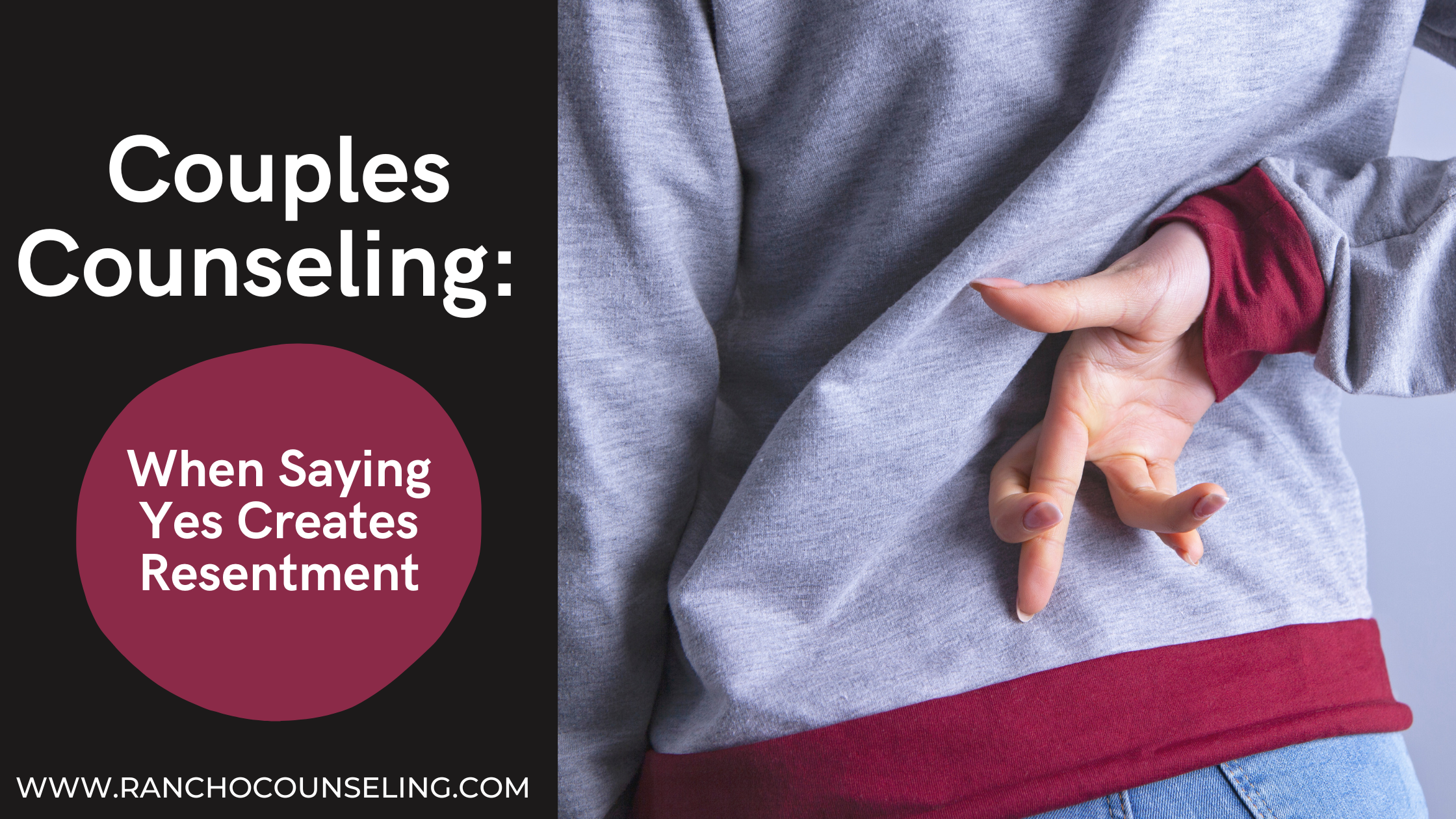
Couples Counseling: When Saying Yes Creates Resentment
Are you saying yes when you really mean no? Avoiding conflict may feel easier in the moment, but it often creates resentment and emotional distance. Learn how couples counseling can help you communicate more honestly and strengthen your relationship.

The other day, my 6-year-old daughter asked me to do a craft with her. I had a whole list of to-dos that I wanted to get done that day, and I knew if I didn’t get started early, I’d never complete all the things on my list.
She begged and pleaded with me, and I gave in. We made an origami sword that she ended up being obsessed with. She said it made her feel so powerful.
I wish I could say it was a great activity and that it was totally worth pushing off my to-do list for.
But unfortunately, that wasn’t the case.
She asked me to do a craft with her, but I ended up doing it for her. She did some cutting and project management, but it was an involved process that included many folds, multiple papers, and a glue gun. It was not something she could have completed on her own.
I begrudgingly folded and glued, and even though she came with excitement and encouragement, I was resentful.
I felt the annoyance radiating through my body, and it didn’t allow me to show up with an open heart. I was short and uninterested. It wasn’t what she deserved. It wasn’t even her fault. It was mine.
I had said yes when I meant no.
The entire project took maybe 30 minutes, but the entire time I was distracted thinking about what I needed to get done before we headed out on our camping trip the next day. I was grumpy and didn’t appreciate her enthusiasm and sweetness.
When it was finished, I totally regretted my withdrawn attitude.
That’s not how I want to show up in my relationship with her.

How Avoiding Conflict Creates Resentment in Relationships
That’s not how any of us should show up in our relationships, but it’s how I see so many couples show up toward one another.
As a therapist who provides couples counseling, I often see resentment growing when people say yes when they really mean no. We convince ourselves we're being kind, accommodating, or keeping the peace. But underneath the surface, resentment begins to build.
And when we feel resentful, it impacts our mood, our communication, and the way we approach the people we love most.
I was withdrawn with my daughter and unappreciative of her excitement.
How many times have you begrudgingly attended an event with your partner and looked for any reason not to have a good time?
You might drag your feet and show up late. You might nitpick the food, criticize the company, or find fault with your partner throughout the evening.
When we say yes when we mean no, it often leads to passive-aggressive behavior, emotional distance, and resentment. Ironically, the very conflict we were trying to avoid often becomes much bigger later.
Why Couples Avoid Difficult Conversations

So why do we do it?
Most people do it to avoid conflict.
Many people also do it because they don't want to disappoint their partner. Others do it because they feel guilty about something that happened in the relationship and believe they need to make up for it by always saying yes.
This is especially common after a betrayal, breach of trust, or major relationship conflict.
If you feel like you have to go along with whatever your partner wants because you made a mistake in the past, there is really no amount of people-pleasing or good deeds that will repair the relationship.
Healthy relationships aren't built on obligation.
They're built on honesty, authenticity, and open communication.
What Couples Counseling Teaches About Healthy Communication
One of the goals of couples counseling is helping partners communicate honestly without fear of conflict.
Conflict itself isn't the problem.
In fact, healthy conflict can lead to deeper intimacy, greater understanding, and stronger emotional connection.
The real problem is when couples avoid difficult conversations altogether.
When you continually suppress your feelings, avoid expressing your needs, or agree to things you don't actually want, resentment begins to take root. Over time, resentment can create emotional distance, increase defensiveness, and leave both partners feeling misunderstood.
Learning to say:
"I don't have the capacity for that right now."
"Can we find a compromise?"
"I want to support you, but I also need to be honest about what I'm feeling."
These conversations may feel uncomfortable in the moment, but they create much more connection than silently carrying resentment.
Couples Counseling Can Help You Stop Avoiding Conflict
If you find yourself avoiding difficult conversations, walking on eggshells, or struggling to express your needs, it may be time to take a closer look at what's happening beneath the surface.
You aren't showing up authentically, and you're doing a disservice to both your partner and the relationship.
Often, it's a sign that important issues aren't being addressed through open dialogue. Healing happens when both partners feel safe enough to be honest about their needs, disappointments, fears, and desires.
Sometimes that healing comes from doing your own inner work. Sometimes it comes from working together with a trained therapist through couples counseling.
The good news is that it's never too late to start having the conversations you've been avoiding.
If you're ready for a fresh start and want to improve communication, resolve resentment, and strengthen your relationship, we're here to help.
Schedule a free 15-minute phone consultation to learn more about couples counseling, relationship therapy, and intensive couples therapy options available in Rancho Cucamonga, Temecula, or online throughout California.
Alicia Taverner, LMFT, is a licensed marriage and family therapist who helps couples heal after infidelity, years of resentment, and the exhaustion of feeling stuck in the same painful patterns.
Her work helps partners begin to understand each other again, rebuild appreciation, and create lasting change with a focused, supportive approach. Alicia uses brain based techniques, including Brainspotting and ketamine assisted psychotherapy, in an intensive format that gives couples more room to heal without the start and stop of weekly sessions.
Learn more about Alicia’s work with affair recovery intensives, relationship therapy, and ketamine therapy, or visit her About page.