
Blog
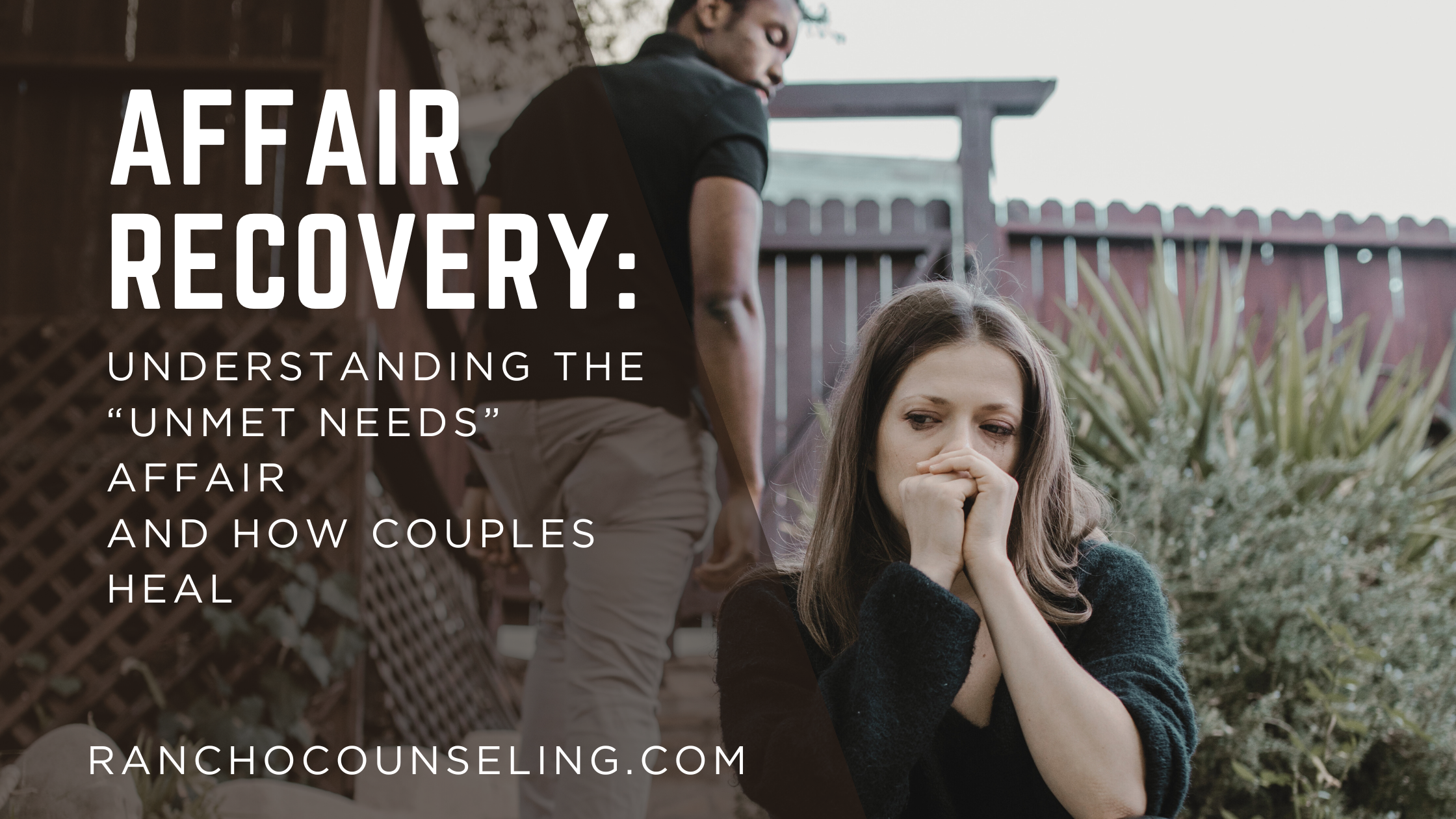
Affair Recovery: Understanding the “Unmet Needs” Affair and How Couples Heal
Affair recovery is about more than healing from betrayal—it’s about understanding what led to the affair in the first place. One common pattern is the “unmet needs” affair, where emotional, physical, or relational needs go unaddressed for so long that a connection outside the relationship begins to feel irresistible. In this article, we explore why good people sometimes cross the line, why affairs rarely solve the underlying problem, and how affair recovery therapy can help couples rebuild trust and connection. You'll learn how unmet needs contribute to infidelity, why weekly therapy may not always provide enough support, and how affair recovery intensives in California offer couples the time and structure needed to create meaningful change. Whether you're the partner who had the affair or the one who was betrayed, healing is possible. With the right guidance, affair recovery can become an opportunity to understand your relationship more deeply and build a stronger foundation for the future.
Affair recovery is rarely as simple as identifying who was right and who was wrong. Many couples are surprised to discover that an affair didn't happen because love disappeared—it happened because important emotional, physical, or relational needs went unaddressed for too long.
In my work providing affair recovery intensives in California, I often help couples understand the deeper patterns beneath infidelity. One of the most common is what relationship expert Mira Kirshenbaum calls the "unmet needs affair."
Whether you're the partner who had the affair or the partner who was betrayed, understanding these patterns can be a critical step in the affair recovery process.
What Is an "Unmet Needs" Affair?
Mira Kirshenbaum, in her book When Good People Have Affairs, describes the “unmet needs” affair as one that stems from feeling that something vital is missing in your relationship.
It could be emotional intimacy, physical affection, intellectual stimulation, or simply feeling truly seen and valued.
Over time, that missing piece can start to feel overwhelming—like a hole in the relationship that you can’t seem to fill.
And when someone new shows up who seems to meet that specific need, it can feel intoxicating.
But focusing on what's missing often causes people to overlook all the good that still exists with their partner: the history, the support, the deeper love built over years.
When you chase one missing piece outside the relationship, you risk everything else you’ve built.

Why Affairs Don't Solve Relationship Problems
Here’s the hard truth:
Affairs tend to live in a vacuum.
They exist in a bubble of excitement, secrecy, and fantasy—without the weight of real life.
When you only see the parts of someone that meet your unmet need, it's easy to believe you've found something perfect.
But all relationships, over time, involve hard conversations, messy feelings, and unmet needs that require honest communication—not escape.
If you don’t address the real reasons you felt unfulfilled, even a new relationship will eventually face the same challenges.
That’s why doing the work through infidelity counseling is so powerful:
It’s not just about "getting over" the affair.
It’s about learning why it happened—and how to build a relationship that meets both partners’ needs in a healthy, lasting way.
The Role of Affair Recovery Therapy in Healing
If you're feeling the weight of betrayal, guilt, or grief after an affair, you don't have to stay stuck in that pain.
Through couples therapy in Rancho Cucamonga and surrounding areas like Fontana, I've helped many couples rebuild trust, reconnect emotionally, and create new, stronger foundations for their future.
It’s not easy work—but it’s real, transformative healing.
If you're ready to understand your relationship on a deeper level, face the hard truths with compassion, and rebuild connection that’s grounded in honesty and respect, I invite you to reach out.
When Weekly Affair Recovery Counseling Isn't Enough
For some couples, weekly 50-minute sessions work just fine. But when it comes to infidelity, those short sessions often barely scratch the surface. You finally start to open up… and then the clock runs out. You leave feeling raw, hurting, maybe even in tears—and then you’re left on your own for six more days, cycling through the same arguments, questions, and triggers without support.
It can feel like trying to put out a house fire with a spray bottle.
That’s why so many couples choose affair recovery intensives. Instead of inching forward week by week, an intensive gives you uninterrupted hours of deep, focused work—something traditional therapy simply can’t offer.

How Affair Recovery Intensives Help Couples Heal Faster
In an intensive, you have the time, structure, and safety to:
Lay out the full story in a clear, guided way
Slow down the emotional overwhelm so both of you feel understood
Rebuild the foundation of trust and safety
Explore the unmet needs, patterns, and vulnerabilities in your relationship
Create a concrete plan for healing and next steps
Instead of taking one tiny step each week, intensive therapy in California allows you to dive deeply into the work over the course of one to three transformative days.
What to Expect During an Affair Recovery Intensive in California
Every couple's intensive is tailored specifically for your needs, but a typical structure may include:
A thorough assessment of your relationship history and the affair
Time with each partner individually and together
Guided conversations around the questions that feel too painful or overwhelming to handle alone
Tools to regulate your nervous systems and manage triggers
Work on trust, boundaries, transparency, and accountability
Space to explore whether you both want to stay in the relationship and what that commitment would require
We move at a pace that honors the hurt partner’s nervous system and the responsibility needed from the partner who had the affair.
The goal is clarity, honesty, healing, and a path forward—whatever that path becomes.
What Happens After an Affair Recovery Intensive?
Affair recovery is such a focused, immersive process that many couples travel from out of state specifically for a relationship intensive in California.
If you’re traveling, you’re in good company. Many couples:
Fly in for a 1–3 day intensive
Stay in a hotel or rental nearby so they can fully immerse in the work
Use the time away from home to step outside their routines and really focus on their relationship
If traveling is part of your plan, we’ll walk through:
Travel logistics, timing, and lodging
How to emotionally and practically prepare
What (and how much) to share with kids, family, or friends
You don’t need all the details figured out before reaching out. I’ll help you determine whether an intensive is the right fit and make the process as grounded and manageable as possible.
A couples intensive can be a powerful turning point—but it’s not the final step. Afterward, we’ll explore what kind of continued support feels right, such as:
Ongoing intensive couples sessions to keep healing moving forward
Individual therapy for one or both partners
Collaboration with a local therapist if you traveled from out of town
The intensive gives you a solid foundation: shared understanding, a clearer narrative, and early repair work. The next phase is integrating those shifts into daily life.
Begin Your Affair Recovery Journey Today
Recovering from an affair can feel overwhelming, but you don't have to navigate it alone. Whether you're looking for weekly support or a focused affair recovery intensive in California, healing is possible.
Through specialized affair recovery therapy, couples can learn to rebuild trust, understand the patterns that contributed to the affair, and create a new foundation for their relationship.
If you're ready to take the next step in your affair recovery journey, schedule a free 30-minute consultation today. Together, we'll explore what healing can look like for your relationship and determine the best path forward.
Alicia Taverner, LMFT, is a licensed marriage and family therapist who helps couples heal after infidelity, years of resentment, and the exhaustion of feeling stuck in the same painful patterns.
Her work helps partners begin to understand each other again, rebuild appreciation, and create lasting change with a focused, supportive approach. Alicia uses brain based techniques, including Brainspotting and ketamine assisted psychotherapy, in an intensive format that gives couples more room to heal without the start and stop of weekly sessions.
Learn more about Alicia’s work with affair recovery intensives, relationship therapy, and ketamine therapy, or visit her About page.
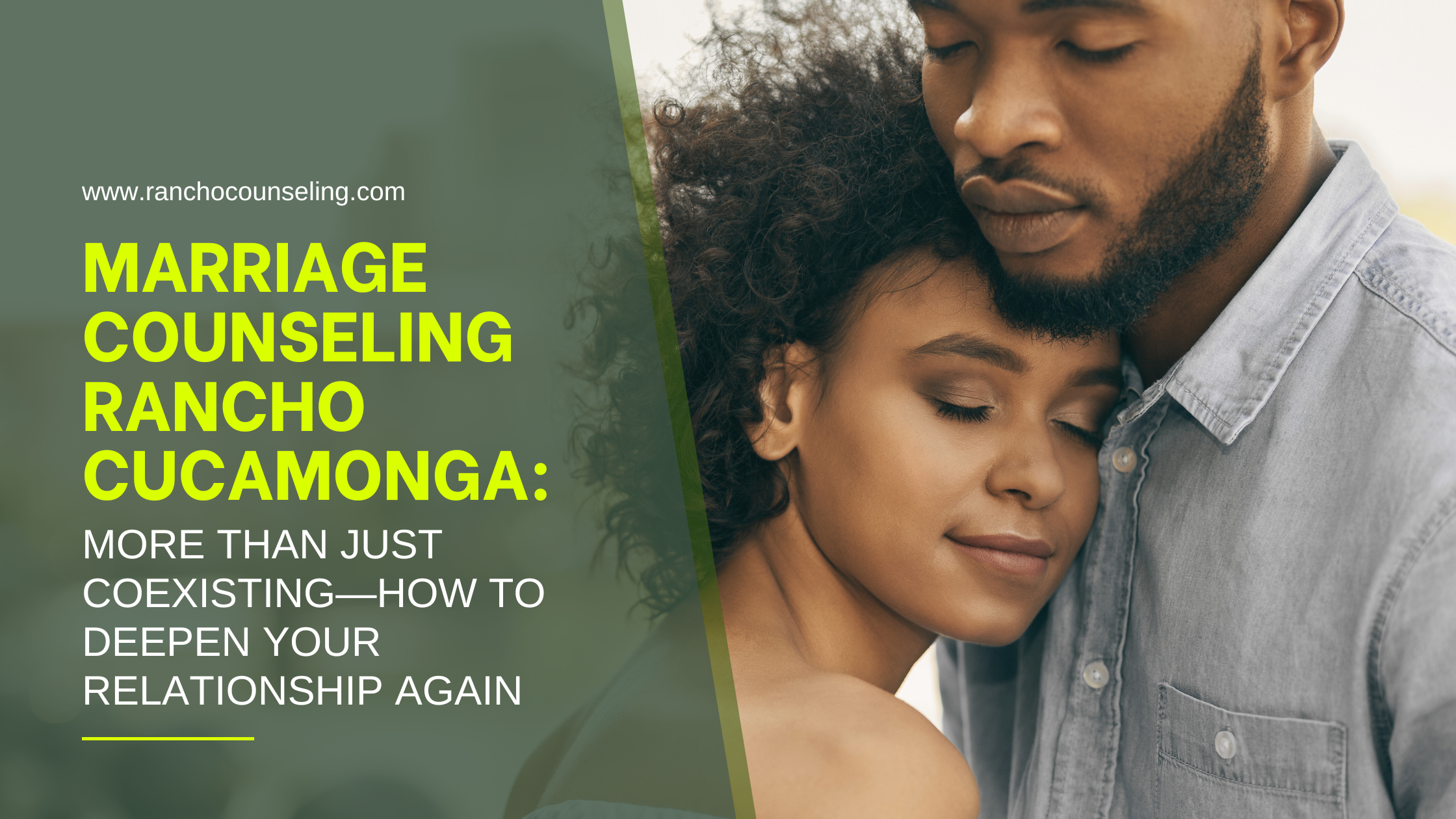
Marriage Counseling Rancho Cucamonga: More Than Just Coexisting—How to Deepen Your Relationship Again
Feeling more like roommates than romantic partners? Discover simple ways to rebuild connection and learn how marriage counseling in Rancho Cucamonga can help strengthen your relationship.
Have you ever looked at your partner and realized you're functioning more like roommates than romantic partners?
You're sharing responsibilities, coordinating schedules, paying bills, and managing family life—but somewhere along the way, the emotional connection that once felt effortless has faded. Conversations revolve around logistics. Physical affection becomes less frequent. Date nights disappear. And even though you're living under the same roof, you may feel surprisingly alone.
If this sounds familiar, you're not alone. Many couples who come to me for marriage counseling in Rancho Cucamonga describe feeling disconnected long before they seek help. The good news? Disconnection doesn't mean your relationship is broken. It simply means your relationship needs attention.
While working with a marriage therapist in Rancho Cucamonga can help you uncover and heal deeper patterns, there are a few simple shifts you can begin making today.

1. Get Curious Instead of Defensive
One of the fastest ways couples become disconnected is through defensiveness.
When your partner brings up a concern, it's natural to want to explain yourself, justify your actions, or point out what they're doing wrong. Unfortunately, these reactions often leave both partners feeling unheard.
Instead, practice curiosity.
The next time your partner expresses frustration, try asking:
"Can you tell me more about what you're feeling?"
"Help me understand why that's important to you."
"What was that experience like for you?"
Notice that none of these responses are about proving who's right or wrong.
Curiosity communicates, "I want to understand you."
When people feel understood, they become less defensive and more willing to connect. Over time, these conversations help create emotional safety—the foundation of every healthy relationship.
2. Reconnect Through Small Daily Moments
Many couples believe they need a grand romantic gesture to feel close again.
The truth is that emotional intimacy is usually built through small, consistent interactions.
Relationship researchers often refer to these as "bids for connection"—tiny moments when one partner reaches toward the other.
Examples include:
Sending a thoughtful text during the day
Greeting your partner with a hug when they come home
Making eye contact while talking
Sitting together without distractions
Holding hands during a walk
Asking about their day and truly listening
These moments may seem insignificant, but they send an important message:
"I see you. I care about you. You're important to me."
Couples who regularly engage in these micro-moments often feel more connected, even during stressful seasons of life.
3. Stop Treating Problems as Opponents
When couples feel disconnected, they often begin viewing each other as the problem.
One partner feels criticized. The other feels unappreciated. Over time, both become trapped in a cycle of blame.
Healthy couples learn to approach challenges differently.
Instead of:
"You never listen to me."
Try:
"We seem to keep getting stuck in this conversation. How can we solve it together?"
The goal is to move from "me versus you" to "us versus the problem."
This subtle shift can dramatically reduce conflict and increase teamwork.

Why Couples Drift Apart
Many people assume that relationship problems develop because two people stop loving each other.
In reality, most couples drift apart because they become overwhelmed by life's demands.
Careers, children, finances, aging parents, household responsibilities, and stress all compete for attention. Without intentional effort, connection slowly moves to the bottom of the priority list.
Over time, couples may experience:
Increased conflict
Emotional distance
Reduced physical intimacy
Frequent misunderstandings
Feelings of loneliness within the relationship
Growing resentment
The earlier these patterns are addressed, the easier they are to change.
How Marriage Counseling in Rancho Cucamonga Can Help
Many couples wait years before seeking help because they believe they should be able to fix things on their own.
Unfortunately, by the time they reach out, they're often exhausted and discouraged.
Marriage counseling in Rancho Cucamonga provides a structured space where both partners can slow down, understand what's happening beneath the surface, and learn new ways of relating to one another.
A skilled therapist can help you:
Improve communication
Reduce recurring arguments
Rebuild trust after hurt or betrayal
Increase emotional intimacy
Strengthen friendship and connection
Develop healthier conflict-resolution skills
Create a shared vision for your future
Most importantly, counseling helps couples move beyond simply managing daily life together and begin enjoying each other again.
Need Faster Results? Consider a Couples Intensive
For busy professionals and couples who don't want to spend months in weekly therapy, a couples intensive can be an excellent alternative.
A one-day or multi-day intensive provides focused time to work through challenges without the stop-and-start nature of traditional sessions. Many couples find they make significant progress in a short period because they're able to stay engaged in the process long enough to create meaningful breakthroughs.
Your Relationship Can Feel Different
If you're tired of feeling like co-managers, roommates, or strangers sharing a home, know that change is possible.
The habits that create distance can be replaced with habits that create connection.
Whether you're looking for marriage counseling in Rancho Cucamonga, couples counseling in Rancho Cucamonga, or an intensive format designed for faster results, support is available.
You don't have to settle for surviving your relationship.
With the right tools, guidance, and commitment, you can rebuild trust, deepen intimacy, and create the partnership you both want.
Reach out today to learn more about marriage counseling in Rancho Cucamonga and take the first step toward reconnecting.
Alicia Taverner, LMFT, is a licensed marriage and family therapist who helps couples heal after infidelity, years of resentment, and the exhaustion of feeling stuck in the same painful patterns.
Her work helps partners begin to understand each other again, rebuild appreciation, and create lasting change with a focused, supportive approach. Alicia uses brain based techniques, including Brainspotting and ketamine assisted psychotherapy, in an intensive format that gives couples more room to heal without the start and stop of weekly sessions.
Learn more about Alicia’s work with affair recovery intensives, relationship therapy, and ketamine therapy, or visit her About page.

Couples Counseling Rancho Cucamonga: Two Powerful Ways to Reconnect When You Feel Stuck in Your Relationship
Feeling stuck in the same arguments with your partner? You're not alone. Many couples seek couples counseling in Rancho Cucamonga after months or even years of feeling disconnected, unheard, or trapped in unhealthy communication patterns. The good news is that meaningful change often starts with small shifts. In this article, you'll learn two powerful relationship tools that can help you reconnect: leading with your needs instead of criticism and using the power of the pause during conflict. These simple strategies can reduce defensiveness, improve communication, and create more emotional connection in your relationship. Whether you're struggling with recurring arguments, emotional distance, or simply want to strengthen your bond, these practical tips can help you begin moving in a healthier direction. Discover how small changes can lead to lasting transformation—and when it may be time to seek professional support through couples counseling or marriage counseling in Rancho Cucamonga to help your relationship thrive.
Have you ever looked at your partner and wondered, "How did we get here?"
Maybe you're having the same argument over and over. Maybe conversations feel transactional, revolving around schedules, kids, chores, and responsibilities instead of connection. Or perhaps you've noticed a growing emotional distance between you and the person you once couldn't wait to spend time with.
If any of this sounds familiar, you're not alone.
Many couples come to couples counseling in Rancho Cucamonga feeling frustrated, exhausted, and unsure how to break free from the patterns that keep pulling them apart. The encouraging news is that relationships rarely change because of one grand gesture. More often, transformation happens through small, consistent shifts that help partners feel seen, heard, and valued again.
While professional support can accelerate the process, there are simple strategies you can start using today to create more understanding and connection in your relationship.
Why Couples Get Stuck
Most couples don't wake up one morning suddenly disconnected. Instead, disconnection happens gradually.
A stressful job leads to less quality time together. Parenting demands consume your attention. Unresolved arguments pile up. Small hurts go unspoken. Over time, these experiences create emotional distance.
When couples feel disconnected, they often develop predictable patterns:
One partner pursues while the other withdraws.
Conversations quickly become defensive.
Assumptions replace curiosity.
Resentment grows beneath the surface.
Emotional intimacy begins to fade.
These patterns are common, but they aren't permanent. Understanding how to interrupt them is often one of the first steps we work on in couples counseling Rancho Cucamonga.

1. Lead With the Need, Not the Criticism
When you're hurting, frustrated, or feeling neglected, criticism often feels like the easiest way to communicate.
You may find yourself saying:
"You never help around the house."
"You're always on your phone."
"You don't listen to me."
"You care more about work than this relationship."
While these statements may contain some truth, they rarely produce the response you're hoping for.
Why?
Because criticism tends to trigger defensiveness. Instead of hearing your pain, your partner hears an accusation. Rather than moving toward you, they instinctively move into self-protection.
Underneath most criticism is an unmet need.
For example:
Instead of:
"You never help around the house."
Try:
"I've been feeling overwhelmed lately, and I'd really appreciate more support."
Instead of:
"You're always on your phone."
Try:
"I miss spending uninterrupted time together."
Instead of:
"You don't listen to me."
Try:
"I want to feel understood and connected when we talk."
Notice the difference.
The second version reveals vulnerability rather than blame. It gives your partner insight into your emotional experience and creates an opportunity for connection.
Why Vulnerability Works
Many people fear vulnerability because it feels risky. Criticism can feel protective because it keeps us from exposing our deeper emotions.
But healthy relationships are built on emotional honesty.
When you share your needs directly, you're inviting your partner into your experience rather than attacking them from the outside.
In marriage counseling Rancho Cucamonga, couples often discover that the argument they're having isn't really about dishes, text messages, or household responsibilities. It's about wanting to feel loved, appreciated, important, and emotionally safe.
Once those deeper needs become visible, meaningful conversations become possible.

2. Harness the Power of the Pause
One of the biggest mistakes couples make during conflict is trying to solve problems when their nervous systems are already overwhelmed.
When we're emotionally activated, our brains become less capable of empathy, perspective-taking, and problem-solving. Instead, we move into survival mode.
You may notice yourself:
Raising your voice
Interrupting
Shutting down
Becoming defensive
Saying things you later regret
This is where the pause becomes incredibly powerful.
The next time a disagreement starts escalating, try stopping for just 30 seconds.
Ask yourself:
What am I feeling right now?
What do I need?
What outcome do I want from this conversation?
How do I want my partner to feel after we talk?
Taking a brief pause gives your nervous system an opportunity to regulate before responding.
The Difference Between Reacting and Responding
Reacting is automatic.
Responding is intentional.
When we react, we often speak from frustration, fear, or hurt.
When we respond, we speak from clarity.
A simple pause can be the difference between:
Escalating a conflict
Creating understanding
It may feel small, but this practice can dramatically improve communication over time.
In fact, many couples tell me that learning to pause during conflict is one of the most valuable skills they gain through couples counseling in Rancho Cucamonga.
The Importance of Micro-Moments of Connection
While conflict gets most of the attention, healthy relationships are built through everyday moments of connection.
Research consistently shows that strong couples turn toward each other in small ways throughout the day.
This might look like:
A six-second kiss before leaving for work
Sending a thoughtful text during the day
Holding hands while watching television
Making eye contact during conversations
Asking meaningful questions and listening to the answers
These moments may seem insignificant, but they help create emotional safety and trust.
When couples stop investing in these small interactions, disconnection often follows.
If your relationship feels distant, start by looking for opportunities to create more positive moments together rather than waiting for a major breakthrough.
When It May Be Time for Professional Support
Sometimes relationship challenges go beyond communication tips and self-help strategies.
If you're experiencing:
Constant arguments
Emotional disconnection
Trust issues
Infidelity or betrayal
Recurring resentment
Difficulty resolving conflict
A feeling that you're living like roommates
It may be time to seek professional guidance.
Working with a therapist can help you identify the underlying patterns driving your conflict and develop healthier ways of relating to one another.
At Rancho Counseling, we provide couples counseling Rancho Cucamonga for couples who want to rebuild trust, improve communication, strengthen emotional intimacy, and create lasting change. We offer both traditional therapy and private couples intensives designed to help partners make meaningful progress in a focused, supportive environment.
It's Never Too Late to Reconnect
Many couples wait years before seeking help because they believe things will eventually improve on their own.
Unfortunately, relationship problems rarely resolve through avoidance. More often, they grow larger over time.
The good news is that even relationships that feel stuck can change when both partners are willing to approach each other with curiosity, compassion, and commitment.
Small shifts—like expressing needs instead of criticism and learning to pause before reacting—can create powerful momentum toward healing.
And when you need additional support, you don't have to navigate it alone.
If you're looking for couples counseling in Rancho Cucamonga, we'd be honored to help you strengthen your relationship and rediscover the connection that brought you together in the first place.
Ready to Take the Next Step?
Schedule a FREE 15-minute consultation to learn more about our couples therapy and relationship intensives. We'll answer your questions, discuss your goals, and help you determine the best path forward for your relationship.
Alicia Taverner, LMFT, is a licensed marriage and family therapist who helps couples heal after infidelity, years of resentment, and the exhaustion of feeling stuck in the same painful patterns.
Her work helps partners begin to understand each other again, rebuild appreciation, and create lasting change with a focused, supportive approach. Alicia uses brain based techniques, including Brainspotting and ketamine assisted psychotherapy, in an intensive format that gives couples more room to heal without the start and stop of weekly sessions.
Learn more about Alicia’s work with affair recovery intensives, relationship therapy, and ketamine therapy, or visit her About page.

Infidelity Recovery: Owning Your Mistake Without Carrying All the Blame
Infidelity recovery requires accountability, honesty, and trust rebuilding—but it doesn't mean carrying the entire relationship alone. Learn how couples can move beyond blame, address deeper relationship issues, and create lasting healing after an affair.
Infidelity recovery is one of the most challenging journeys a couple can face. The discovery of an affair can shake a relationship to its foundation, bringing up intense emotions, shattered trust, and painful questions about the future. Yet for couples who choose to stay together and do the work, infidelity recovery can also become an opportunity for deeper understanding, healthier communication, and a stronger connection than they had before.
If you're the partner who had the affair, you may feel overwhelming guilt and shame. You may also feel like all of the responsibility for fixing the relationship has fallen squarely on your shoulders. While accountability is essential in infidelity recovery, carrying all of the blame indefinitely is neither healthy nor productive.
Healing Takes Two People
One of the biggest misconceptions about infidelity recovery is that the partner who cheated must do all of the work while the betrayed partner simply waits to heal.
Yes, you made a choice that caused tremendous pain. Rebuilding trust requires honesty, transparency, consistency, and patience. However, lasting relationship healing requires participation from both partners.
Many couples enter infidelity recovery believing the affair is the only issue that needs to be addressed. While the affair itself must be processed thoroughly, healthy recovery also involves examining the relationship dynamics that existed before the betrayal.
This does not mean the betrayed partner caused the affair.
The decision to be unfaithful belongs solely to the person who made that choice.
However, understanding the state of the relationship before the affair can help both partners identify patterns, unmet needs, communication breakdowns, emotional disconnection, and unresolved conflicts that may have existed long before the betrayal occurred.

Holding Vigil Without Losing Yourself
Relationship expert Esther Perel describes a concept known as "holding vigil" after an affair.
In infidelity recovery, holding vigil means acknowledging your partner's pain and actively supporting them through the healing process. It means staying present when difficult conversations arise, answering questions honestly, and recognizing that your partner's triggers are a normal response to betrayal trauma.
Holding vigil is an important part of rebuilding trust.
However, holding vigil does not mean accepting emotional abuse, endless punishment, or carrying responsibility for every problem in the relationship forever.
There's a difference between accountability and self-sacrifice.
Healthy infidelity recovery requires empathy for your partner's pain while also maintaining your own emotional well-being and sense of self.
Navigating Triggers and Rebuilding Trust
One of the most important aspects of infidelity recovery is learning how to navigate triggers.
A particular restaurant, hotel, song, date, work trip, or even a simple text notification can bring the betrayal rushing back into the present moment for the betrayed partner.
The partner who had the affair can help rebuild trust by proactively acknowledging these triggers rather than waiting for their partner to become upset.
For example:
Discuss upcoming work trips ahead of time.
Offer transparency around schedules and communication.
Check in emotionally before difficult anniversaries or triggering events.
Create clear agreements around boundaries and accountability.
These actions help create safety.
At the same time, successful infidelity recovery also requires the betrayed partner to engage in their own healing process. Trust cannot be rebuilt solely through monitoring, questioning, or remaining stuck in hypervigilance. Both partners must learn how to move from survival mode toward genuine connection.
The Frustration of Being Defined by One Mistake
Many people who are working hard in infidelity recovery describe feeling trapped in the role of "the cheater."
No matter how much progress they make, every disagreement circles back to the affair. Every conflict becomes evidence that they haven't done enough. Every mistake reinforces the narrative that they are permanently the villain in the relationship.
While discussing the affair is an essential part of recovery, there comes a point when repeatedly weaponizing the betrayal can prevent healing rather than support it.
When every conversation returns to the affair without addressing current relationship dynamics, couples often become stuck in a cycle of resentment, defensiveness, and hopelessness.
The goal of infidelity recovery isn't lifelong punishment.
The goal is understanding, accountability, healing, and growth.

Moving Beyond Punishment Toward Real Healing
Healthy infidelity recovery requires both partners to answer difficult questions.
The partner who had the affair must ask:
How did I justify crossing my boundaries?
What vulnerabilities led me to make this choice?
How can I become a safer partner moving forward?
The betrayed partner must eventually ask:
What do I need in order to heal?
Am I willing to rebuild trust?
What patterns in our relationship need attention if we are going to create something healthier together?
Healing becomes possible when both people shift their focus from proving who is right and who is wrong toward understanding what needs to change.
When to Seek Professional Help for Infidelity Recovery
Trying to navigate infidelity recovery alone can feel overwhelming.
Many couples find themselves stuck in repetitive conversations that lead nowhere. The same arguments happen over and over again, leaving both partners feeling exhausted and discouraged.
This is where professional support can make a tremendous difference.
An experienced infidelity recovery therapist can help couples move through the stages of healing, facilitate productive conversations, rebuild trust, and address the deeper issues that existed before the affair.
For many couples, traditional weekly therapy simply doesn't provide enough time to work through the complexity of betrayal trauma and relationship repair.
That's why I offer intensive infidelity recovery programs in California. Rather than spending months revisiting the same issues in 50-minute sessions, we dedicate focused time to understanding what happened, processing the pain, rebuilding trust, and creating a roadmap for the future.
Infidelity Recovery Is Possible
If you're the partner who had the affair, take responsibility for your choices. Be honest. Be transparent. Stay committed to rebuilding trust.
But remember this: accountability does not mean carrying the entire relationship on your back forever.
Successful infidelity recovery happens when both partners are willing to engage in the process. It requires courage, honesty, compassion, and a shared commitment to creating something healthier than what existed before.
While the affair may become part of your story, it doesn't have to define your future.
Ready to Begin Your Infidelity Recovery Journey?
I love helping couples navigate the difficult but transformative process of infidelity recovery. In my California affair recovery intensives, we spend focused time addressing betrayal, rebuilding trust, improving communication, and uncovering the patterns that keep couples stuck.
I've seen couples arrive feeling hopeless and overwhelmed and leave with a renewed sense of clarity, connection, and possibility.
If you're ready to stop spinning in circles and start making meaningful progress, I'd love to help. Schedule a consultation today and learn whether an infidelity recovery intensive is the right next step for your relationship.
Alicia Taverner, LMFT, is a licensed marriage and family therapist who helps couples heal after infidelity, years of resentment, and the exhaustion of feeling stuck in the same painful patterns.
Her work helps partners begin to understand each other again, rebuild appreciation, and create lasting change with a focused, supportive approach. Alicia uses brain based techniques, including Brainspotting and ketamine assisted psychotherapy, in an intensive format that gives couples more room to heal without the start and stop of weekly sessions.
Learn more about Alicia’s work with affair recovery intensives, relationship therapy, and ketamine therapy, or visit her About page.
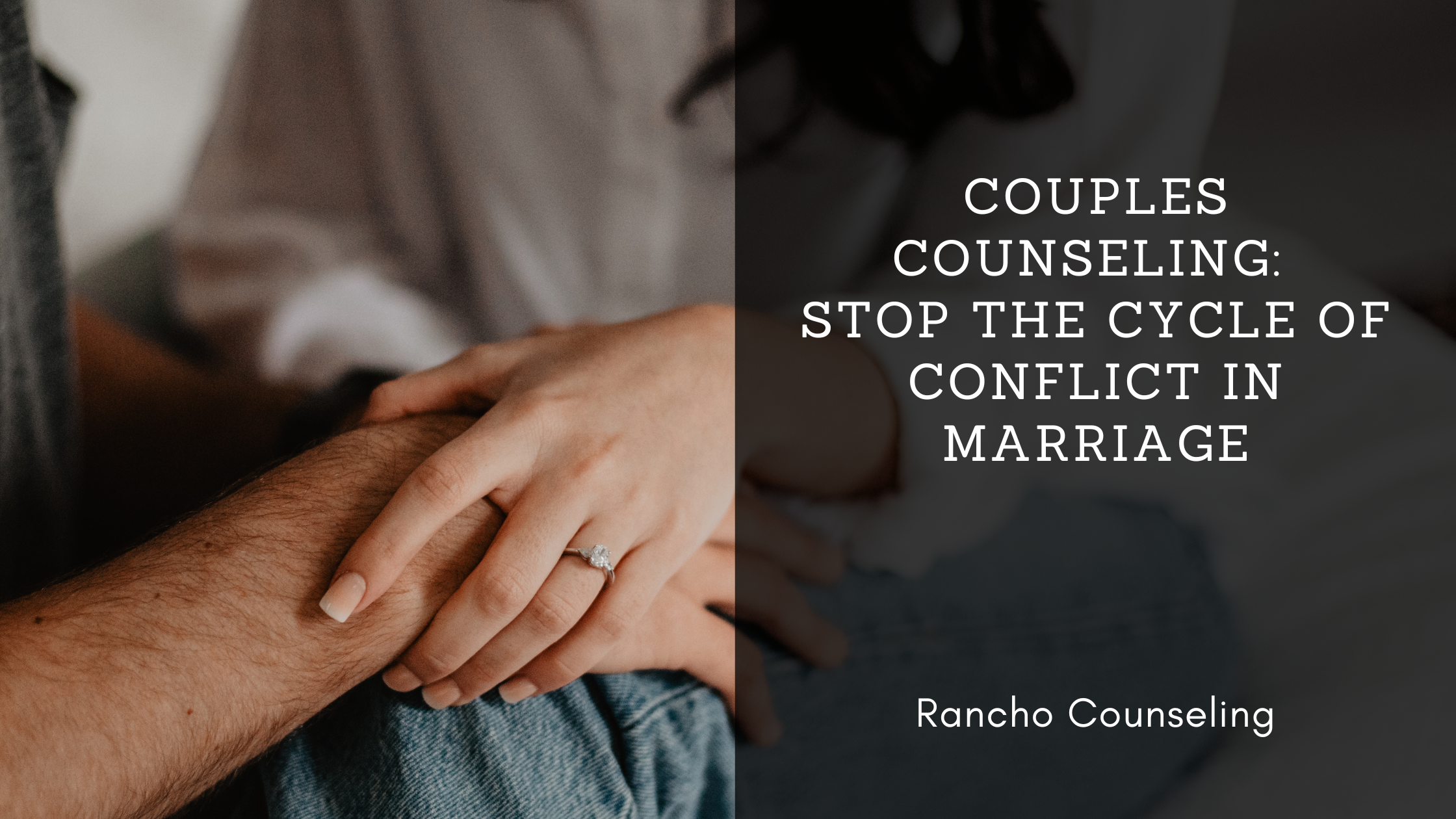
How Couples Counseling Can Help You Break Free from Repetitive Arguments
Feeling stuck in the same arguments with your partner? Learn how couples counseling can help you break unhealthy conflict patterns, improve communication, rebuild trust, and reconnect emotionally. Discover practical strategies to strengthen your relationship and create lasting change.
Does it feel like no matter how carefully you explain yourself, your partner still doesn't understand what you're trying to say?
Do small disagreements quickly turn into major fights?
Are you exhausted from having the same arguments over and over again, only to end up feeling hurt, disconnected, and alone?
If so, you're not alone. Many couples come to couples counseling feeling stuck in a painful cycle of conflict that seems impossible to escape. They love each other, but they no longer know how to communicate in a way that brings them closer.

The good news is that these patterns can change.
Why Constant Conflict Feels So Draining
When your relationship is struggling, it affects every area of your life.
You may find yourself distracted at work because you're replaying last night's argument in your head. You may feel emotionally unavailable for your children because you're carrying resentment, frustration, or sadness. Even when you're together, you can feel miles apart.
Over time, ongoing conflict creates emotional exhaustion. Instead of feeling supported by your partner, you may start viewing them as the source of your stress.
Many couples describe feeling trapped between two painful choices:
Continue fighting and feeling misunderstood.
Stop talking about problems altogether and slowly drift apart.
Neither option leads to the healthy, connected relationship you truly want.
The Temporary Fixes That Don't Actually Fix Anything
When the tension becomes overwhelming, most people naturally look for ways to escape it.
You might find yourself:
Scrolling endlessly on social media
Throwing yourself into work
Shopping online
Spending more time with friends
Exercising excessively
Watching television or gaming for hours
These distractions can provide temporary relief from emotional pain, but they don't address the underlying issues in your relationship.
The unresolved conflict remains beneath the surface, waiting for the next disagreement to bring everything back up again.
This is one reason why couples counseling can be so powerful. Rather than helping you avoid the problem, therapy helps you understand what's really happening underneath the conflict.
Why You Haven't Given Up Yet
If you're reading this, chances are there's still a part of you that believes your relationship can improve.
Maybe you've built a life together.
Maybe you're raising children together.
Maybe despite everything that's happened, you still love each other.
Couples don't usually seek couples counseling because they're completely done. They seek help because they want things to be different. They want to reconnect. They want to stop hurting each other.
Think back to the beginning of your relationship.
Can you remember the excitement of seeing your partner?
The conversations that lasted for hours?
The feeling that you were truly on the same team?
Those experiences were real. The problem isn't that your relationship was never good. The problem is that you've become stuck in patterns that are preventing you from accessing that connection today.
The Relationship Cycle That Keeps Couples Stuck
One of the most common patterns I see in couples counseling looks something like this:
Step 1: Conflict Happens
A disagreement starts over something seemingly small—finances, household responsibilities, parenting, intimacy, or communication.
Step 2: Emotions Escalate
One or both partners become defensive, critical, or overwhelmed.
Instead of feeling heard, each person begins focusing on protecting themselves.
Step 3: Withdrawal or Shutdown
Someone leaves the room.
The silent treatment begins.
Communication stops.
Step 4: Forced Reconnection
Eventually, life requires interaction again. There are children to care for, bills to pay, and responsibilities to manage.
Step 5: Surface-Level Repair
One person makes a small gesture. Maybe it's a text message, a hug, or acting as if nothing happened.
Step 6: The Problem Remains
The underlying issue is never fully addressed.
The relationship returns to "normal" until the next conflict starts the cycle all over again.
This repetitive pattern is one of the biggest reasons couples seek marriage counseling and couples counseling. Without intervention, the cycle can continue for years.

What Couples Counseling Actually Does
Many people assume couples counseling is simply sitting in a room talking about your problems.
Effective couples counseling is much more than that.
A skilled couples therapist helps you identify the negative interaction patterns that keep showing up in your relationship. Rather than focusing on who is right or wrong, therapy helps you understand what is happening underneath the conflict.
Often, arguments aren't really about dishes, money, or schedules.
They're about deeper questions such as:
Do I matter to you?
Can I trust you?
Am I important?
Are you there for me when I need you?
Do you truly understand me?
When couples learn to address these deeper needs, communication changes dramatically.
Game-Changing Tips to Start Today
While couples counseling can provide significant support, there are also a few strategies you can begin practicing immediately.
Get Curious Instead of Defensive
When your partner shares a complaint, try asking:
"Help me understand what this feels like for you."
Curiosity creates connection. Defensiveness creates distance.
Focus on Feelings Rather Than Blame
Instead of saying:
"You never help around the house."
Try:
"I've been feeling overwhelmed and could really use your support."
This simple shift lowers defensiveness and increases understanding.
Take a Pause When Emotions Are Running High
Not every disagreement needs to be solved immediately.
When emotions become overwhelming, take a short break and return to the conversation when both of you are calmer.
Look for Small Moments of Connection
Healthy relationships aren't built only during big conversations.
They're built through everyday interactions:
A six-second kiss before work
A text message during the day
Holding hands
Expressing appreciation
Making eye contact during conversations
These small moments create emotional safety and strengthen your bond over time.
You Don't Have to Stay Stuck
The couples who succeed aren't necessarily the ones who never fight.
They're the ones who learn how to repair, reconnect, and grow through conflict together.
If your relationship feels trapped in the same painful cycle, couples counseling can help you develop healthier communication, rebuild emotional connection, strengthen trust, and create a relationship that feels safe and supportive again.
You don't have to continue repeating the same arguments year after year.
Change is possible.
The relationship you want is still within reach.
Ready to Strengthen Your Relationship?
If you're looking for couples counseling in Rancho Cucamonga or online couples counseling throughout California, I help couples break unhealthy communication patterns, rebuild trust, and reconnect emotionally.
Schedule a free 15-minute phone consultation today and take the first step toward creating the relationship you both deserve.
Alicia Taverner, LMFT, is a licensed marriage and family therapist who helps couples heal after infidelity, years of resentment, and the exhaustion of feeling stuck in the same painful patterns.
Her work helps partners begin to understand each other again, rebuild appreciation, and create lasting change with a focused, supportive approach. Alicia uses brain based techniques, including Brainspotting and ketamine assisted psychotherapy, in an intensive format that gives couples more room to heal without the start and stop of weekly sessions.
Learn more about Alicia’s work with affair recovery intensives, relationship therapy, and ketamine therapy, or visit her About page.