

Intensives for Individuals
Therapy intensives for people who want to heal themselves and their relationships
Trauma therapist California | Therapy Intensives to help you heal

You are tired of feeling like you are always bracing for something. From the outside, your life may look pretty put together. You have a career, responsibilities and people who count on you. You get things done. You’ve learned how to keep going even when things are hard.
But inside, it feels different.
You’re anxious more often than you would like to admit. Your mind rarely stops. You replay conversations, question yourself, anticipate what might go wrong, or find yourself reacting strongly to things you wish did not affect you so much.
It shows up most in your relationships.
Some small thing happens and suddenly you are right back in a familiar cycle. You get angry. You shut down. You over-explain. You try harder. You people-please. You pull away before someone else can hurt you. You find yourself desperate to be understood—or convincing yourself that you do not need anyone at all.
And somewhere inside, you know this is about more than what is happening right now.
You already understand where some of these patterns came from. You grew up having to be responsible too early, learned to keep the peace, lived with unpredictability, experienced abuse or neglect, and went through things that changed the way you see yourself and the world.
Or maybe there is one particular experience you still can’t seem to move beyond.
You know what happened. You may have talked about it before. You can explain your patterns and understand why you do what you do. But understanding it has not changed what happens inside your body when something touches that wound.
Your nervous system still reacts as though the past is happening now.
Part of you is scared to say it out loud, but you are ready to do something different. You do not want to spend years talking around the edges of what hurts. You want the time and space to go deeper—to understand what your mind and body have been carrying, tend to the parts of you that learned how to survive, and begin changing the patterns that are keeping you stuck.
Trauma Therapy Intensives in California for Deeper Healing

Trauma does not always look like flashbacks or memories you cannot escape. Sometimes it looks like being highly successful while quietly feeling anxious all the time. It looks like over-functioning, perfectionism, people-pleasing, difficulty trusting, constantly questioning yourself, or feeling responsible for everyone around you.
And very often, trauma shows up in relationships.
You might notice the cycle starting but still feel powerless to stop it. You promise yourself you will not react, and then your body is flooded and old protective parts of you jump in. Maybe you go numb and quiet. Maybe you get louder because you are desperate to be heard. Maybe you shapeshift into the version of yourself you think someone else needs so they will not leave.
Later, you replay what happened and wonder why you keep doing this when you know better.
This is one of the painful realities of unresolved trauma: insight alone does not always change the patterns your nervous system learned in order to survive.
If you’ve been searching for the right trauma therapist in California and wondering what kinds of therapy might actually help you create lasting change, a therapy intensive is worth considering. Instead of spending a few minutes each week getting reacquainted with the problem and stopping just as you begin to get somewhere, we have several hours to slow down, listen to what your body is communicating, work with the protective parts of you, and process experiences that may still be shaping the way you feel, react, connect, and move through your life.
For some people, that work centers around a romantic relationship. You may be trying to understand why you keep choosing the same kinds of partners, why conflict feels so threatening, why you look outside of your relationship for connection, why you lose yourself in relationships, or what belongs to you when your partner is unwilling to do their own work.
For others, the relationship they most need to repair is the one they have with themselves.
Either way, the goal is not simply to make your symptoms disappear or teach you how to react “better.” It is to tend to the parts of you that have been hurting for a long time and working incredibly hard to keep you safe—so you no longer have to organize your life around wounds from the past.
Hi, I’m Alicia, a Trauma Therapist in California

I’m Alicia Taverner, a Licensed Marriage and Family Therapist in Rancho Cucamonga, CA. I work with people who are tired of understanding their patterns intellectually and find themselves caught in the same reactions, relationships, fears, and ways of protecting themselves.
Often, those patterns have roots in experiences that happened long before you had the ability to understand what was happening. You learned how to adapt, how to stay safe, how to keep the peace, how to perform, or how to disconnect from what you were feeling so you could keep moving forward.
While those adaptations helped you survive, you may be coming to realize that they are likely no longer serving you. You find yourself looking in the mirror wondering who you actually are without the performing, the people-pleasing, shutting down, or avoidance. You long to come home to yourself - not the self that faces the world now, but the true self that has not yet been allowed to see and interact with the world. You have a deep knowing that coming home to that truest version of yourself will set you free and instead of being exhausted, you’ll feel energized and excited about your life.
My work as a trauma therapist is informed not only by my clinical training, but by my own years of healing and my experiences in psychedelic healing spaces. That work has profoundly changed the way I understand what it means to sit with another human being in pain. I have learned that I do not need to pull someone away from a difficult emotion, rush to make meaning of it, or try to make it more comfortable. I can stay with you there.
Sometimes healing requires having another person willing to sit beside you while you feel what you may have spent a lifetime learning not to feel. To allow anger, grief, fear, shame, longing, or whatever else has been held inside of you to finally have somewhere to go.
You may already know that some of these feelings need your attention, but you feel unsafe to turn towards them so you spend a lot of time disconnecting from what’s inside of you - you distract yourself with what others need, and how you believe you need to show up for them. I truly understand the fear that if you let yourself fully feel what is there that it all become too overwhelming or disorienting - that you’ll open something that you won’t know how to close again.
This is why having the right support really matters. Our work won’t be about pushing you into painful emotions or asking you to relive difficult experiences without the proper resources to move through them. Instead, I help you approach what needs your attention while staying connected to yourself, noticing when your nervous system needs more support, and we build the internal resources necessary to allow the difficult emotions to be felt without completely taking over.
My approach draws from Brainspotting, Internal Family Systems (IFS), somatic and nervous system work, psychedelic integration, and, when appropriate and clinically indicated, ketamine-assisted psychotherapy in collaboration with medical providers. I also draw from healing traditions that have taught me to listen to the body, heart, and spirit—not only the thinking mind. Together these approaches allows us to work with what you’re carrying in a way that goes beyond simple understanding and intellectualizing. We can pay attention to what your body and nervous system are communicating, move at a pace that allows you to stay resourced, and make space for what is ready to be felt and shifted.
Constantly running from what hurts can keep you disconnected to from the parts of yourself that most need your attention, but healing does not require throwing yourself into the deep end either. There is another way to move through what you’ve been carrying with support, intention, and the tools to help you find your way back home to you.
Healing is not about creating a better version of you. It is about gently returning to the places you learned to abandon, listening to what has been there all along, and remembering who you were before survival asked you to disconnect from yourself.
For some people, this journey begins because of a relationship. You may be losing yourself in love, repeating painful patterns, over-functioning, people-pleasing, shutting down, or desperately trying to get someone else to understand you.
For others, there is a specific trauma, loss, childhood experience, or chapter of life that they know they are ready to finally tend to.
You do not have to come into an intensive knowing exactly what needs to be healed. My job is to create enough safety and space for us to listen together—to your mind, your body, your protective parts, and the deeper wisdom inside of you that trauma may have taught you not to trust.
My clients often experience me as direct but deeply compassionate. I am not interested in analyzing you from across the room or shaming you for the ways you learned to survive. I am interested in helping you understand those parts of yourself, experience what has been waiting to be felt, and begin finding your way back home to you.
The Therapy Intensive Process
-

Pre-Intensive Interview
It all begins with a planning and preparation session. During this 50-minute pre-intensive meeting we will determine the goals for your intensive. We will look at your patterns, habits and cycles and get clear on what you want to heal.
-

Your First Intensive
Sessions take place at my office in Rancho Cucamonga, CA, or virtually and are scheduled for 1-2 days for 4 hours each day, using tools such as Internal Family Systems and brainspotting to help you create safety in your nervous system so you can dive deep and shift patterns that are hurting you.
-

Continued Healing
After your first intensive, you will continue the healing with one monthly intensive of 4 hours or two 100-minute sessions per month. We do this method, not only because it is more affordable, but it is more accessible and leads to much better outcomes. Generally people work with me for a year.
What To expect in your Trauma Therapy Intensive
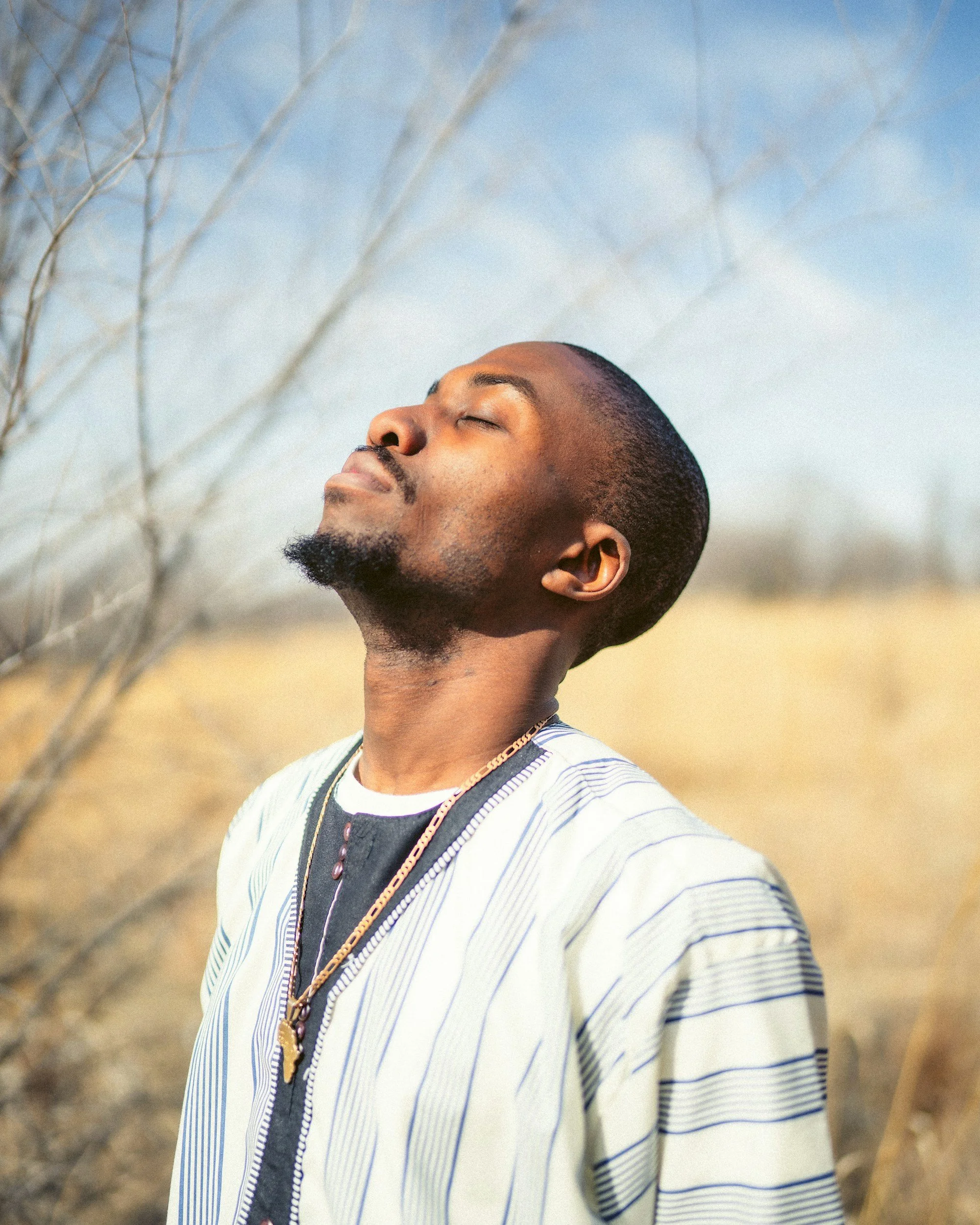
In our work together, we slow things down in a way that can be difficult to do in everyday life. Instead of immediately trying to change what you are feeling, we get curious about what is happening underneath it.
We notice what happens in your body when you talk about the thing that still hurts. Maybe your chest tightens, your stomach drops, your jaw clenches, or you suddenly feel far away. We pay attention to the moments when you want to change the subject, intellectualize what happened, make a joke, minimize your experience, or convince yourself that you should be over it by now.
These responses are information.
They tell us something about how your mind and body learned to protect you.
Using Brainspotting, we can access deeper layers of the brain and nervous system where experiences may still be held in ways that talking alone has not been able to reach. Rather than simply telling the story of what happened again, we pay attention to what happens inside of you as you remember it. The fear. The grief. The anger. The shame. The beliefs you formed about yourself because of what you experienced.
“I am not safe.”
“I am not enough.”
“I have to take care of everything myself.”
“I am too much.”
“I cannot trust anyone.”
“I have to make sure everyone is happy.”
This is where healing begins to become something you feel, rather than something you only understand.
With IFS-informed work, we also get curious about the different parts of you that developed along the way.
The part that keeps everyone happy.
The part that never wants to need anyone.
The part that works relentlessly.
The part that shuts down when things become overwhelming.
The part that is still angry.
The part that wants desperately to be loved.
The part that looks outside of your relationship for attention and connection.
Rather than fighting with these parts or trying to make them disappear, we begin to understand why they are there and what they have been protecting.

As you develop a different relationship with these parts of yourself, something begins to shift. You have more space between what happens to you and how you respond.
You have more agency.
You begin to recognize when the past has entered the present—and you can respond from who you are today rather than automatically reacting from an old wound.
For many people, relationships are where this becomes especially visible. Conflict, intimacy, rejection, abandonment, criticism, or simply feeling unseen can activate wounds that are much older than the relationship itself. We can slow those moments down and begin untangling what belongs to the person in front of you from what your nervous system remembers from long ago.
When appropriate and when you are interested, ketamine-assisted psychotherapy can also support this work. Ketamine can sometimes soften rigid defenses and create space to experience yourself, your emotions, and your story differently. If this is something you want to explore, we will talk carefully about safety, medical collaboration, preparation, and whether it is clinically appropriate for you. There is never pressure to incorporate ketamine into our work.
Throughout the intensive, we are not working toward some predetermined version of who you should become. We are building your capacity to stay present with yourself—to notice what you feel, listen to what your body is communicating, understand your protective patterns, set boundaries, and begin trusting your own knowing again.
You may come to therapy because of your marriage. You may come because something happened years ago that you know you have never fully processed. You may be grieving, questioning who you are, repeating patterns you cannot seem to stop, or simply because you feel exhausted from carrying something you no longer want to carry alone.
You do not have to arrive knowing exactly where the work will take you.
The intensive gives us the time to listen—to your body, your emotions, your history, and the parts of yourself you may have learned to silence. The goal is not to force an answer or fix you.
It is to help you become connected enough to yourself that you can hear what has been there all along.
How I use Brainspotting as a Trauma Therapist in California
This is more than just regular talk therapy. Brainspotting is an experiential, brain-body approach that allows us to work with experiences that may be difficult to access through words alone. Rather than only talking about what happened or trying to understand why you feel the way you do, Brainspotting gives us another way to work with the emotional, physical, and nervous system responses connected to what you’ve experienced.
Brainspotting is a focused processing technique used to identify and process experiences connected to emotional and physical pain, trauma, and coping patterns. It can be used as part of therapy for people experiencing PTSD symptoms, anxiety, depression, chronic pain, difficult memories, and other forms of emotional distress.
I incorporate Brainspotting into my therapy intensives when it can support the deeper work we are doing together. It can be particularly helpful when you understand your patterns intellectually but still find yourself becoming overwhelmed, shutting down, feeling anxious, or reacting in ways you can’t seem to change.
Working through trauma and other difficult experiences can bring up powerful emotions, memories, and physical sensations. As a trauma therapist in California trained in Brainspotting, my role is to help you stay supported and resources while we work with what comes up.
We can slow the process down, pay attention to what is happening in your body and nervous system and work within your capacity so that you are not overwhelmed by your emotions or go into numbing or dissociation. The goal is to help the past feel less overwhelmed by your emotions, feel more present, and more connected to yourself.
Options and Investment
1 Day
$1,950
5 hour program
Pre-intensive interview (50 mins)
4 face-to-face hours
Resources, assessments and personalized treatment
Each intensive following your initial intensive is $1600 for 4 hours or $1400 for two 100 minute sessions per month
2 Days
$3,550
9 hour program
Pre-intensive interview (50 mins)
2 days of intensive sessions (total of 8 hours)
Resources, assessments and personalized treatment
Each intensive following your initial intensive is $1600 for 4 hours or $1400 for two 100 minute sessions per month
Cost comparison - Traditional Weekly Therapy vs Intensive Therapy
While weekly therapy can be beneficial, many find the following information helpful in their search for something that is designed to have a bigger impact and not draw the process out longer than necessary.
-
Traditional Weekly Therapy (2 months)
8 weekly sessions (50 minutes each)
$250-$350 per session
Total cost: $2,000 - $2,800
~30 minutes of deep work per session → ~4 hours total
Stop–start rhythm slows progress
Momentum resets every week
Total Deep-Work Hours: ~4 Hours
-
Two-Day Intensive + Prep Sessions
8-hour intensive (4 hours each day)
Three 50-minute prep sessions (2.5 hours)
Total cost: $4,250
8+ hours of uninterrupted deep work
Faster breakthroughs, deeper repair
Results in days, not months
Total Deep-Work Hours: 8+ Hours
You get double the deep work and significantly faster results with a two-day intensive.
It’s an investment in you — in your healing, your peace, and your freedom from the patterns that have kept you disconnected from yourself for far too long.

What if Healing Didn’t Have to Wait?
What If Healing Could Begin Now?
Imagine spending a full day — or two — not brushing the surface, not tiptoeing around your pain, not stopping the moment you finally start to feel something…
but diving in, gently, safely, deeply.
Imagine having the space to follow the threads of your story all the way through, to understand how you got here, to release what’s been weighing on your heart for so long.
Imagine the relief of not carrying this alone.
An intensive gives you:
uninterrupted time
steady support
deep therapeutic momentum
direction
clarity
emotional grounding
and space to actually finish the work you came to do
Instead of stretching four hours of deep work over two months…
You receive eight hours of healing in one concentrated, transformative experience, plus a grounding prep session that helps you begin healing before you even walk in.
It’s not rushed.
It’s not chaotic.
It’s not overwhelming.
It’s focused, compassionate, intentional, and deeply held.
It’s the kind of healing your heart has been asking for.
Frequently Asked Questions About Trauma Therapy Intensives
What is a trauma therapy intensive?
A trauma therapy intensive is an extended therapy session that gives us more uninterrupted time to work with what is underneath the patterns, emotions, and nervous system responses that are keeping you stuck.
Instead of trying to fit meaningful trauma work into a traditional 50-minute session, an intensive gives us several hours together. This allows time to settle in, understand what is happening in your mind and body, do deeper processing, and integrate what comes up without having to stop just as we are getting somewhere.
Who are trauma therapy intensives for?
Trauma therapy intensives can be helpful for people who know something from their past is still affecting the way they feel, respond, or connect today. If you’ve been searching for a trauma therapist in California, you may be struggling with anxiety, people-pleasing, perfectionism, hypervigilance, difficulty trusting, relationship patterns, emotional shutdown, fear of abandonment, or the feeling that you are always responsible for holding everything together.
You may also have a specific traumatic experience, loss, betrayal, childhood experience, or period of your life that you know you are ready to process more deeply.
You do not have to have a particular diagnosis—or even be certain that what you experienced “counts” as trauma—to explore whether an intensive might be appropriate for you.
How is a trauma therapy intensive different from weekly therapy?
The biggest difference is time. Traditional therapy usually gives you about 50 minutes before you have to wrap things up and return to your day. For some people, that format works beautifully. For others, it can feel like they are continually opening the door to something important and then having to close it again.
Trauma therapy intensives give us a longer, uninterrupted period to stay with what is emerging. We can follow what your nervous system is communicating, work with protective parts, process deeper material, take breaks when needed, and allow time for integration before you leave.
Intensives can be especially helpful if you are looking for a different approach to trauma therapy in California and do not want to stretch deeper work across months or years of weekly sessions.
Do I need to remember everything that happened to heal from trauma?
No. Trauma therapy is not about forcing yourself to remember every detail of your past or repeatedly telling painful stories.
We can work with what is present now—the emotions, body sensations, beliefs, relationship patterns, protective responses, or memories that arise naturally. Your nervous system often gives us information about where the work needs to go without requiring you to construct a complete narrative of everything that happened.
I am much more interested in helping you listen to what is happening inside of you than pushing you somewhere your system is not ready to go.
What kinds of trauma do you work with?
I work with people carrying many different kinds of painful experiences, including childhood and attachment trauma, relationship wounds, betrayal, loss, emotional neglect, difficult family dynamics, and experiences that have changed the way they see themselves or the world.
Sometimes there is a clearly identifiable traumatic event. Other times, there were years of smaller experiences that taught you to stay quiet, keep everyone happy, anticipate other people's needs, disconnect from your emotions, or become incredibly self-reliant.
The impact of an experience matters more than whether it fits neatly into a particular definition of trauma.
What happens during a trauma therapy intensive?
Your intensive is individualized to you rather than following a rigid formula. We begin by identifying what you want to work on and understanding the patterns, experiences, beliefs, and nervous system responses connected to it.
From there, I may draw from Brainspotting, Internal Family Systems (IFS)-informed work, somatic and nervous system approaches, and other trauma-informed interventions. We pay attention not only to what you are thinking, but also to what is happening in your body, emotions, and internal system.
There is room to slow down, take breaks, follow what emerges, and integrate the experience. The goal is not to accomplish as much as possible in a few hours. It is to create enough time and support to go where the work actually needs to go.
What is Brainspotting, and how do you use it in trauma therapy?
Brainspotting is a brain-body-based therapy that uses where you look to help access and process experiences that may be held beyond conscious thought. I often incorporate Brainspotting into trauma therapy intensives because it allows us to work with emotions, body sensations, memories, and beliefs without relying exclusively on talking or analyzing.
For people who already understand why they feel the way they do but still find themselves having the same reactions, Brainspotting can offer another way into the work.
Do you use IFS in trauma therapy intensives?
I incorporate tools and concepts from Internal Family Systems (IFS) to help you understand the different parts of yourself that may have developed to protect you.
You may have a part that keeps everyone happy, a part that never wants to need anyone, a part that becomes angry when you feel threatened, or a part that works relentlessly so you never feel out of control. Rather than judging or trying to eliminate these parts, we become curious about what they have been trying to do for you.
Over time, the goal is to have more choice in how you respond rather than automatically being led by old survival strategies.
Do I have to use ketamine as part of my trauma therapy intensive?
No. Ketamine-assisted psychotherapy is an option for some clients, not a requirement for trauma therapy intensives.
When it is clinically appropriate and something you are interested in exploring, ketamine-assisted psychotherapy may be incorporated in collaboration with a medical provider. Preparation, safety, medical screening, and integration are important parts of that process.
There is never pressure to use ketamine. Brainspotting, IFS-informed work, somatic approaches, and deeper trauma processing can all be part of our work without psychedelic medicine.
Can trauma therapy help with my relationships even if my partner does not attend?
Yes. Relationships are often one of the places where unresolved trauma becomes most visible. Fear of abandonment, difficulty trusting, people-pleasing, shutting down, over-functioning, anger, or losing yourself in relationships can all be connected to ways you learned to protect yourself.
Individual trauma therapy gives us an opportunity to understand what happens inside you when those patterns are activated. Your partner does not need to participate for you to begin changing your relationship with yourself and the ways you respond within relationships.
What if I don't know whether I should stay in my relationship or leave?
You do not need to make that decision before beginning therapy. In fact, sometimes trying to force an answer while you are anxious, overwhelmed, or disconnected from yourself makes clarity even harder to find.
Our work is not about convincing you to stay or encouraging you to leave. We can explore what belongs to your own history, what is happening in your current relationship, what you need, what your boundaries are, and what feels true for you.
As you become more connected to yourself, you may find that you are better able to hear your own answer.
Can I do a trauma therapy intensive if I already have a therapist?
Yes. Some people use an intensive to complement the work they are already doing with a weekly therapist, particularly when there is a specific experience or pattern they would like more uninterrupted time to address.
We can discuss your current treatment during the consultation and determine whether an intensive makes sense alongside your existing therapy. When appropriate and with your permission, collaboration with your current therapist can also help support continuity of care.
What should I look for in a trauma therapist in California?
Finding the right trauma therapist is about more than choosing a particular technique or modality. Trauma work can bring you into contact with emotions, memories, body sensations, and protective responses that you may have spent years learning to avoid. It is important to work with someone who can help you approach those experiences without simply pushing you further than you are ready to go.
My approach draws from Brainspotting, Internal Family Systems (IFS), somatic and nervous system work, psychedelic integration, and, when appropriate and clinically indicated, ketamine-assisted psychotherapy in collaboration with medical providers. I also draw from healing traditions that have taught me to listen to the body, heart, and spirit—not only the thinking mind.
If you are searching for a trauma therapist in California, I encourage you to consider not only a therapist’s training, but also whether their approach to healing feels aligned with the kind of support you are looking for.
Do you offer trauma therapy online in California?
Depending on the type of work we are doing and whether telehealth is clinically appropriate for you, some therapy services may be available online to clients located in California. Working online can make it possible to work with a California trauma therapist even when you do not live near my Rancho Cucamonga office.
Certain services or modalities may be better suited to in-person work. We can talk about your location, what you would like to work on, and the format that makes the most sense during your consultation.
Where do you offer in-person trauma therapy intensives?
I offer in-person trauma therapy intensives from my office in Rancho Cucamonga, California. I work with clients from throughout Southern California as well as people who choose to travel for concentrated therapy work.
If you are looking for a trauma therapist in California and are wondering whether an intensive is appropriate for what you are experiencing, a consultation is a good place to start. We can talk about what has been happening, what you hope will change, and whether this way of working feels like the right fit.
What if I am traveling to California for my therapy intensive?
If you are traveling from another part of California or flying in from out of state, my Rancho Cucamonga office is conveniently located near Ontario International Airport (ONT). ONT offers nonstop service to many major cities and connecting options beyond them, while being much smaller and easier to navigate than some of Southern California’s larger airports.
Once you arrive, Rancho Cucamonga is a short drive from the airport, with rental cars and rideshare services such as Uber and Lyft available at ONT. If you are coming specifically for an intensive, I recommend staying nearby rather than planning a long drive afterward. Having a local hotel gives you somewhere to rest, decompress, and allow some space for yourself after the deeper work we may do together.
There are several hotels near my office at 10630 Town Center Drive, Rancho Cucamonga, including:
Hampton Inn & Suites Ontario Rancho Cucamonga — 11669 Foothill Blvd. This is one of the closer hotel options to my office and includes complimentary hot breakfast and Wi-Fi. The hotel is also approximately 4.7 miles from Ontario International Airport.
Four Points by Sheraton Ontario-Rancho Cucamonga — 11960 Foothill Blvd. Another nearby option with an on-site restaurant, fitness center, outdoor pool and complimentary Wi-Fi. Marriott lists the property approximately 7 miles from Ontario International Airport.
Best Western Plus Heritage Inn Ontario Rancho Cucamonga — 8179 Spruce Ave. This hotel offers complimentary breakfast, Wi-Fi and parking and is approximately 4 miles from Ontario International Airport. The hotel also currently offers complimentary airport shuttle service during designated hours with advance notice.
Staying nearby can make an intensive feel much less rushed, particularly if you are traveling specifically to work with a trauma therapist in California. You can arrive the day before if needed, give yourself time for the work itself, and return to your hotel afterward rather than immediately navigating a long drive or flight home.
What if I’m looking for more of a retreat experience?
If you would like to create a little more space around your intensive, The Mission Inn Hotel & Spa in nearby Riverside is another option. This historic hotel offers a full-service spa, pool and Jacuzzi, relaxation areas, on-site dining, and beautiful grounds, making it a good choice if you want your time in Southern California to feel more like a restorative getaway than simply a hotel stay.
Some clients may appreciate giving themselves an extra day before or after their intensive to rest, spend time by the pool, book a spa treatment, journal, or simply have some quiet time to themselves before returning home.