

Blog

They Told Me My Body Had Failed
I was a brand-new mother when I was told my body couldn’t give my baby what he needed. I believed it. Years later, sitting in a circle of women, I began to understand how deeply those words had shaped me—and discovered the kind of healing that becomes possible when we stop trying to do it all alone.
Some of the deepest healing I’ve experienced didn’t come from understanding myself better. It came from being witnessed.
My own experience with postpartum anxiety eventually changed not only the way I understood myself, but the way I understood therapy. It showed me the limits of trying to heal entirely on our own and the power of being in relationship with people who can help us see the things we’ve learned to normalize.
Today, that experience influences the way I approach individual and group work, including online therapy in California and the healing circles I offer for women throughout the state. For women searching for group therapy in San Diego or elsewhere in California, I believe there is something uniquely powerful about having a space where healing happens not only within ourselves, but in connection with others.
This is part of the story of how I came to understand that:
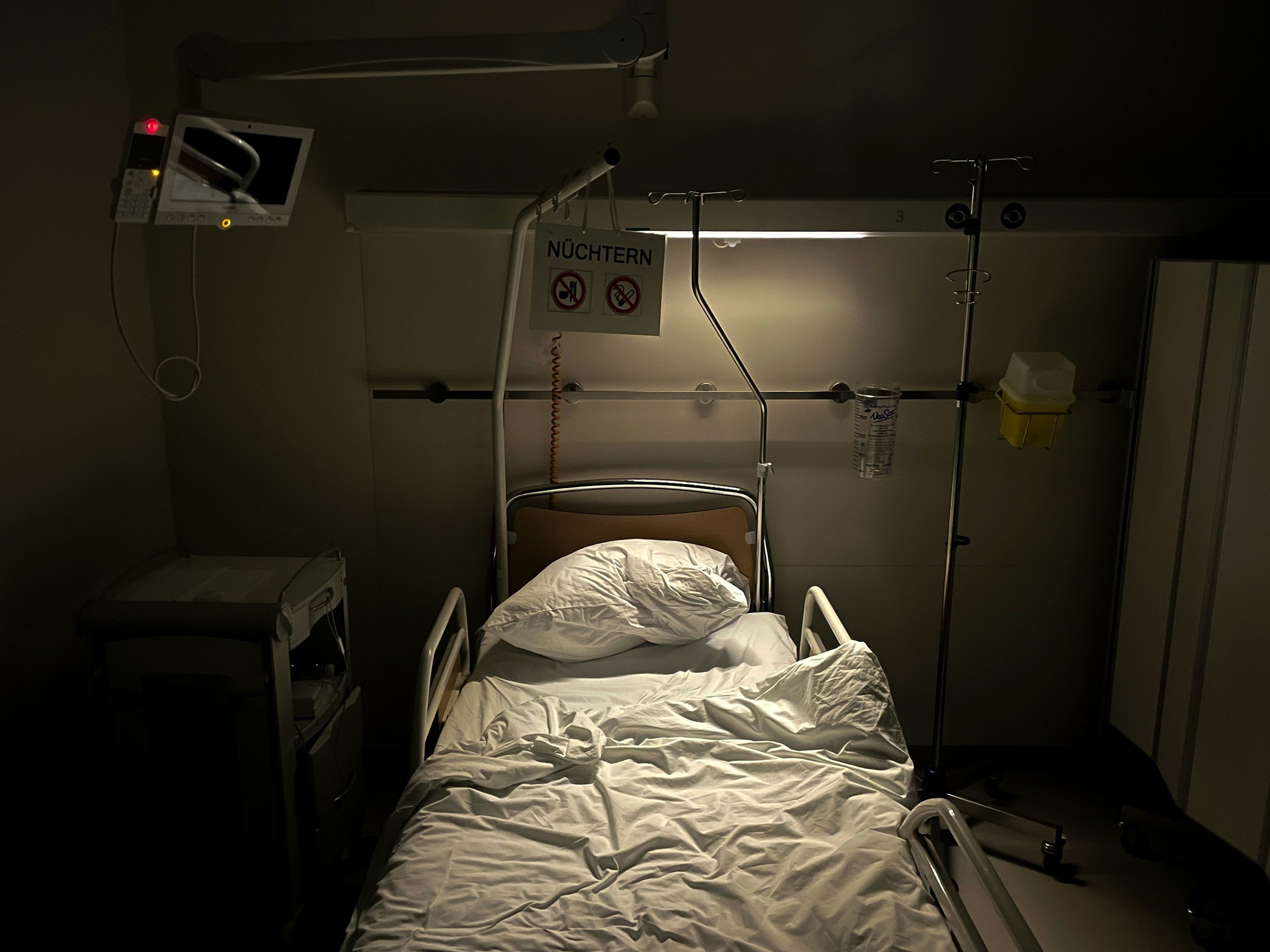
I sat in my hospital bed holding my brand new baby. After 18 hours of labor and an emergency c-section, he was finally here and my life as a new mom had just begun. I had just experienced more physical pain than I ever knew was possible. My body was bleeding, I was exhausted, and my abdomen was freshly stitched up, but nevermind all that - I was now responsible for this very tiny human.
Who said I could be in charge of this tiny human?
I didn’t know the first thing about breast feeding, but a nurse came in and showed me how to hold him and get him to latch. She was gruff and not very kind. I could tell that maybe she’d been having a bad day, so I tried not to ask too many questions. I felt desperate to get the whole breast-feeding thing right, so I hung on every word she’d said and tried to commit it all to memory. My brain felt like mush.
She seemed like she was in a hurry, so I didn’t want to take up too much of her time. He had latched and seemed like he was eating fine, but I was so new at this that I felt anxious. How do I know when he’s done? How will I know when he’s hungry again? Do I switch boobs? I had so many questions but I told myself that I’d just figure it out as I went. This nurse was definitely not up for chit-chat.
After he seemed to be done I rolled him carefully onto my chest and she showed me how to burp him. Nothing came out so I just I held him there. He was so small and felt so fragile. I tried to take it in, but I was worried I’d hurt him somehow. The nurse was very adamant that his head needed to be supported. I did my best to hold his tiny little head without touching the soft spot on top. She was also adamant that I needed to be careful not to injure his brain by pushing on it.
I let him sleep on me for a while. The nurse came back in to check on us. She took my vitals, checked my incision, and pushed on my belly. Tears welled in my eyes but I refused to cry because I was afraid of waking the baby and inflicting even more pain into my abdomen.
The nurse looked at me and said, “make sure you don’t hold him too much. He’ll become spoiled if he’s always in your arms.”
I nodded my head slowly as she left the room. I looked down at my baby, worried again that I’d somehow fuck this up. I figured she knew what she was talking about. She was the one wearing the scrubs and taking care of all the new moms on this floor. I’d only been a mom for 6 hours at this point, what did I know?
After that, I’d feed him, burp him, change him, rock him for a little while and then put him in the little clear isolette next to my bed. I’d stare at him and make sure he was still breathing. He seemed to be fine with this arrangement for the reminder of our stay at the hospital.
Once we got home I followed the same routine and placed him in his Momaroo. I stared at him as he was lulled to sleep by the circular rocking motion it made.
On his second night home he started crying and would not stop. Every time I tried feeding him he’d latch for a minute or two and then pull his head off and wail. I felt panicked and worried that something was terribly wrong with him. My partner and I took turns trying to soothe him.
Maybe he wasn't getting enough milk. How could he be getting enough milk? He wasn’t latching long enough.
Why wasn’t he latching??
This continued for hours. I don’t even remember how it finally stopped. I’d only had 8 hours of sleep in the last 3 days, so maybe I blacked out at some point and he finally gave up after deciding I was an unfit mother.
Some version of this scenario continued the next night and the next day my partner drove me to the breast-feeding group hosted by the hospital. There, I sat in a circle of women who were also having trouble with breastfeeding while the nurse walked around and adjusted our positions, handed out nipple shields, and gave tips about ways to improve milk production. The nurse told me that my colostrum was fine and that my real milk should arrive in the next day or so.
It did not.
I bought all the lactation cookies, teas, and tinctures I could get my hands on. The smell of maple syrup came out of my pores from all the fenugreek I ingested. I changed my diet and ate all the things that were said to increase milk production.
I pumped and fed and pumped some more. I slept in 1-hour increments and returned to the breastfeeding support group a couple days later. I felt ashamed that my breasts weren’t engorged with milk. I told the nurse that nothing was coming out when I pumped.
She said, “your body just isn’t going to produce what your baby needs.”
I felt devastated that, once again, my body had failed to do what it was supposed to know how to do naturally.
Or so I was told.
I remember the first time I sat in a room full of women and told them these stories.

They were outraged.
There were parts of me that knew the things I was told weren’t great, but hearing from a group of women who were all intelligent, caring, and supportive allowed me to see that not only were the comments not great - they were actually harmful.
I was in an incredibly vulnerable state and because I was raised to not question authority, I took what those nurses said as fact. This cut me off from my intuition and made me question everything about my body and my ability to care for my baby.
I eventually learned that I had postpartum anxiety and OCD. (I also learned that my son had a lip tie and his inability to latch correctly was actually the cause of my lack of milk production.) I followed the typical medical protocol and got on meds. I went to therapy and I did my best to heal. But healing often reaches a limit when it’s done in isolation.
For the first four years of my healing journey I barely scratched the surface. It wasn’t until I found this beautiful community and was witnessed by other women that the deeper work truly began.
Healing Was Never Meant to Happen in Isolation
My own healing changed the way I think about what it means to help another person heal.
Individual therapy can be incredibly powerful. There is something deeply healing about having another person sit with you, co-regulate with you, help you understand what happened, and reflect back the things you may not yet be able to see for yourself.
But community offers something different.
There is something powerful that happens when we tell the truth in a room full of women and are met not with judgment, advice, or someone trying to fix us—but with recognition.
Sometimes another woman can see what we have normalized for years. She can reflect back the parts of us we learned to question, silence, or abandon. We hear another woman’s story and recognize something of ourselves in it.
And slowly, in the safety of being witnessed, we begin to trust ourselves again.
This is one of the reasons I’ve become so passionate about creating opportunities for women seeking online therapy in California to experience healing in community, too. An online group allows women across California—including women looking for group therapy in San Diego—to gather in an intentional space without geography determining who gets to sit in the circle.
As humans, we are wired for connection. And I think we’ve been siloed for far too long.
An Invitation to Becoming
This is part of what inspired me to create Becoming, an 8-week online healing circle for women in California.
Becoming is for women who are ready to move beyond understanding their patterns intellectually and begin reconnecting with the wisdom of their bodies, their intuition, and the parts of themselves they may have learned long ago not to trust.
We gather not because any one of us has the answers for another woman, but because there is something profoundly healing about remembering ourselves in the presence of one another.
If you’ve been doing your healing alone for a long time, maybe you were never meant to do all of it that way.
Whether you’ve been searching for online therapy in California, group therapy in San Diego, or simply know that you’re longing for a different way of doing your healing work, I invite you to learn more about Becoming.
I’d love to welcome you into the circle.
Alicia Taverner, LMFT, is a licensed marriage and family therapist who helps couples heal after infidelity, years of resentment, and the exhaustion of feeling stuck in the same painful patterns.
Her work helps partners begin to understand each other again, rebuild appreciation, and create lasting change with a focused, supportive approach. Alicia uses brain based techniques, including Brainspotting and ketamine assisted psychotherapy, in an intensive format that gives couples more room to heal without the start and stop of weekly sessions.
Learn more about Alicia’s work with affair recovery intensives, relationship therapy, and ketamine therapy, or visit her About page.

When Marriage Feels Hopeless: How Couples Counseling Rancho Cucamonga Can Help
Feeling hopeless in your marriage? You're not alone. Many couples find themselves trapped in painful cycles of conflict, disconnection, and resentment. Learn how couples counseling in Rancho Cucamonga can help you break unhealthy patterns, improve communication, and reconnect with your partner.

When that rage burns through your body like a dragon breathing fire because you feel like your partner is never going to get it, do you feel like just burning it all down?
Do you want to throw in the towel and wave your white flag?
Do you feel like locking the front door and simply walking away?
If so, you're not alone.
As a therapist providing couples counseling Rancho Cucamonga, I meet with many couples who arrive feeling exactly this way.
I know it feels like things will never get better.
I know these cycles can leave you feeling paralyzed and withdrawn. They make it hard to focus on your work, your children, and the life you've worked so hard to build.
That feeling is terrible—feeling so stuck and not knowing what to do next. The guilt. The shame. The exhaustion.
You can go back and fight it out again, or you can retreat and try to soothe yourself with the usual distractions: social media, shopping, drinks with friends, or maybe another trip to the gym.
For a little while, these things help you forget about the rage, sadness, and disappointment of finding yourself in the exact same place you've been for far too long.
But those coping strategies are only temporary.

When Disconnection Takes Over
Deep down, you know this isn't how you truly want to live.
You don't want to feel numb and disconnected from your partner. You don't want to miss out on your children's lives because you're emotionally exhausted. You don't want to hand them another screen because you simply don't have the energy to engage the way you'd like.
I'm not judging you.
I know you're doing the best you can right now.
But I also know you're capable of so much more.
I want to remind you of a couple of things.
First, you're still in this relationship for a reason—probably several reasons.
Maybe it's your children. Maybe it's the life you've built together. Maybe it's the love that still exists beneath all the hurt and resentment.
Those things matter.
If they didn't, you probably wouldn't be searching for marriage counseling Rancho Cucamonga or looking for answers online.
I also want to remind you of another time in your relationship.
You can probably remember a season when you felt deeply connected to your partner. A time when you were in love and filled with hope and excitement for the future.
Right now, it may be difficult to even remember what life felt like before all the fighting.
But not being able to remember doesn't mean those moments never existed.
It simply means you're exhausted from riding the merry-go-round of conflict.
The Negative Cycle Many Couples Experience
Does this sound familiar?
You blow up.
You push each other away.
Someone gives the silent treatment.
Eventually, because of children, schedules, or shared responsibilities, you begin speaking again.
Someone extends an olive branch.
Things return to "normal"—until the next argument.
And then the cycle starts all over again.
I know these cycles well because I hear them every single day in my practice.
When couples walk into my office for the first time, I ask them to describe the dance they do during conflict. While every relationship is unique, the patterns are often surprisingly similar.
The cycle is frustrating not only because it's exhausting, but because it's unproductive.
You're not actually resolving the issues underneath the conflict.
You're simply surviving until the next blow-up.
And you already know you'll probably have the exact same argument again in a few weeks.
How Couples Therapy Can Help
You don't have to stay stuck.
Healing is possible.
With the right support, you can learn to communicate in ways that help both of you feel heard, respected, connected, and loved again.
Whether you're struggling with constant conflict, emotional distance, or feeling more like roommates than partners, relationship counseling can help you understand the patterns keeping you stuck and create new ways of connecting.
If you're ready to get off the merry-go-round and start creating lasting change, couples counseling Rancho Cucamonga can help.
Reach out today to schedule your free 15-minute phone consultation. Together, we'll explore what's happening in your relationship and discuss the next steps toward healing and reconnection.
Alicia Taverner, LMFT, is a licensed marriage and family therapist who helps couples heal after infidelity, years of resentment, and the exhaustion of feeling stuck in the same painful patterns.
Her work helps partners begin to understand each other again, rebuild appreciation, and create lasting change with a focused, supportive approach. Alicia uses brain based techniques, including Brainspotting and ketamine assisted psychotherapy, in an intensive format that gives couples more room to heal without the start and stop of weekly sessions.
Learn more about Alicia’s work with affair recovery intensives, relationship therapy, and ketamine therapy, or visit her About page.

Can Couples Therapy Make Things Worse?
If you’re going from a relationship that rarely or never has conflict, to one that has open dialogue and direct communication then it can be quite eye-opening to make so many changes.
But that doesn’t mean that it’s not for the better.

I’ve heard a lot of strange reasons that couples don’t start the process of couples therapy. Seeing couples day in and day out often makes me forget about some of the myths that exist.
The couples I see are usually so ready to dig in and improve their relationships that sometimes I forget that people actually do believe some interesting things.
One of the questions that I always ask couples is whether or not they have been in therapy before. I like to know what worked and what didn't work with their previous therapy so that I can make sure they get what they are looking for during our time together.
Most recently, I asked a couple if they had been in therapy before and one partner piped up and said, “no we haven’t because she always told me that therapy would just make things worse and cause us to fight more.”
I giggled a little. But then I asked, “what does fighting more mean to you?”
It turns out this couple held the belief that having any conflict in marriage was a sign of an unhealthy marriage. This is not the first time I’ve heard this you can check out my other blog post on the topic here. Many people don’t understand that conflict gives us opportunities for learning, repair, understanding, growth, and creating a deeper connection.
So when people ask, “can couples therapy make things worse?” The answer is: it’s possible. But read on to understand why:
If you’re a couple who rarely argues and has a lot of passive-aggressive tendencies and patterns; then good couples therapy will help bring those issues out in a more direct manner, and it might feel like things are getting worse because there will be more overt conflict.
If you’re a couple where one or both partners harbors a lot of resentment and rarely speaks openly to make requests; then good couples counseling will help bring things to the surface more directly and it very well could feel like things are getting worse because you may be so used to not having direct and open dialogue.
If you’re a couple who had issues from one or both partner’s infidelity, and in order to continue the relationship agreed to just “move on” or “forgive and forget” what happened and rarely, if ever, talk about residual feelings stemming from those betrayals; then good couples therapy might bring those feelings to the surface and the relationship could seem worse because there will be a lot of things coming out that haven't been said.
In all three of the above scenarios exist unhealthy patterns that typically lead to relationship dissatisfaction. So even without couples therapy there’s a high chance that those patterns could lead to divorce if left unchecked.
When couples start therapy with us we like to paint a picture of what couples can expect and I typically have a conversation that goes something like this:
In the beginning of couples therapy, the trajectory of relationship satisfaction tends to go up. The fact that you’re both committed to attending provides a sense of hope, and in the beginning most people find it easy to take direction. They dot their I’s and cross their T’s - they do the homework assigned by the therapist and they spend time focusing on important topics in session and learn to talk about things in a different way.
This is mostly behavioral change.
After a couple of months the couple will get into a fight. It is usually a fight about something they’ve been fighting about for a long time in the relationship, and at that point they will revert back to their old patterns.
This fight can feel even worse than before they started therapy.
The reason it feels worse is: people feel like because they are in therapy, they shouldn’t be doing things the old way, and they should “know better,” since they’ve been working hard learning new ways of behaving.
The truth is: this is actually when the real work in couples therapy begins.
This is when couples get to start to understand what is under their behavior.
At this point in time a good couples therapist will help them look beneath the behavior at the various patterns that each partner brings to the table and they will begin to see how those patterns show up in different areas of their lives, including this relationship.
Once each partner is able to identify the impact of the challenging or maladaptive patterns then they can begin to understand the patterns, understand themselves, and find ways to truly create lasting change in the relationship.
I’m not going to lie to you - this part of the process can be really difficult and it’s when a lot of couples want to quit therapy.
If you’re going from a relationship that rarely or never has conflict, to one that has open dialogue and direct communication then it can be quite eye-opening to make so many changes.
But that doesn’t mean that it’s not for the better.
Couples who come out on the other end have much higher levels of connection, intimacy, trust, and commitment. They have more passion and romance, and they have much deeper levels of friendship.
When couples get out of their comfort zones, that is when good things begin to blossom. So yes, couples therapy can make things seemingly worse. But if you stick with it and push past those difficult times, it’s totally worth it!

When work causes Anxiety
Do you ever get a pit in your stomach when you think about going to work? Or meeting with your boss or a potential client? Your palms might get sweaty, your throat might feel dry, you might feel nauseous or get that sinking or butterfly feeling in your stomach. Read more about how Brainspotting can help .

Do you ever get a pit in your stomach when you think about going to work? Or meeting with your boss or a potential client?
Your palms might get sweaty, your throat might feel dry, you might feel nauseous or get that sinking or butterfly feeling in your stomach.
Over the last couple of months these are some of the anxiety symptoms I’ve helped clients clear with Brainspotting. Most of these difficult symptoms cleared after just one session.
One. Session.
Think about that…
Have you ever had trouble sleeping the night before a big meeting?
They don’t call it the “Sunday Scaries” for nothing - it’s a pretty widely accepted thing to feel anxious on Sunday about the work week ahead.
But what happens when you absolutely can’t go to work because your anxiety and panic is just too high?
It might seem extreme, but I’ve known plenty of people to take leaves of absences, or stress leaves from work.
When I worked in county mental health, stress leaves were just part of the culture.
But I’m here to tell you, that is not normal!
You don’t have to accept that! You should feel confidant, calm, collected, level headed, and ready to tackle whatever your boss has to say, or whatever the project has in store for you.
We’ve all got to make money, my friend.
{I’m still waiting for that distant, filthy, rich aunt, or uncle to leave me millions in their will too}
But making money shouldn’t come at the cost of your mental health.
You also don’t have to be in an intense, high stress type of job to experience work-related anxiety.
Many times the stress and angst people experience is actually rooted in feelings of not being good enough, not producing enough, or just not being enough. Most of those underlying beliefs come from family of origin or childhood.
When we help clients find a brainspot and do some deep, focused processing, those old beliefs move from the hind-brain (where they produce mostly involuntary bodily responses) to the prefrontal cortex, and no longer produce physical, fight or flight symptoms.
I'm talking heading to the office singing to the music all the way there, sitting in a meeting with your thoughts cool, calm and collected, being asked questions and responding without a quiver in your voice, or a second guess, feeling grounded and in your power.
These are just a few of the ways my clients have described feeling after their Brainspotting sessions, and this could be you too!
Does this sound like something you’d like? Do you want to feel more joy, presence, and confidence at work?
You can request a free 15-minute phone consultation and our intake coordinator will answer all of your questions about the process, and get you booked with one of our therapists to have you on your way to less Sunday Scarries, and more presence and ability to focus on whatever you’d like to be enjoying instead!

Keep your criticism to Yourself!
Criticism is like a match, and can ignite a conflict into a huge blow up. Keep reading to find out how to identify when this is happening in your marriage and how to counteract this habit.

Criticism may start out as a way to rib or joke with your partner, but it can start to happen more often than not and without you even realizing that’s what you’re doing.
I see it a lot in relationships that are on the rocks. Criticism is one of the 4 Horsemen of the apocalypse, according to the Gottman Institute, and is one of the greatest predictors of divorce.
The couples that I work with sometimes have no idea the impact that it can have on their marriage in the long run which is why I want to bring it to your attention today.
Criticism usually begins with the word “you,” and often also includes words like, “always” and “never.”
“You never do the dishes when you say you’re going to! You’re so lazy!” ::Heavy sigh::
Criticism attacks your partner’s character and leaves little room for a productive response or conversation. If you think about it though, it makes total sense - do you ever respond to someone telling you what a shitty job you’re doing at something with an open heart, or a, “wow! Thanks for pointing that out for me, I’m totally going to start doing the dishes now…”
Absolutely not!
Criticism actually does the opposite. It’s like a match, and can ignite a conflict into a huge blow up. This is because our natural inclination is to respond to criticism with defensiveness. It doesn’t elicit warm fuzzies, it makes us want to shut down, fight, or point out all the ways your partner is falling short (defensiveness). The bottom line is - it’s uncomfortable.
Have you ever heard the saying, “you catch more bees with honey?” This is precisely the approach you should be taking with your partner instead.
Talking from a place of how you feel about a behavior is so much more effective and will put your partner in a much less defensive place.
Criticism should be replaced with using I-statements and making specific requests.
Example: I feel hurt and lonely when I’m the only one doing the housework. Can you help me by picking up the kids' toys and doing the dishes when I’m working late?
The need to criticize is often the sign of an unmet need. If you stop and take a moment before you lash out at your partner ask yourself, “what is my need here?” If your need is for support then ask specifically for that support.
Using an I-statement to express how not having your need met makes you feel, makes your feeling hearable. We can hear our partner say when they're hurt, sad, or lonely. Those feelings get lost in translation though when they are hidden behind criticism.
If you feel criticism running rampant in your relationship we are here to help! Click here to set up a free 15-minute phone consultation, or join us for our upcoming 6-week, 7 Principles for Making Marriage Work class beginning in March, 2023. Click here for details and answers to frequently asked questions about this upcoming workshop.